
Have you ever worried your broker isn’t listening or is recommending investments that feel too risky for you? These concerns are valid, and for some investors, they become formal complaints. When an advisor fails to follow a client’s instructions or suggests unsuitable products, it’s a serious issue. Public records exist to make these disputes transparent. For example, the FINRA report for UBS Financial Services, Inc. broker Kieran Varga details recent customer allegations involving these exact problems. By looking closely at these real-world examples, we can better understand the red flags all investors should watch for and the steps you can take to protect your portfolio.
Key Takeaways
- Always research your broker’s public record: Use free tools like FINRA’s BrokerCheck to review an advisor’s employment history, licenses, and any past customer disputes before you invest.
- Question recommendations that don’t align with your goals: A trustworthy advisor creates a personalized plan; be wary of unsuitable investment suggestions, a lack of transparency, or any trades made without your permission.
- Keep detailed records of all communications: Maintain a file of statements, emails, and notes from conversations, as this documentation is crucial if you ever need to seek legal advice for an investment dispute.
Who is UBS Broker Kieran Varga?
When you entrust your financial future to an advisor, it’s essential to understand who you’re working with. Knowing your broker’s professional history, qualifications, and current role can provide clarity and peace of mind. This information forms the foundation of a transparent relationship and is a key part of safeguarding your financial interests. If you ever have concerns about potential broker fraud and negligence, a clear picture of your advisor’s background is the first step in assessing the situation. Let’s look at the publicly available information for Kieran Varga of UBS Financial Services.
A Look at His Professional Background
Kieran Varga’s career with UBS began in 2022. According to his professional biography, he started as a Financial Advisor in the UBS Wealth Advice Center. In this initial role, his responsibilities centered on handling the accounts of mass affluent clients. This type of position often involves providing financial advice and services to a large volume of clients who meet a certain threshold of investable assets. Understanding a broker’s career progression can give you insight into the type of experience they have and the client base they have traditionally served. This history is a piece of the puzzle when evaluating if an advisor is the right fit for your specific financial goals and needs.
Licenses and Certifications on Record
To work in the securities industry, financial professionals must pass a series of rigorous examinations. These licenses authorize them to conduct specific types of business. According to a public statement from Mr. Varga, he passed the Securities Industry Essentials (SIE), Series 7, and Series 66 exams to become a fully licensed Financial Advisor. The Series 7 license allows him to sell a broad range of securities, while the Series 66 combines the requirements of two exams, qualifying him to act as both a securities agent and an investment adviser representative. These are standard and necessary credentials for financial advisors who manage client investments and provide advice.
His Current Role at UBS
Currently, Kieran Varga is listed as a Senior Wealth Strategy Associate with UBS. He works as part of The McDermott & Sano Group, a wealth management team based in Garden City, New York. This title suggests his responsibilities may have evolved from his initial role at the Wealth Advice Center. Working within a team structure is common at large firms like UBS, where associates often support senior advisors in managing client relationships, developing financial plans, and executing investment strategies. This role is integral to the team’s ability to handle complex investment issues and provide comprehensive service to their clients.
What Services Does Kieran Varga Offer?
Understanding the services a broker and their team offer is a crucial step for any investor. According to his public profiles, Kieran Varga and his team at The McDermott & Sano Group provide a range of financial services centered on personalized planning. These services are designed to address various aspects of a client’s financial life, from immediate investment needs to long-term legacy goals. Let’s look at what his team publicly offers to clients.
Wealth Management and Advisory Services
Kieran Varga’s work centers on comprehensive wealth management. This approach typically involves more than just managing investments; it’s about creating a holistic financial strategy. His stated services include investment advisory, financial planning, portfolio management, and legacy planning. For investors, this means expecting a plan that considers your entire financial picture, from your current goals to how you’ll pass on your assets in the future. When these complex investment issues are mishandled, however, the consequences can be significant, making it vital to understand exactly what your advisor is promising and delivering.
The McDermott & Sano Group’s Team Approach
Kieran Varga works as part of The McDermott & Sano Group, which emphasizes a team-based approach to financial planning. The group states its goal is to build long-term relationships by listening to client needs and creating custom financial plans. They describe their role as being similar to a “family office” that helps clients with their estate plans, using their collective experience and technology. A key part of their process is recommending a personalized investment plan that aligns with your unique situation and risk tolerance. This is a standard and critical practice, as any deviation can lead to claims of broker fraud and negligence if investments are unsuitable for the client.
Understanding Kieran Varga’s Investment Strategy
A financial advisor’s investment strategy is their roadmap for managing your money. It should be clear, tailored to you, and consistently followed. According to his professional profiles, Kieran Varga and his team at The McDermott & Sano Group focus on a client-centric approach. They emphasize creating custom financial plans, managing risk, and building lasting relationships.
Understanding this stated philosophy is important for any investor. It sets a baseline for what you should expect from your interactions and the management of your portfolio. When a broker’s actions don’t match their promises, it can be a cause for concern. If you ever feel that your financial plan doesn’t reflect your goals or that your portfolio is taking on risks you never agreed to, it’s crucial to ask questions and get clear answers. A mismatch between a stated strategy and actual practice can sometimes be a sign of deeper investment issues.
Crafting Personalized Wealth Plans
A personalized wealth plan should be more than just a collection of stocks and bonds; it should be a reflection of your life and future goals. Kieran Varga’s team states they focus on comprehensive strategies that include financial planning, portfolio management, and legacy planning. For you as an investor, this means your advisor should be asking detailed questions about your retirement dreams, family situation, and major life events. The advice you receive should be uniquely yours, not a generic template. If your advisor’s recommendations feel impersonal or don’t align with the personal information you’ve shared, it may be a sign that your plan isn’t truly customized to your needs.
Aligning Portfolios with Client Risk
One of the most important conversations you can have with a financial advisor is about your comfort with risk. The McDermott & Sano Group highlights that they create investment plans based on each client’s risk tolerance. This process should involve a thorough discussion where your advisor explains the potential upsides and downsides of different investments, ensuring you understand the level of risk you’re taking on. If you find your account is filled with high-risk or speculative investments that make you uncomfortable, or if you were never consulted on your risk level, it could be a serious red flag. This kind of misalignment can be a form of broker fraud and negligence.
The Focus on Long-Term Relationships
Building a long-term relationship with an advisor is built on a foundation of trust and open communication. The group’s stated focus on listening to clients and building lasting relationships implies a commitment that goes beyond individual transactions. A trustworthy advisor should be available to answer your questions, provide regular updates, and adjust your financial plan as your life changes. If you find it difficult to get in touch with your broker, feel that your concerns are dismissed, or believe they are more focused on making trades than on your long-term success, the relationship may not be serving your best interests. When communication breaks down, it can be difficult to resolve disputes on your own.
A Review of Kieran Varga’s Regulatory History
When you entrust your financial future to an advisor, you’re placing a significant amount of faith in their judgment and integrity. That’s why taking a close look at a broker’s professional history is a critical step for any investor. This isn’t about digging for dirt; it’s about performing your due diligence to ensure your investments are in capable hands. Publicly available records, like those maintained by the Financial Industry Regulatory Authority (FINRA), provide a transparent look into a broker’s past, including any customer disputes or disciplinary actions.
Understanding this history helps you build a complete picture of the person managing your money. It allows you to see how they have handled client relationships and whether there are patterns that might give you pause. For Kieran Varga, his record includes recent customer disputes that are worth examining. These disclosures are not just formalities; they are vital pieces of information that can help you make a more informed decision about who to work with and how to protect your financial interests from potential broker fraud and negligence.
Recent Allegations and Customer Disputes
Kieran Varga’s record shows several recent customer complaints that warrant attention. In one instance, a client alleged that Varga recommended unsuitable investments, specifically involving debt securities. This type of complaint raises questions about whether an investment strategy is truly aligned with a client’s financial goals and risk tolerance.
In another dispute, a client claimed Varga failed to follow their instructions to cash out during the VMware/Broadcom acquisition. This matter was resolved with a settlement of $42,000. While a settlement isn’t an admission of wrongdoing, it highlights the absolute importance of clear communication and a broker’s duty to act on a client’s specific directives. These events serve as a reminder for investors to ensure their instructions are understood and followed precisely.
Understanding Settlements and Disclosures
It’s important for investors to know that all registered brokers are required to disclose customer complaints, regulatory actions, and arbitrations on their public record. This system is designed to provide transparency and protect you. When you see a settlement on a broker’s record, it means a dispute was resolved financially, often to avoid a lengthy and costly securities arbitration process.
These disclosures are a key tool for evaluating a financial advisor. They offer a glimpse into the broker’s professional conduct and how they handle conflicts when they arise. Reviewing these details allows you to assess the risks associated with an advisory relationship and decide if you are comfortable moving forward.
How to Read a FINRA BrokerCheck Report
FINRA’s BrokerCheck tool is an invaluable free resource for every investor. When reviewing a report, focus on a few key sections to get a clear picture of a broker’s history. The “Disclosures” section is where you’ll find details on any customer disputes, regulatory actions, or terminations. Pay close attention to the summary of the allegations and the outcome.
Also, review the broker’s employment history to see how long they have been with their current and past firms. A history of frequent job changes can sometimes be a point of concern. By familiarizing yourself with these reports, you can better understand the professional background of your advisor and identify any potential investment issues before they affect your portfolio.
Evaluating a Broker’s Advisory Services
When you partner with a financial advisor, you’re not just hiring an individual; you’re also engaging with the firm they represent and the specific services they provide. Understanding the structure of their advisory services is a critical step in protecting your financial interests. A broker’s value is often tied to the resources of their firm, the support system of their team, and the depth of their financial planning process. Evaluating these components helps you set clear expectations and identify whether the services you’re receiving align with your long-term goals.
It’s wise to look beyond the sales pitch and examine the practical framework of how your money will be managed. Does the broker operate as part of a team or as a solo practitioner? What does their idea of “comprehensive planning” actually entail? The answers to these questions reveal a lot about their approach and whether it’s truly centered on your needs. A clear understanding of these elements can help you spot inconsistencies and ensure you’re working with someone who offers genuine, well-supported financial guidance.
The Resources of a Platform like UBS
Large, established financial firms often highlight their extensive resources as a key benefit to clients. For instance, a global firm like UBS, which “operates in 51 countries around the world and has been helping clients for over 160 years,” can provide its brokers with access to a wide array of research, market analysis, and investment products. For an investor, this can translate into more sophisticated strategies and a broader range of options. However, access to resources doesn’t automatically guarantee sound advice. It’s crucial to determine if your broker is actually using these tools to your benefit or if you are facing potential broker fraud and negligence. The firm’s reputation is not a substitute for diligent oversight of your own accounts.
Benefits of a Team-Based Support System
Some brokers work within a team structure, which can offer an additional layer of support and knowledge. A group like The McDermott & Sano Group, for example, notes it “has experienced leaders, Ryan McDermott and David Sano, who are both certified as Chartered Retirement Planning Counselors.” This team-based model means you may benefit from multiple perspectives and specialized knowledge within one group. It can also provide continuity if your primary contact leaves the firm. As an investor, you should clarify who your main point of contact is, how the team collaborates on your portfolio, and who holds ultimate responsibility for the decisions made on your behalf. A team approach should enhance your service, not diffuse accountability.
What Comprehensive Financial Planning Includes
The term “comprehensive financial planning” is used frequently, but its meaning can vary. True comprehensive planning goes far beyond simply buying and selling stocks. As noted in one team’s description, a broker may focus on “comprehensive Wealth Management strategies, including investment advisory, financial planning, portfolio management, and legacy.” This holistic approach should involve a deep dive into your entire financial picture, including your retirement goals, cash flow needs, insurance coverage, and estate plans. If your advisor isn’t asking about these things and is instead focused only on transactions, it may be a sign that their recommendations could lead to unsuitable investment issues. A solid plan should be a roadmap for your entire financial life.
Essential Qualities of a Trustworthy Financial Advisor
Finding the right financial advisor is about more than just investment returns; it’s about building a relationship based on trust. A dependable advisor acts as your partner, guiding you through complex financial decisions with your best interests as their top priority. They should provide a sense of security, not anxiety. When you entrust someone with your financial future, certain non-negotiable qualities should be evident from the start. These traits are the bedrock of a healthy and productive partnership, helping you distinguish a dedicated professional from someone who might expose you to unnecessary risk. Understanding these core qualities empowers you to protect your assets and make informed choices.
Prioritizing Clear Communication and Transparency
A trustworthy advisor will always make sure you understand your financial strategy. They should be able to explain complex investment concepts in simple terms, without relying on jargon. This includes being completely transparent about all fees, potential risks, and how your portfolio is performing. You should feel comfortable asking questions and expect to receive direct, honest answers. When an advisor is evasive or dismisses your concerns, it can be a major red flag. True transparency is a sign that your advisor is confident in their strategy and respects your role as the owner of the assets. A breakdown in communication can sometimes be a precursor to more serious problems, including broker fraud and negligence.
Maintaining a Clean Regulatory Record
Every financial advisor registered in the United States has a public record that details their professional history. A dependable advisor should have a clean regulatory history, free from a pattern of customer complaints, disciplinary actions, or arbitrations. You can and should verify this information using FINRA’s free BrokerCheck tool. While a single, isolated complaint may not be a dealbreaker, a history of disputes is a serious warning. An advisor should be forthcoming about their record. Hiding or downplaying past issues suggests a lack of accountability. When disputes do arise, they are often resolved through securities arbitration, a process that becomes part of their permanent record.
Demonstrating a Commitment to Personalized Service
Your financial situation is unique, and your investment plan should reflect that. A quality advisor takes the time to understand your individual goals, your comfort level with risk, and your long-term aspirations. They will craft a tailored strategy rather than pushing a one-size-fits-all product or the latest hot stock. This personalized approach shows they are committed to your success, not just earning a commission. If you feel like your advisor isn’t listening or is recommending investments that don’t align with your stated objectives, it may be a sign that your interests are not their priority. This misalignment can lead to a variety of investment issues, including holding unsuitable assets in your portfolio.
How to Vet Your Broker’s Credentials
Before you hand over your hard-earned money, it’s critical to do your homework on the financial professional you plan to work with. Vetting a broker isn’t just a formality; it’s a fundamental step in protecting your investments and ensuring your financial future is in capable hands. A thorough background check can reveal a broker’s qualifications, professional history, and any red flags that might signal potential trouble ahead.
Fortunately, you don’t need to be a private investigator to get the information you need. Regulators have created public-facing tools that give you direct access to a broker’s professional records. By taking the time to look into their licenses, employment history, and any past customer disputes, you can make a much more informed decision. This simple due diligence can save you from significant financial loss and the stress that comes with broker fraud and negligence. Think of it as the most important research you’ll do for your portfolio.
Using FINRA BrokerCheck to Verify Licenses
The first place you should always look is the FINRA BrokerCheck tool. This free resource from the Financial Industry Regulatory Authority (FINRA) allows you to see if a broker is properly licensed and registered to sell securities or offer investment advice. According to FINRA, “All individuals registered to sell securities or provide investment advice are required to disclose customer complaints and arbitrations, regulatory actions.” This level of transparency is designed to protect you. A quick search can confirm that your potential advisor has the necessary qualifications and is in good standing with regulators, giving you a baseline of confidence before moving forward.
Reviewing a Broker’s Work History
Understanding a broker’s professional background gives you valuable insight into their experience and areas of focus. BrokerCheck provides a detailed history of where an advisor has worked and for how long. For example, the record for Kieran Varga shows he joined UBS in 2022 as a Financial Advisor in the UBS Wealth Advice Center, where he serves mass affluent clients. This kind of information helps you gauge whether a broker’s expertise aligns with your specific financial needs and goals. A long and stable work history can be a positive sign, while frequent job changes might warrant a closer look.
Checking for Disciplinary Actions
Perhaps the most critical part of your research is checking for any past disciplinary actions or customer complaints. This is where you can spot potential red flags. For instance, Kieran Varga’s record includes a customer complaint alleging that he recommended unsuitable investments in various products. Allegations like these are serious because they can indicate a pattern of behavior that may not be in a client’s best interest. If you find such disclosures, it’s crucial to understand the nature of the complaints and how they were resolved. This information can be pivotal in deciding whether to trust an advisor with your money and may be relevant in a future securities arbitration claim.
Red Flags in Your Broker Relationship
Trust is the foundation of any healthy client-advisor relationship. You rely on your broker to provide sound guidance that aligns with your financial goals. But what happens when that trust is shaken? Recognizing the warning signs of a troubled relationship is the first step toward protecting your assets. While every situation is unique, certain behaviors should prompt you to ask more questions and take a closer look at your accounts.
It’s easy to feel intimidated or to second-guess your own judgment, especially when dealing with complex financial products. However, you are the ultimate authority on your own money. If something feels wrong, it probably is. Paying attention to these red flags isn’t about being cynical; it’s about being a smart, engaged investor. From recommendations that don’t fit your profile to a sudden lack of communication, these signs can indicate anything from simple carelessness to outright broker fraud and negligence. Knowing what to look for can help you address problems before they escalate.
Questionable Investment Recommendations
Your broker should have a deep understanding of your financial situation, long-term goals, and tolerance for risk. Every recommendation they make should clearly connect back to that personal profile. A major red flag is when a broker suggests investments that seem out of sync with your objectives. For example, if you’ve specified a conservative, low-risk strategy, but they are pushing high-risk, speculative products, it’s time to be concerned. This can be a sign of them recommending unsuitable investments to generate higher commissions for themselves. Similarly, if a broker ignores your direct instructions, such as a request not to sell a particular stock, it’s a serious breach of trust and their professional duty.
A Lack of Transparency
Clear, consistent communication is non-negotiable. Your broker has a professional and ethical obligation to be transparent with you. This includes explaining the reasoning behind their recommendations, fully disclosing all fees and commissions, and providing straightforward answers to your questions. If your advisor becomes evasive, uses confusing jargon to deflect questions, or seems reluctant to provide documents, you should be wary. All registered brokers are required to disclose customer complaints and regulatory actions. A lack of transparency can sometimes be an attempt to hide a history of disputes that could lead to securities arbitration. You have a right to understand exactly how your money is being managed.
Signs of Unauthorized Trading
You should be the one authorizing every single transaction in your non-discretionary accounts. Unauthorized trading occurs when a broker buys or sells securities in your account without your prior consent. The most common way to spot this is by carefully reviewing your account statements each month. Look for any trades you don’t recognize or don’t remember discussing. While an honest mistake can happen, a pattern of unauthorized trades is a serious violation. Don’t hesitate to question any unfamiliar activity immediately. This behavior undermines your control over your own portfolio and is a clear sign that your broker is not acting in your best interest. If you suspect this is happening, it’s important to contact a legal professional to understand your options.
Steps to Protect Your Investments
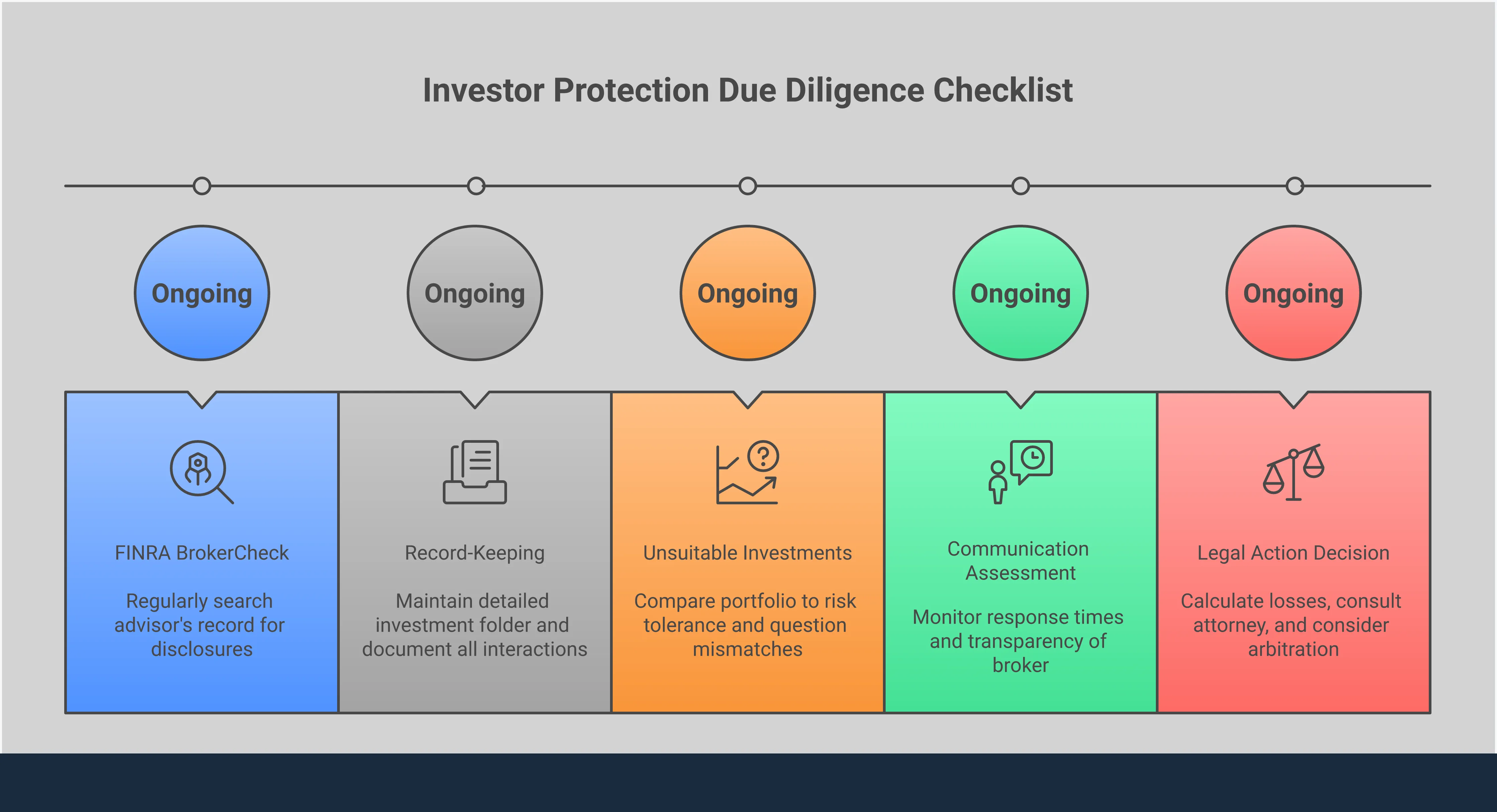
Taking a proactive approach to your financial health is one of the most powerful things you can do. While you rely on a financial advisor to manage your portfolio, staying informed and engaged is your best defense against potential issues. Understanding your rights, keeping meticulous records, and knowing when to ask for help are fundamental steps every investor should take. These practices don’t require a financial degree—just a commitment to being an active participant in your own financial story. By building these habits, you create a strong foundation for protecting your hard-earned money and securing your future.
Know Your Rights as an Investor
As an investor, you are entitled to transparency from the professionals you work with. Financial advisors and brokers are required to disclose important information about their professional history, including any customer complaints, regulatory actions, or arbitrations they’ve been involved in. This isn’t a courtesy; it’s a requirement. You can access this information for free using tools like FINRA’s BrokerCheck. Knowing this allows you to make informed decisions before entrusting someone with your finances. Understanding your rights is the first step in holding financial professionals accountable and ensuring they act in your best interest.
The Importance of Keeping Good Records
Maintaining organized and thorough records of all your investment activities is essential. Think of it as your personal financial diary. You should save everything, including account statements, trade confirmations, prospectuses, and any written correspondence like emails or letters with your broker. It’s also a great idea to take notes during or after phone calls, jotting down the date, the topics discussed, and any specific recommendations made. If a dispute ever arises over an issue like an unsuitable investment recommendation, these documents will serve as your evidence. Clear records provide a factual timeline and can be invaluable in proving your case.
When to Seek Legal Advice for Investment Disputes
It can be difficult to know when a bad investment outcome crosses the line into potential misconduct. If you feel that your broker is not listening to you, notice trades you didn’t authorize, or suspect your money is being handled improperly, it may be time to seek legal advice. Don’t wait for a small concern to become a major loss. An experienced securities attorney can review your situation and explain your options, which may include a process like securities arbitration. Consulting with a legal professional can provide clarity and help you determine the best course of action to protect your financial interests.
Related Articles
- Edward Jones Broker Mark Roberti Review: What Investors Should Know – The Frankowski Firm
- Edward Jones Broker Bryan Everett: A Comprehensive Guide – The Frankowski Firm
- Wells Fargo Broker Wilson Kwok: Investor Allegations & Disputes | The Frankowski Firm
- Equitable Advisors Broker Tiffany Osman: Investor Complaints – The Frankowski Firm
Frequently Asked Questions
Why should I care about a broker’s customer disputes, especially if they were settled? Think of a broker’s public record as their professional resume. Customer disputes, even when settled, are a significant part of that history. A settlement is not a formal admission of wrongdoing, but it does show that a client’s complaint was serious enough for the firm to resolve it financially, often to avoid a longer legal process. A pattern of similar complaints can be a major warning sign, suggesting a potential issue with how the broker handles client accounts or communicates risk.
What does it mean for an investment to be ‘unsuitable’? An unsuitable investment is one that doesn’t match your specific financial situation, goals, or tolerance for risk. For example, if you told your advisor that you need to preserve your capital for retirement and can’t afford big losses, a high-risk, speculative stock would likely be considered unsuitable for you. Your advisor has a duty to recommend investments that are appropriate for your unique profile, and failing to do so is a serious breach of that responsibility.
I’ve noticed some of the red flags you mentioned with my own advisor. What’s my first step? Your first step is to document everything. Gather your account statements, emails, and any notes you have from conversations with your advisor. Having a clear, organized record of your interactions and account activity is crucial. Once you have your information together, you should consider speaking with a securities law attorney who can review your situation and help you understand your options for recovering potential losses.
How often should I check my broker’s public record? It’s a great practice to check your broker’s record on FINRA’s BrokerCheck tool at least once a year. You should also perform a check anytime you feel uneasy about your account or if your broker changes firms. New disclosures can be added at any time, so an annual review helps you stay informed about any new customer complaints or regulatory actions that may have been filed since you last looked.
My broker uses a lot of financial jargon I don’t understand. Is this a problem? Yes, this can definitely be a problem. A good advisor should be able to explain your investments and their strategy in plain language that you can easily understand. If they consistently use confusing jargon or make you feel foolish for asking questions, it could be a way to obscure risk or avoid being transparent. You have a right to complete clarity, and a trustworthy advisor will always take the time to make sure you are comfortable and informed.