
+1-888-741-7503
NO FEES UNTIL WE WIN
FREE CONSULTATION
NO FEES UNTIL WE WIN
FREE CONSULTATION
Not all financial losses are the same. While market volatility is a known risk, losses caused by a broker’s failure to act in your best interest are a different matter entirely. This could look like concentrating your retirement funds in a single risky stock, churning your account to generate commissions, or misrepresenting the details of an investment. This misconduct is legally defined as broker negligence. You don’t have to simply accept these losses as the cost of investing. You have options for holding the responsible parties accountable. A skilled broker negligence lawyer understands how to prove these claims and will work to restore what was taken from you.
When you trust a financial advisor with your money, you expect them to act with your best interests at heart. Broker negligence occurs when they fail to meet that standard of care, causing you to suffer financial losses. It’s important to understand that negligence doesn’t require proof that your broker intended to cause harm. Instead, it focuses on whether their actions, or lack thereof, were careless and fell short of their professional responsibilities. This could involve giving poor advice, failing to execute trades properly, or not adequately explaining the risks of an investment. At its core, it’s about a professional failing to do their job correctly, with your financial well-being paying the price.
Negligence can show up in several ways, and it’s not always obvious at first glance. One common example is recommending unsuitable investments, like pushing a high-risk tech stock on someone nearing retirement who needs stable, low-risk assets. Another form is the failure to diversify a portfolio. Putting all of a client’s funds into a single stock or sector is incredibly risky and often a clear sign of negligence. Other examples of broker fraud and negligence include excessive trading, also known as “churning,” to generate commissions, or a simple failure to follow your direct instructions. These actions represent a breach of the broker’s duty to you.
The consequences of a broker’s carelessness can be devastating. You might face significant losses in your retirement account, see your savings dwindle, or miss out on important financial goals. For instance, a broker might misrepresent the terms of an investment, making it seem safer than it is. They could also fail to secure the type of investment you specifically requested or provide inadequate advice that doesn’t align with your financial situation. When a broker ignores changes in your life, such as a job loss or a shift toward retirement, and fails to adjust your portfolio accordingly, the financial damage can be substantial. These are serious investment issues that can jeopardize your future.
Many financial advisors operate under a “fiduciary duty,” which is a legal and ethical obligation to act in their client’s best interest above all else. This is the highest standard of care in the financial industry. This duty requires them to provide you with all the necessary information to make sound financial decisions, including being transparent about risks, fees, and any potential conflicts of interest. When a broker fails to disclose this crucial information or prioritizes their own financial gain (like earning a higher commission) over your financial success, they are breaching their fiduciary duty. This breach is a form of negligence, and it’s a primary reason investors pursue securities arbitration to recover their losses.
When you discover that your broker’s actions have led to significant financial losses, it’s easy to feel overwhelmed and unsure of what to do next. Taking on a large brokerage firm by yourself is a daunting task. This is where a lawyer who focuses on broker negligence can make all the difference. They act as your advocate and ally, using their deep understanding of securities law to level the playing field. A dedicated attorney handles the complex legal procedures, investigates the wrongdoing, and builds a strong case on your behalf, allowing you to focus on your financial recovery. Their primary goal is to guide you through the process and work to get back the money you lost.
Most disputes between investors and brokerage firms don’t end up in a traditional courtroom. Instead, they are typically resolved through a process called securities arbitration, often overseen by the Financial Industry Regulatory Authority (FINRA). Your original agreement with the brokerage firm likely included a clause requiring you to resolve any issues this way. An attorney is essential in this setting. They understand the specific rules and strategies of the securities arbitration process, from selecting arbitrators to presenting evidence. They will prepare and file your claim, represent you at hearings, and argue your case, ensuring your story is heard and your rights are protected against the firm’s legal team.
Before a claim can be filed, your lawyer will conduct a thorough investigation into what happened. This involves a detailed review of your financial records, including account statements, trade confirmations, and all correspondence with your broker. They are looking for clear evidence of negligence, such as unsuitable investment recommendations that didn’t match your risk tolerance, excessive trading to generate commissions, or misrepresenting the facts about an investment. This deep dive is crucial for building a strong foundation for your case and accurately calculating the full extent of your financial damages. This is a key step in any broker fraud and negligence claim.
The legal process for holding a brokerage firm accountable is complex, with strict deadlines and procedural rules. A good lawyer acts as your guide, explaining each step in a way you can understand. They manage all the paperwork, communications with the opposing counsel, and strategic decisions, removing the burden from your shoulders. Brokerage firms have powerful legal teams whose job is to minimize or deny claims, so having a professional on your side is critical. Your attorney will keep you informed and prepared for what’s next, providing the support you need to see the process through from start to finish.
The ultimate objective is to recover the money you lost due to your broker’s misconduct. Your lawyer will work to build a compelling case that clearly demonstrates how the broker’s negligence caused your financial harm. They will meticulously calculate your damages, which may include not only the direct losses but also the growth your investments should have seen. While no attorney can guarantee a specific outcome, their advocacy significantly improves your chances of achieving a favorable settlement or arbitration award. They are committed to holding negligent financial professionals accountable and helping you restore your financial stability.
Finding the right lawyer can feel like a monumental task, especially when you’re already dealing with the stress of financial loss. But this is one of the most important decisions you’ll make in your journey to recover what’s rightfully yours. You need an advocate who not only understands the law but also understands what you’re going through. Think of this process as finding a partner for your case, someone you can trust to guide you through the complexities of the legal system. The right attorney will do more than just file paperwork; they will be your strategist, your voice, and your support system.
When you start your search, focus on a few key areas that will define your experience and the potential outcome of your claim. You’ll want to look at the lawyer’s specific experience in securities law, their history of success with cases similar to yours, how they communicate with clients, and how they handle their fees. Taking the time to carefully evaluate these factors will help you find a firm that is well-equipped to handle your case and a team that you feel comfortable working with. A good fit means you’ll have a dedicated ally who is committed to fighting for your best interests every step of the way.
When you’re facing a potential broker fraud and negligence claim, you don’t want a general practice lawyer. You need a legal team that lives and breathes securities law. This area of law is incredibly specific, with its own set of complex rules and procedures, like the FINRA arbitration process. A lawyer who specializes in this field will already have a deep understanding of the financial industry’s regulations and the tactics used by brokerage firms. They won’t be learning on your time. Instead, they can immediately start building a strong strategy for your case, giving you a significant advantage from the very beginning.
A law firm’s past performance can tell you a lot about its ability to handle cases like yours. While every case is unique, a history of successful outcomes shows that the attorneys have the skill and determination to see a case through. Look for a firm that is transparent about its results. Do they have a record of securing substantial recoveries for their clients? This information demonstrates their effectiveness and their commitment to achieving justice for investors. A strong track record can give you the confidence that your case is in capable hands and that your lawyer knows how to get results.
The legal process can be long and complicated, so clear and consistent communication is essential. You should feel like a priority, not just another case number. During your initial conversations, pay attention to how the attorneys and staff interact with you. Do they listen to your story? Do they explain things in a way you can understand? A strong attorney-client relationship is built on trust and responsiveness. You need a lawyer who will keep you informed about your case’s progress and be available to answer your questions. This partnership is key to feeling supported throughout the process.
Concerns about cost should never prevent you from seeking justice. Many reputable securities law firms handle broker negligence cases on a contingency fee basis. This means you don’t pay any attorney’s fees unless they successfully recover money for you. The firm’s fee is a percentage of the amount recovered. This arrangement aligns your interests with your lawyer’s, as they are motivated to secure the largest possible recovery for you. Before you agree to anything, make sure you receive a clear, written explanation of the fee structure. Don’t hesitate to ask questions until you are completely comfortable with the terms.
Taking legal action can feel intimidating, but understanding the steps involved can make the process much clearer. When you work with a lawyer on a broker negligence claim, you’ll move through a structured process designed to build your case and seek a resolution. From the first conversation to the final outcome, your legal team will handle the complexities, allowing you to focus on moving forward. The journey typically involves an initial consultation, a thorough evidence-gathering phase, and a formal dispute resolution process, usually through arbitration. Knowing what’s ahead can help you feel more prepared and in control.
Your first step is an initial consultation. This meeting is a confidential conversation where you can share your story and the details of your financial losses without any commitment. It’s your opportunity to ask questions and understand your legal options. The attorney will listen to your situation to determine if you have a viable claim. Think of it as a two-way interview. You are learning about the firm and the process, while the lawyer is assessing the merits of your case. Many firms offer this initial discussion at no cost, so you can gain clarity before making any decisions. You can contact us to schedule a conversation about your situation.
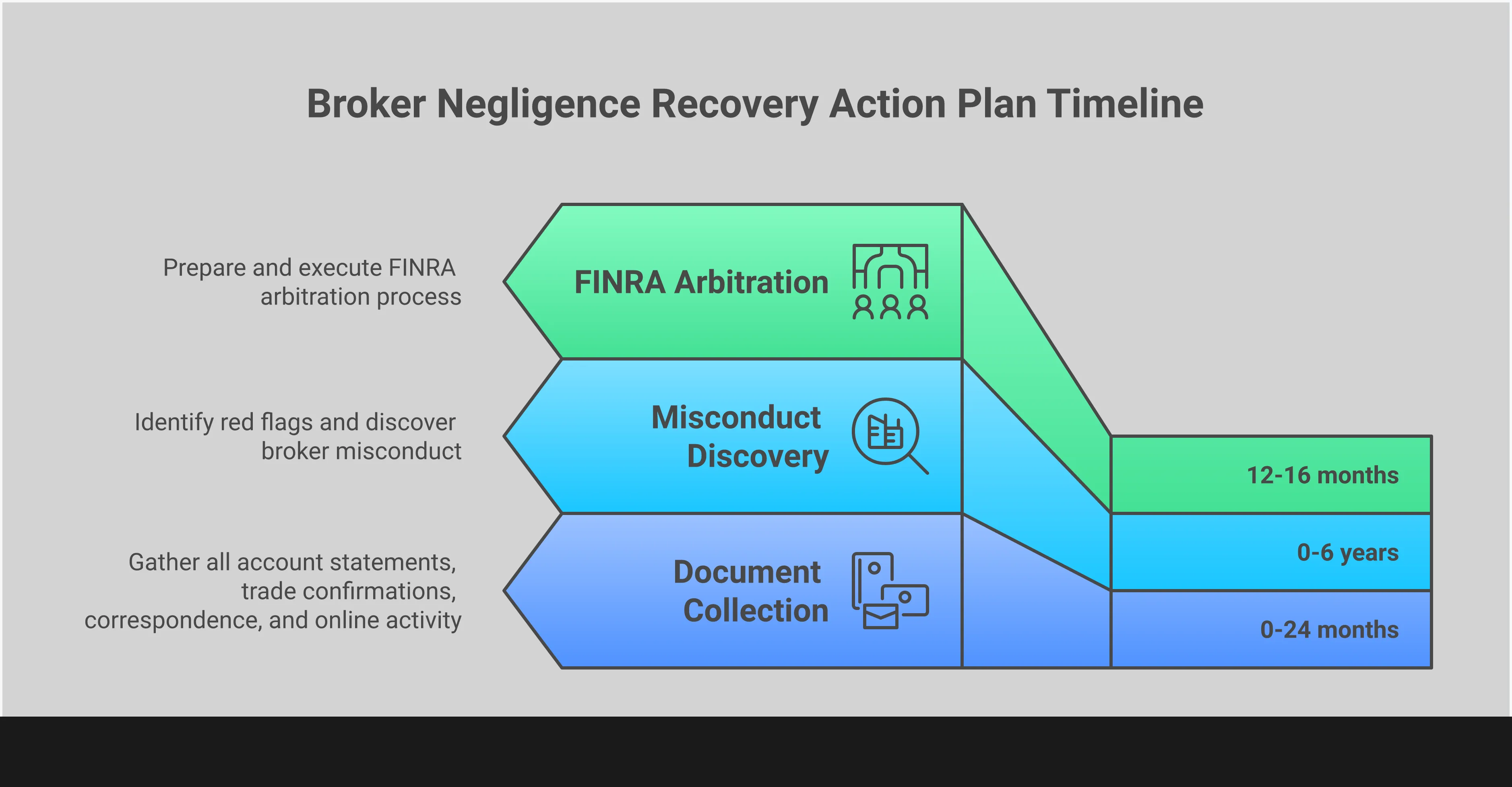
A strong case is built on solid evidence. After your initial meeting, the next step is to gather all relevant documents. This includes account statements, trade confirmations, emails, letters, and any notes you took during conversations with your broker. To prove negligence, your attorney will need to show that the broker had a duty to act in your best interest, that they breached that duty, and that this breach directly caused your financial losses. Your detailed records are crucial for demonstrating this. This collection of evidence forms the foundation of your claim and is a key part of addressing broker fraud and negligence.
Most disputes with brokerage firms are not resolved in a traditional courtroom. Instead, they are handled through a process called arbitration, which is typically overseen by the Financial Industry Regulatory Authority (FINRA). When you opened your brokerage account, you likely signed an agreement to resolve any disputes this way. Arbitration is often faster and less formal than a court trial. Your lawyer will prepare and file the claim on your behalf, represent you during hearings, and present your evidence to an arbitrator or a panel of arbitrators. This process is a core part of securities arbitration and is designed to settle investment-related conflicts.
It’s important to have realistic expectations about the timeline. A case that settles before a final hearing can take around 12 months to resolve. If your case proceeds to an arbitration hearing, the process may take closer to 16 months. The outcome can vary; many cases reach a settlement, where the brokerage firm agrees to pay a certain amount to resolve the claim. If a settlement isn’t reached, the case goes to a hearing, and the arbitrators will issue a final decision, known as an award. Your attorney will guide you through each stage, working to resolve your investment issues and recover your losses.
After facing financial losses, the last thing you want to worry about is the cost of legal help. Fortunately, most broker negligence lawyers work on a payment structure that makes seeking justice accessible, regardless of your current financial situation. This approach is designed to protect you from further financial risk while you pursue your claim. Understanding how legal fees are structured can give you the confidence to take the next step. The most common model in these cases is the contingency fee agreement, which removes the burden of upfront costs.
A contingency fee means your lawyer’s compensation is entirely dependent on the successful outcome of your case. You do not pay any legal fees unless and until your attorney recovers money for you through a settlement or a court award. If you win, the lawyer’s fee is a pre-agreed percentage of the funds recovered. The American Bar Association reports that a typical lawyer contingency fee is between 33% and 40%. This model is beneficial because it allows you to pursue a claim without paying from your own pocket. It also aligns your interests with your lawyer’s, as you both share the same goal: to secure a favorable result.
Beyond the attorney’s fee, every legal case involves certain expenses needed to build a strong claim. These can include court filing fees, the cost of hiring financial analysts to review your accounts, and fees for deposition transcripts. In a strong contingency fee agreement, your law firm will typically advance these case costs so you don’t have to pay for them as they arise. If your case is successful, these expenses are usually reimbursed to the firm from the total settlement amount before the contingency fee is calculated. It’s important to have a clear conversation about this upfront and review your fee agreement carefully to understand how all costs are handled.
Knowing when to seek legal advice can feel overwhelming, especially when you’re dealing with financial losses. If you have a gut feeling that something is wrong with your investments or your broker’s advice, it’s worth paying attention. Acting quickly is often key to protecting your rights and your financial future.
Broker negligence occurs when a financial professional fails to act in your best interest, leading to financial harm. It doesn’t mean they intended to cause problems, only that their actions or inactions were careless. Some common signs of broker fraud and negligence include recommending investments that are too risky for your financial situation, not fully explaining the risks involved, or making trades without your permission. If your portfolio has taken a significant and unexpected hit that doesn’t align with market trends, or if your broker is dismissive of your concerns, it might be a red flag. Trust your instincts. If the advice you’re receiving seems off or your broker can’t provide clear reasons for their strategy, it may be time to get a second opinion from a legal professional.
One of the most critical reasons to act quickly is the statute of limitations. This is a legal deadline for filing a claim. If you wait too long after discovering the potential negligence, you could lose your right to recover any of your losses. These time limits can be complex and vary depending on the specifics of your situation. Don’t try to figure this out on your own. The rules surrounding these deadlines are strict, and missing one could mean your case is dismissed before it even begins. A lawyer who handles investment issues can review your case and determine the specific timeframes that apply, ensuring you don’t accidentally forfeit your rights. The sooner you reach out, the more options you will have.
Many people hesitate to contact a lawyer because of common misconceptions. You might think that suing a broker is impossible or that your losses are just a normal part of investing. While market risk is real, losses caused by a broker’s failure to meet their professional duties are different. A broker can be held accountable for providing unsuitable advice or misrepresenting information. Another myth is that the legal process is too complicated. While these cases can be detailed, you don’t have to go through it alone. Most investor claims are resolved through a process called securities arbitration, which is designed to be more efficient than a traditional court trial. A dedicated lawyer can guide you through every step.
Walking into your first meeting with a lawyer can feel intimidating, but a little preparation goes a long way. When you arrive organized, you help your attorney understand your situation more quickly and give them the tools they need to assess your case. Think of this initial consultation as a strategy session. It’s your opportunity to share your story, ask important questions, and determine the best path forward. By gathering your documents and thinking through the details beforehand, you can make the most of this crucial first step.
The more information you can provide, the clearer the picture becomes for your legal team. Start by gathering every document related to your investments and your interactions with the broker. This includes account statements, trade confirmations, new account forms, and any emails or letters you exchanged. If you took notes during phone calls or meetings, bring those too. This paper trail is essential for building a timeline and identifying where things went wrong. Having these records on hand allows your lawyer to begin piecing together the facts and evaluating the strength of your potential investment issues claim from day one.
This first meeting is a two-way street. It’s just as important for you to interview the lawyer as it is for them to learn about your case. Come prepared with a list of questions to help you feel confident in your choice of representation. You might ask about their approach to cases like yours, what the legal process typically involves, and how they will communicate with you. A great question to start with is, “What are the possible avenues for recovering my losses?” This can open up a discussion about processes like securities arbitration and what it takes to build a successful claim.
Beyond the documents, your lawyer will need to hear your side of the story in detail. Be ready to walk them through your relationship with the broker from the very beginning. Explain your financial goals and what you communicated to the broker about your risk tolerance. It’s especially important to recount specific instances of potential misconduct. Did your broker misrepresent an investment, fail to explain the risks involved, or make trades without your permission? These details are the foundation of a broker fraud and negligence case, so the more specific you can be, the better your lawyer can understand what happened.
My broker says my losses are just part of normal market risk. How can I tell if it’s actually negligence? It’s true that all investments carry some risk, but losses from negligence are different. Negligence involves your broker failing to meet their professional duties, for example, by recommending investments that were far too risky for your stated goals or by concentrating your portfolio in a single stock. If your losses seem extreme compared to the overall market or if your broker’s strategy shifted without a clear explanation, it’s a sign that something more than just market fluctuation could be at play.
What’s the real difference between broker negligence and broker fraud? The key difference comes down to intent. Broker negligence happens when a broker is careless or fails to uphold their professional standard of care, which causes you financial harm. It’s about a breach of duty, not necessarily a plan to deceive. Broker fraud, on the other hand, involves intentional deception, such as knowingly misrepresenting an investment or making unauthorized trades for their own benefit. Both are serious issues that can be grounds for a legal claim.
I signed a contract with my brokerage firm. Does that prevent me from taking legal action? Not at all. That agreement you signed likely contains a clause that requires disputes to be settled through securities arbitration rather than a traditional court. This is a very common practice in the financial industry. It simply defines the venue where your case will be heard. You absolutely retain the right to file a claim and hold your broker accountable for their actions through the arbitration process.
I’m concerned about legal fees. How much will it cost to pursue a claim? This is a common and completely valid concern. Most reputable securities law firms handle these cases on a contingency fee basis. This means you pay no attorney fees upfront. The law firm only gets paid if they successfully recover money for you, and their fee is a percentage of that recovery. This structure allows you to seek justice without taking on any additional financial risk.
How long does a typical broker negligence case take to resolve? The timeline can vary depending on the complexity of your case. Many claims are resolved through a settlement, which can often be reached within about a year. If your case proceeds to a final arbitration hearing, the process might take closer to 16 months from start to finish. Your attorney can give you a more specific estimate after reviewing the details of your situation.