If you invested in GWG L Bonds, you likely remember the promise of high, stable returns. You also remember when those payments suddenly stopped, leaving you with a nearly worthless investment and a lot of unanswered questions. You are not alone in this experience. In a significant development, federal regulators have stepped in, and Centaurus Financial, Inc. was sanctioned with a cease and desist order relating to the sale of GWG L Bonds. This regulatory action confirms what many investors already suspected: these risky products were improperly sold by brokers who failed to protect their clients. This guide explains what this SEC order means and what you can do now.
Key Takeaways
- Firms are responsible for the advice they give: The SEC’s action against Centaurus shows that regulators hold firms accountable for failing to ensure investments, like GWG L Bonds, are actually appropriate for their clients’ financial situations.
- High commissions can signal a conflict of interest: Brokers earned significant commissions for selling risky L Bonds, creating an incentive to recommend them even when they were unsuitable for investors, especially retirees.
- You can pursue losses from the firm that sold you the bonds: Because GWG Holdings is in bankruptcy, the most direct way to recover your money is by filing a FINRA arbitration claim against the brokerage firm for its negligent and unsuitable recommendations.
Why Did the SEC Censure Centaurus Financial?
The U.S. Securities and Exchange Commission (SEC) doesn’t take action lightly. When it censured Centaurus Financial, it was sending a clear message about protecting investors. The firm and several of its advisors faced penalties for their role in selling high-risk GWG L Bonds to clients. The SEC’s investigation found that Centaurus fell short of its legal obligations in several key areas, ultimately putting its customers’ money in jeopardy. Let’s look at the specific reasons behind the SEC’s order.
Violating Regulation Best Interest
At the heart of the SEC’s action is a rule called Regulation Best Interest, or Reg BI. This regulation is straightforward: it requires brokers and financial advisors to put your financial interests ahead of their own. They can’t recommend an investment just because it earns them a higher commission. The SEC found that Centaurus and four of its advisors violated this fundamental rule by recommending GWG L Bonds without a solid reason to believe these products were the right choice for their clients. This failure to prioritize customer needs is a serious breach of trust and a violation of securities law.
Failing to Assess Investor Suitability
Beyond acting in your best interest, a broker must ensure an investment is “suitable” for you. This means considering your age, income, goals, and how much risk you’re comfortable with. GWG L Bonds were complex, high-risk products not appropriate for many everyday investors. The SEC found that Centaurus advisors recommended these bonds to customers without properly assessing if they were a suitable fit. Pushing an unsuitable investment on a client is a significant form of broker fraud and negligence, as it ignores your financial reality and exposes you to unnecessary risk.
Neglecting to Train Staff on High-Risk Products
The problems at Centaurus weren’t just limited to a few advisors; the SEC’s order pointed to a failure at the corporate level. The firm did not provide adequate training to its staff about their responsibilities under Regulation Best Interest. They also failed to properly educate their team on the specific risks associated with GWG L Bonds. This lack of training created an environment where advisors were ill-equipped to make appropriate recommendations. When a firm doesn’t ensure its representatives understand the products they sell, it fails to protect its clients from serious investment issues.
What Are GWG L Bonds?
If you invested in GWG L Bonds, you might be wondering what exactly you put your money into. Many investors were told these were safe, high-yield investments, but the reality was far different. GWG L Bonds were unrated, high-risk corporate bonds issued by GWG Holdings, a company that specialized in life insurance settlements. The money raised from selling these bonds was used to purchase life insurance policies from seniors on the secondary market.
The promise was that investors would receive high returns as the company collected on these policies. However, these bonds were illiquid, meaning you couldn’t easily sell them or get your cash back when you needed it. They were complex financial products that carried significant risks—risks that were often downplayed or completely ignored by the financial advisors who sold them. Understanding the nature of these bonds is the first step in figuring out what went wrong and what you can do about it.
The Basics of Life Settlement Securities
At their core, GWG L Bonds were tied to life settlements. This is when a person sells their life insurance policy to a third party for a one-time cash payment. The buyer, in this case GWG Holdings, then takes over the premium payments and collects the death benefit when the original policyholder passes away. GWG pooled these policies together and used them as collateral for the L Bonds they sold to investors like you.
This business model is inherently speculative. Its success depends on complex calculations about life expectancy. For investors, the high yields offered were meant to compensate for this uncertainty. Unfortunately, the company’s financial health was precarious, and the underlying assets were not as secure as many investors were led to believe.
The Risk of Losing Your Entire Investment
GWG L Bonds were always described in official documents as high-risk and speculative. This wasn’t a hidden detail; it was a fundamental characteristic of the investment. For investors, this meant there was a very real possibility of losing every dollar you put in. These bonds were not like traditional corporate bonds from well-established companies, nor were they insured or guaranteed.
The high-risk nature of these bonds made them unsuitable for anyone who couldn’t afford a total loss. If your broker presented L Bonds as a safe way to generate income, especially for retirement, they may have misrepresented the product. Investors face a wide range of investment issues, and misrepresenting risk is one of the most serious.
Why L Bonds Weren’t Right for Most Investors
Because of their speculative nature, L Bonds were only appropriate for a small group of sophisticated, high-net-worth investors who understood the risks and had portfolios that could absorb a complete loss. They were never intended for everyday investors, retirees, or anyone relying on their investment for income. Yet, brokerage firms like Centaurus sold them to exactly these types of clients.
Why would they do this? A major factor was the high commissions firms earned for selling L Bonds—often as much as 8%. This created a powerful incentive for brokers to push the product, regardless of whether it was a good fit for their clients. This is a classic example of broker fraud and negligence, where a broker’s financial interests are placed ahead of their client’s.
What Penalties Did Centaurus and Its Advisors Face?
When a firm fails to protect its clients, regulators can step in to impose serious consequences. In the case of Centaurus Financial, the penalties weren’t just a slap on the wrist. The sanctions targeted both the company and the individual advisors who sold GWG L Bonds, sending a clear message about accountability in the financial industry. This is a crucial part of addressing widespread broker fraud and negligence. Understanding these penalties can show you how regulatory bodies respond to misconduct and why it’s so important for investors to pursue their own claims.
These regulatory actions are designed to do two things: punish the wrongdoing and deter future misconduct. For investors who lost money, seeing a firm held financially responsible can be validating, but it’s important to remember that these fines are paid to the regulators, not directly to the investors who were harmed. Recovering your personal losses requires a separate legal action. The sanctions against Centaurus highlight the severity of their failure to supervise their advisors and ensure the investments they recommended were suitable for their clients. It underscores a pattern of putting profits ahead of investor protection, a red flag that unfortunately appears all too often in the industry. Let’s break down exactly what these penalties looked like for both the firm and its employees.
The Firm’s Financial Penalties
Centaurus Financial Inc. was hit with significant financial penalties for its role in selling these high-risk bonds. The firm was ordered to pay back all of its improper gains, a process known as disgorgement, totaling $6,407. On top of that, they had to pay $1,551.55 in interest and a hefty civil penalty of $160,000. These figures represent more than just numbers; they are a formal acknowledgment from regulators that the firm’s actions were out of line and caused harm to investors. This action shows that regulatory bodies are willing to hold firms accountable for their compliance failures.
Penalties for Individual Advisors
The accountability didn’t stop at the corporate level. Regulators also took action against four individual advisors at Centaurus who were directly involved in selling the GWG L Bonds. Each of these advisors was ordered to pay a civil penalty of $12,500, in addition to their own disgorgement and interest payments. This is important because it shows that individual brokers can’t hide behind their firm’s name. They are personally responsible for the advice they give, and investors can hold them accountable through legal channels like securities arbitration.
How GWG’s Bankruptcy Affected L Bond Investors
The high-risk nature of GWG L Bonds wasn’t just a theoretical warning on a prospectus. For thousands of investors, those risks became a harsh reality when GWG Holdings ran into severe financial trouble. The company’s collapse had a direct and devastating impact on the people who had trusted their savings to this complex investment product. Many investors, including retirees who depended on the interest payments for their living expenses, were left with significant losses and a lot of uncertainty about their financial future.
This situation wasn’t just a case of a bad investment; it was a catastrophic failure that left many feeling betrayed by the financial professionals they trusted. The fallout from the company’s failure highlights the critical importance of understanding the underlying stability of any investment. It also shines a light on the dangers of broker negligence when financial advisors recommend unsuitable products without fully disclosing the risks involved. When a broker pushes a high-risk, illiquid investment on someone who needs stable, reliable income, the consequences can be life-altering. The GWG bankruptcy is a stark reminder that investors need to be vigilant and that brokerage firms have a duty to act in their clients’ best interests.
Why the Payments Stopped
For L Bond investors, the first sign of trouble was the sudden halt of their monthly interest payments. The company that issued the L Bonds, GWG Holdings, stopped paying investors in February 2022 and filed for Chapter 11 bankruptcy just two months later, in April 2022. When a company files for bankruptcy, it receives legal protection from its creditors, which unfortunately includes its bondholders. This action immediately froze any further payments, leaving investors without the income they were promised and had come to rely on. The abrupt stop left many scrambling to understand what happened and what it meant for their financial security, turning a supposedly stable investment into a source of major distress.
The Current Value of L Bonds
After the bankruptcy filing, the next logical question for investors was, “What are my bonds worth now?” The answer is a difficult one. As a result of the company’s collapse, these GWG L Bonds are now considered “nearly worthless.” The bankruptcy proceedings have made the bonds highly illiquid, meaning there is no real market to sell them. While the bankruptcy plan offers a small potential for recovery, it is a fraction of the original investment. For investors who put their life savings into L Bonds, this is devastating news. However, it’s important to know that the low value of the bonds doesn’t mean all hope is lost. You may still be able to recover your losses by filing a securities arbitration claim against the brokerage firm that sold you the investment.
How Can You Recover Your GWG L Bond Losses?
If you’ve lost money in GWG L Bonds, it’s natural to feel overwhelmed and unsure of what to do next. You likely trusted a financial advisor who presented these bonds as a safe way to earn a steady return, only to see your investment value plummet. The news of GWG Holdings’ bankruptcy can make the situation feel even more hopeless, but it’s important to know that you still have options for pursuing financial recovery. Because GWG is protected by bankruptcy proceedings, the most direct path for many investors is to file a claim against the brokerage firm or financial advisor who sold them these high-risk products in the first place.
These firms had a fundamental duty to understand the investments they were selling and to ensure they were suitable for their clients’ financial situations. L Bonds were complex, high-risk, and illiquid securities that were inappropriate for the average retail investor, especially those nearing or in retirement. By recommending them, many brokerage firms failed to act in their clients’ best interests. Taking action against the firm that sold you these bonds is not just about getting your money back; it’s about holding them accountable for their negligence and seeking justice for the harm caused by unsuitable investment advice.
File a FINRA Arbitration Claim
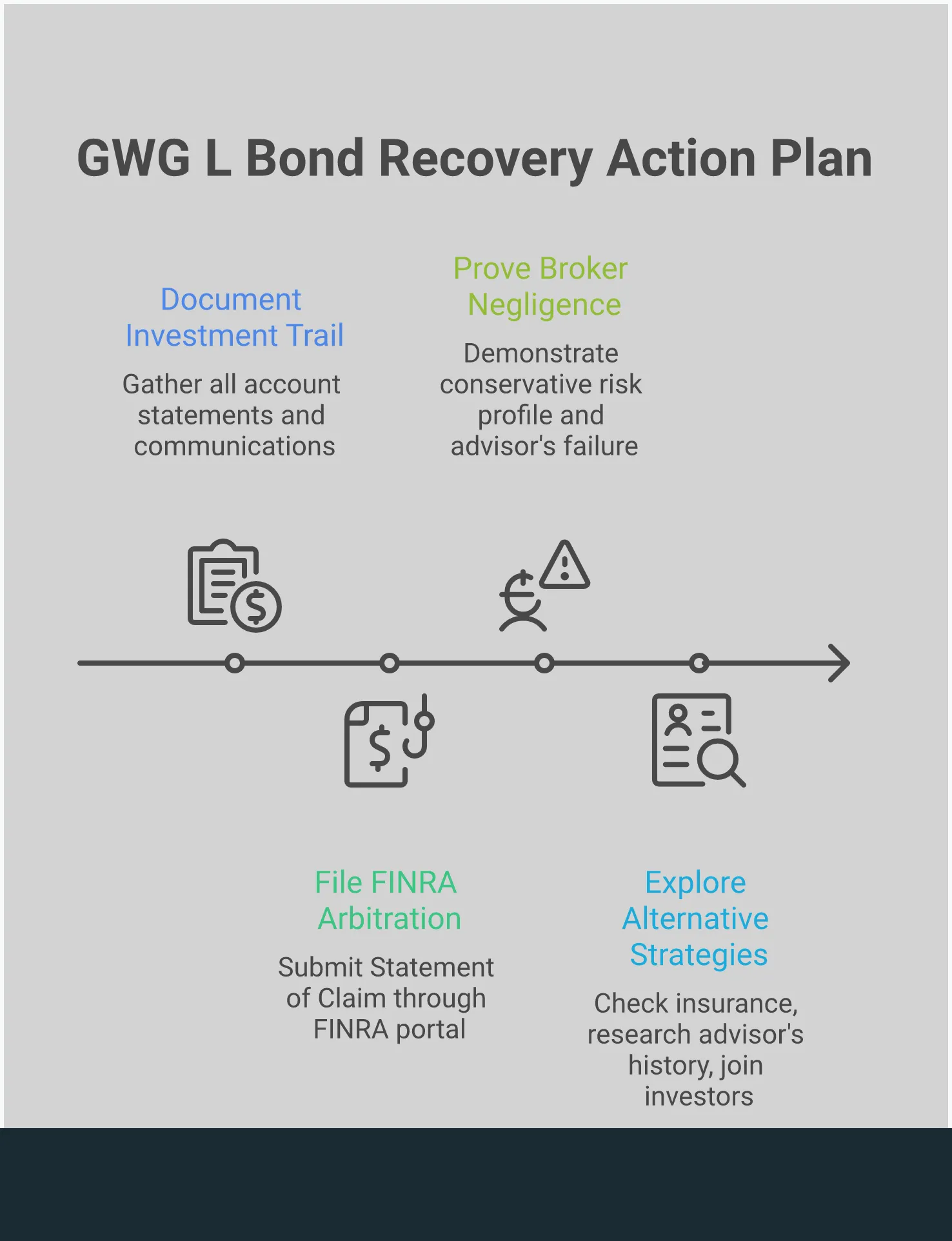
For many investors, filing a FINRA arbitration claim is the most effective way to recover losses from GWG L Bonds. This is a formal process where you can bring a case against the brokerage firm that sold you the investment. Firms like Centaurus Financial had a responsibility to ensure that the products they recommended were appropriate for their clients. When they failed to do so, they can be held liable for the resulting losses. An arbitration claim argues that the firm was negligent or that its broker committed fraud by misrepresenting the investment or failing to disclose its significant risks.
Explore Your Legal Remedies
Financial advisors and their firms have a fundamental legal duty to act in your best interest. This includes conducting proper due diligence on the investments they recommend and ensuring those investments align with your financial situation, risk tolerance, and goals. When an advisor sells a speculative product like a GWG L Bond to a retiree on a fixed income, they may have violated this duty. Exploring your legal remedies means working with an attorney to determine if your broker engaged in fraud or negligence. You have the right to hold them accountable for providing unsuitable advice that led to your financial harm.
Gather Key Documents for Your Case
To build a strong case, you’ll need to gather all relevant paperwork related to your GWG L Bond investment. Start by collecting your account statements, which show the dates and amounts of your purchases. Find any emails, letters, or notes from conversations you had with your financial advisor about the L Bonds. You should also locate any marketing materials, prospectuses, or brochures you were given. These documents are crucial because they can help establish what you were told about the investment and whether the risks were properly explained to you. Having these records organized will be incredibly helpful when you discuss your situation with a securities attorney.
How to Protect Yourself from Bad Investment Advice
It can be tough to know who to trust with your hard-earned money. While many financial advisors work diligently for their clients, some give advice that serves their own interests instead of yours. The good news is that you can learn to identify warning signs and protect your portfolio. It starts with understanding your rights and knowing what to look for in a potential investment. Taking a proactive approach can help you avoid unsuitable recommendations and keep your financial future secure.
Know Your Rights as an Investor
First and foremost, remember that you have rights. Financial advisors and their firms have a legal duty to make sure the investments they recommend are suitable and appropriate for their clients. This means they must consider your financial situation, age, investment goals, and how much risk you’re comfortable with. They can’t just push a product because it offers them a high commission. When an advisor ignores these factors, they may be engaging in broker fraud and negligence. You have the right to ask questions, receive clear answers, and be presented with investments that truly align with your personal circumstances.
Spot the Red Flags of a Risky Investment
Learning to spot red flags is a powerful way to safeguard your investments. For example, the GWG L Bonds were described as high-risk and speculative, meaning investors could lose everything. These were only meant for people with a lot of money who could afford that risk. If an investment sounds too complex or is described in vague terms, press for clarity. Be wary of promises of guaranteed high returns with little to no risk—that’s rarely how legitimate investing works. You should also research the firm and advisor. A history of regulatory trouble, like Centaurus Financial had, is a major warning sign. Don’t be afraid to walk away from any investment issues that feel off.
Lost Money on GWG L Bonds? Here’s What to Do
Discovering you’ve lost a significant portion of your investment is a difficult and frustrating experience. If you invested in GWG L Bonds, you might be wondering what options you have to recover your money. The good news is that you can take concrete steps to pursue a claim and hold the responsible parties accountable. Here’s where to start.
Document Your Losses Now
The first step is to gather all your paperwork. This documentation is the foundation of your potential claim. Collect everything related to your GWG L Bond investment, including account statements showing the purchase, trade confirmations, and any emails or letters you exchanged with your broker. The U.S. Securities and Exchange Commission (SEC) has already issued penalties against firms like Centaurus Financial for their role in selling these bonds, highlighting issues of broker fraud and negligence. Having your records organized will help an attorney accurately assess the full extent of your damages and build a strong case on your behalf.
Consult with a Securities Attorney
You don’t have to figure this out alone. After organizing your documents, the most important step is to speak with an attorney who specializes in investment fraud. They can review your situation, explain your legal options, and guide you through the process of filing a claim. Many investors who purchased GWG L Bonds may be able to recover their losses through securities arbitration with the firm that sold them the investment. A knowledgeable lawyer can determine if your broker sold you an unsuitable product and help you take action. If you believe you have a claim, contact us for a confidential review of your case.
Why the Centaurus Case Is a Warning for All Investors
The Centaurus Financial case serves as a critical reminder for anyone with an investment account. It highlights a fundamental truth: not all financial advice is good advice, and sometimes, it’s downright harmful. This situation isn’t just about one company or a specific high-risk bond; it’s about the core responsibilities that financial professionals have to their clients. When those duties are ignored, investors are the ones who pay the price.
This case pulls back the curtain on two key principles every investor should understand: accountability and suitability. It shows that when brokers and their firms fail to act in their clients’ best interests, there are systems in place to hold them responsible. It also underscores the importance of investment suitability—the rule that says any recommendation you receive should actually fit your financial situation and goals. Understanding these concepts can help you identify red flags and protect your financial future.
Holding Brokers Accountable
When you trust a broker with your money, you expect them to follow the rules. The SEC’s action against Centaurus Financial shows what happens when they don’t. The agency issued a cease-and-desist order because the firm and several of its advisors sold risky GWG L Bonds to clients for whom the investments were completely inappropriate. This wasn’t just a simple mistake; it was a failure to uphold their professional obligations.
This case is a clear example of regulatory bodies stepping in to address broker fraud and negligence. It reinforces that firms can’t simply ignore their duties without consequence. For investors, it’s a powerful reminder that you have rights, and when those rights are violated, firms and individual advisors can be held financially responsible for the harm they cause.
Why Investment Suitability Matters
At the heart of the Centaurus case is a concept called “investment suitability.” Financial advisors are bound by a rule known as Regulation Best Interest, which requires them to recommend only those products that are genuinely right for their clients. This means they must consider your age, income, financial goals, and how much risk you’re comfortable with before suggesting an investment.
Centaurus and its advisors failed to do this, recommending speculative L Bonds to customers who needed safer, more stable investments. Brokers have a duty to fully explain the risks associated with any product they sell. When they push investment issues like high-risk bonds on retirees or conservative investors, they are violating that duty. This case proves that suitability isn’t just a guideline—it’s a requirement.
Related Articles
- GWG L Bonds Guide | GWG Bonds Lawyers
- Ann Vanderslice Faces $250K FINRA Complaint Over L Bonds
- MICHAEL TODD FIRED BY CENTAURUS FINANCIAL FOLLOWING CUSTOMER COMPLAINTS
Frequently Asked Questions
The SEC fined Centaurus, so will I get my money back from that? The financial penalties paid by Centaurus go to the regulators, not directly to the investors who were harmed. While it is a positive step that the firm was held accountable for its actions, recovering your personal investment losses requires a separate and distinct process. To pursue compensation, you must file your own individual claim against the brokerage firm that sold you the bonds.
Since GWG Holdings is bankrupt, is it too late to recover my investment? Not at all. While the bankruptcy protects GWG Holdings from lawsuits, your potential claim is not against them. Instead, your case would be against the financial firm, like Centaurus, that recommended and sold you the L Bonds. These firms had an independent duty to ensure their investment recommendations were suitable for you, and their failure to do so is the basis for a potential claim.
How can I tell if GWG L Bonds were an unsuitable investment for me? GWG L Bonds were high-risk, illiquid products intended for sophisticated investors who could withstand a complete loss of their principal. If you are retired, rely on your investments for income, or told your advisor you had a low tolerance for risk, these bonds were likely an unsuitable recommendation for your financial profile. An investment should match your specific goals and financial situation.
My advisor said these bonds were a safe way to get income. Does that matter? Yes, that is a critical piece of information. If your financial advisor described these speculative bonds as safe, secure, or low-risk, they may have misrepresented the investment. Brokers have a fundamental responsibility to accurately explain the risks associated with the products they sell. Presenting a high-risk bond as a safe source of income is a serious failure and can be a central point in a claim for damages.
What is FINRA arbitration and is it different from a lawsuit? FINRA arbitration is a method of resolving disputes that is typically required when you have an issue with your brokerage firm. It is generally a more streamlined and less formal process than a court case. Instead of a judge and jury, your case is presented to an impartial arbitrator or a panel of arbitrators who will hear the evidence and issue a binding decision.