It’s a common misconception that investment fraud is always a dramatic, obvious scheme. More often, it’s a slow burn of unsuitable recommendations, excessive trading, or vague strategies that quietly drain your savings. You might have a nagging feeling that something isn’t right, but you can’t quite put your finger on it. Recognizing these red flags—like pressure to act quickly or promises of guaranteed high returns—is the first crucial step. If your advisor’s actions don’t align with your financial goals, it’s time to get a second opinion. A skilled Montgomery, Alabama investment fraud attorney can analyze your situation, identify specific instances of misconduct, and explain your legal options for pursuing justice.
Key Takeaways
- Trust Your Instincts and Know the Red Flags: If an investment promises guaranteed high returns with no risk or you feel pressured to act fast, it’s a signal to pause. These are common signs of misconduct, and recognizing them is your first line of defense.
- Your Records Are Your Strongest Asset: When you suspect a problem, your most powerful move is to gather all related documents. Account statements, emails, and a written timeline of events provide the concrete evidence needed to build a solid case.
- Seek Specialized Legal Guidance: Recovering losses involves a specific legal process, often through FINRA arbitration. Working with an attorney who focuses on securities law ensures you have someone who understands the system and can effectively fight for your financial recovery.
What Can an Investment Fraud Attorney Do for You?
When you realize your investments may have been mishandled, it can feel overwhelming and isolating. An investment fraud attorney acts as your advocate, helping you make sense of a complex situation and fighting to protect your financial future. Their primary role is to investigate what happened, explain your legal options in plain English, and build a strong case to recover your losses. They handle the intricate legal procedures so you can focus on moving forward.
From filing claims to representing you in hearings, a lawyer manages the entire process. They understand the tactics used by dishonest brokers and firms and know how to counter them. Whether it’s through negotiation or a formal hearing, their goal is to hold the responsible parties accountable for their actions. If you suspect something is wrong with your accounts, you don’t have to face it alone. Getting professional legal advice can clarify your rights and provide a clear path toward resolution. You can contact us to understand the specifics of your situation.
Common Types of Investment Fraud Cases
Investment fraud can take many forms, and it’s not always as obvious as a dramatic scheme you’d see in a movie. Often, it involves subtle manipulation or negligence that erodes your savings over time. Common examples include Ponzi schemes, where returns are paid to earlier investors using capital from newer investors, and pump-and-dump schemes, where the price of a stock is artificially inflated before being sold off. Other serious issues involve broker fraud and negligence, such as recommending unsuitable investments that don’t match your risk tolerance or churning your account with excessive trades to generate commissions. An attorney can help identify the specific type of misconduct you’ve experienced.
How Securities Laws Protect You
You might feel powerless against a large financial firm, but federal and state laws are in place specifically to protect investors like you. Landmark legislation like the Securities Act of 1933 and the Securities Exchange Act of 1934 establish strict rules against fraud and misrepresentation in the sale of securities. These laws make it illegal for brokers or advisors to lie, omit crucial facts, or engage in deceptive practices. They create a legal framework that holds individuals and firms strictly responsible for their actions. An investment fraud attorney uses these powerful regulations to build your case and demonstrate how your rights were violated, addressing the core investment issues you’re facing.
What is FINRA Arbitration?
If you have a dispute with your broker, you likely won’t end up in a traditional courtroom. Most agreements you sign when opening a brokerage account include a clause that requires you to resolve conflicts through Financial Industry Regulatory Authority (FINRA) arbitration. This is a private, binding dispute resolution process that is often faster and less formal than court litigation. An attorney with experience in securities arbitration is essential, as they understand the specific rules, procedures, and strategies that are effective in this unique forum. They will represent you before a panel of arbitrators, present evidence, and argue your case to seek a favorable award.
Your Options for Recovering Losses
The primary goal of taking legal action is to recover the money you lost due to fraud or negligence. If your case is successful, you could be awarded compensatory damages to cover your investment losses. In some situations, you may also be able to recover interest, attorney’s fees, and other costs associated with the case. Depending on the severity of the misconduct, punitive damages may be awarded to punish the wrongdoer and deter similar behavior in the future. An attorney will assess the full extent of your financial harm and fight for the maximum compensation you are entitled to receive, helping you regain your financial footing.
Red Flags: Signs You Might Be a Victim of Investment Fraud
It can be incredibly difficult to realize that a trusted advisor or a promising opportunity wasn’t what it seemed. Hindsight often makes things clearer, but the truth is, the warning signs of investment fraud are often present from the beginning. Scammers rely on tactics that play on emotion and trust, making it hard to see the situation objectively when you’re in it. They might build a friendly rapport, appeal to your desire for financial security, or create a sense of exclusivity that makes you feel special for being included. This emotional manipulation is a powerful tool that can cloud judgment and cause even savvy individuals to miss crucial details.
Knowing what to look for is the first step in protecting yourself and your assets. Think of these red flags not as reasons to panic, but as signals to pause, ask more questions, and get a second opinion from an unbiased source. If you notice any of these signs in your own financial dealings, it’s a clear indication that you need to look closer at what’s happening with your money. Recognizing these issues is the first and most important step toward taking control of your financial future and seeking help if you suspect something is wrong. It empowers you to move from a position of uncertainty to one of action.
Promises of High Returns with No Risk
You’ve probably heard the saying, “If it sounds too good to be true, it probably is.” This is especially relevant in the world of investing. A common sign of fraud is the promise of high, guaranteed returns with little to no risk. Every legitimate investment carries some degree of risk—that’s the fundamental trade-off. Anyone who tells you otherwise is not being honest. Fraudsters often dangle the prospect of wealth without risk to lure you in. They know that the promise of a “sure thing” can be tempting enough to make people overlook other warning signs. Be wary of any investment described as “guaranteed” or “risk-free,” as these are often hallmarks of serious investment issues.
Pressure Tactics and a Sense of Urgency
Do you feel rushed to make a decision? A fraudster’s worst enemy is time—time for you to think, do your own research, or talk to family. That’s why they often create a false sense of urgency. You might be told it’s a “limited-time offer” or that you have to act now to get in on a special deal. This is a classic manipulation tactic designed to get you to hand over your money before you can spot the holes in their story. A reputable financial professional will encourage you to take your time and will provide you with all the information you need to make a sound decision. If you feel pressured to invest immediately, consider it a major red flag.
Unlicensed or Unregistered Investments
Most financial professionals and investment products are required by law to be registered with regulatory bodies like the Financial Industry Regulatory Authority (FINRA) or the U.S. Securities and Exchange Commission (SEC). This registration process provides a layer of protection for investors. Scammers often operate outside of these regulations, using unregistered investments or acting as unlicensed brokers. Before you invest, you can and should verify the credentials of both the person and the product. If they aren’t registered, you have fewer protections if things go wrong. This lack of oversight makes it easier for fraudulent activities to go unchecked and harder for you to resolve disputes through processes like securities arbitration.
Missing or Inconsistent Paperwork
Every legitimate investment should come with a clear paper trail. This includes a prospectus, official account statements, and trade confirmations. If your advisor is hesitant to provide documentation, or if the paperwork you do receive is confusing, incomplete, or contains errors, you should be concerned. Fraudsters often avoid creating clear records because it makes their scheme harder to prove. Pay close attention to your statements. Do they arrive regularly? Do the numbers add up? Vague descriptions of how your money is being used or a complete lack of documentation are serious warning signs that something is wrong. It’s your money, and you have a right to see exactly where it is and what it’s doing at all times.
Overly Complex or Vague Strategies
You should always have a clear understanding of how your money is being invested. If your broker or advisor explains a strategy using confusing jargon or concepts that seem overly complex, ask them to simplify it. If they can’t—or won’t—explain it in a way that makes sense to you, it could be a sign that they’re trying to hide something. Sometimes, complexity is used to intimidate investors into not asking questions. Furthermore, the investments should align with your financial goals and risk tolerance. If an advisor is pushing products that seem unsuitable for you, it could be a sign of broker fraud and negligence. Your portfolio should reflect your needs, not your advisor’s commissions.
How to Choose the Right Investment Fraud Attorney
Finding the right legal partner after you’ve been wronged can feel like another overwhelming task, but it’s the most important step you can take toward recovery. You need someone who not only understands the law but also understands what you’re going through. The goal is to find a firm that will handle your case with the detailed attention it deserves, giving you the confidence to move forward. Think of this process as an interview—you are hiring someone for a critical job, and it’s okay to be selective.
Look for These Key Qualifications
When you start your search, focus on attorneys who specialize in investment fraud. This area of law is incredibly specific, and you don’t want a general practitioner who dabbles in it. A dedicated investment fraud attorney lives and breathes this work. They are familiar with the tactics used by dishonest brokers and the specific regulations that protect you. Don’t hesitate to ask about their experience with cases like yours. Look for a history of success and a clear focus on representing investors who have faced broker fraud and negligence.
Verify Their Securities Law Experience
Beyond a general focus, confirm that the attorney has deep experience in securities law. This includes a strong background in handling claims through the Financial Industry Regulatory Authority (FINRA) and a thorough understanding of the securities arbitration process. This isn’t just about knowing the rules; it’s about having practical experience applying them to get results for clients. An attorney with a solid track record in securities law will know how to build a strong case, anticipate the opposition’s moves, and effectively argue on your behalf.
Assess Their Communication Style
You and your attorney will be working closely together, so a good rapport is essential. When an investment fraud attorney takes on your case, it should feel like it becomes their case, too. During your initial conversations, pay attention to how they listen and respond. Do they explain complex legal concepts in a way you can understand? Do you feel comfortable asking questions? You should feel like a valued partner in the process, not just another case file. A good attorney will keep you informed and be available to address your concerns.
Understand the Fee Structure
Before you commit, make sure you have a clear understanding of how the attorney gets paid. Many reputable investment fraud attorneys work on a contingency fee basis. This means you won’t have to pay any legal fees unless their firm wins your case. This arrangement is beneficial because it reduces your financial risk and shows that the firm is confident in its ability to secure a recovery for you. Be sure to ask for a detailed explanation of the fee structure during your initial consultation so there are no surprises down the road. You can often get this information when you first contact a firm for a case evaluation.
Ask These Questions During Your Consultation
Your initial consultation is your opportunity to gather the information you need to make an informed decision. Come prepared with a list of questions to help you gauge if the attorney is the right fit.
Here are a few to get you started:
- Have you handled other investment issues similar to mine?
- What is your assessment of my case?
- Who will be my primary point of contact at the firm?
- How will you keep me updated on the progress of my case?
- Can you walk me through your firm’s process for a case like this?
Building Your Case: How to Take Action
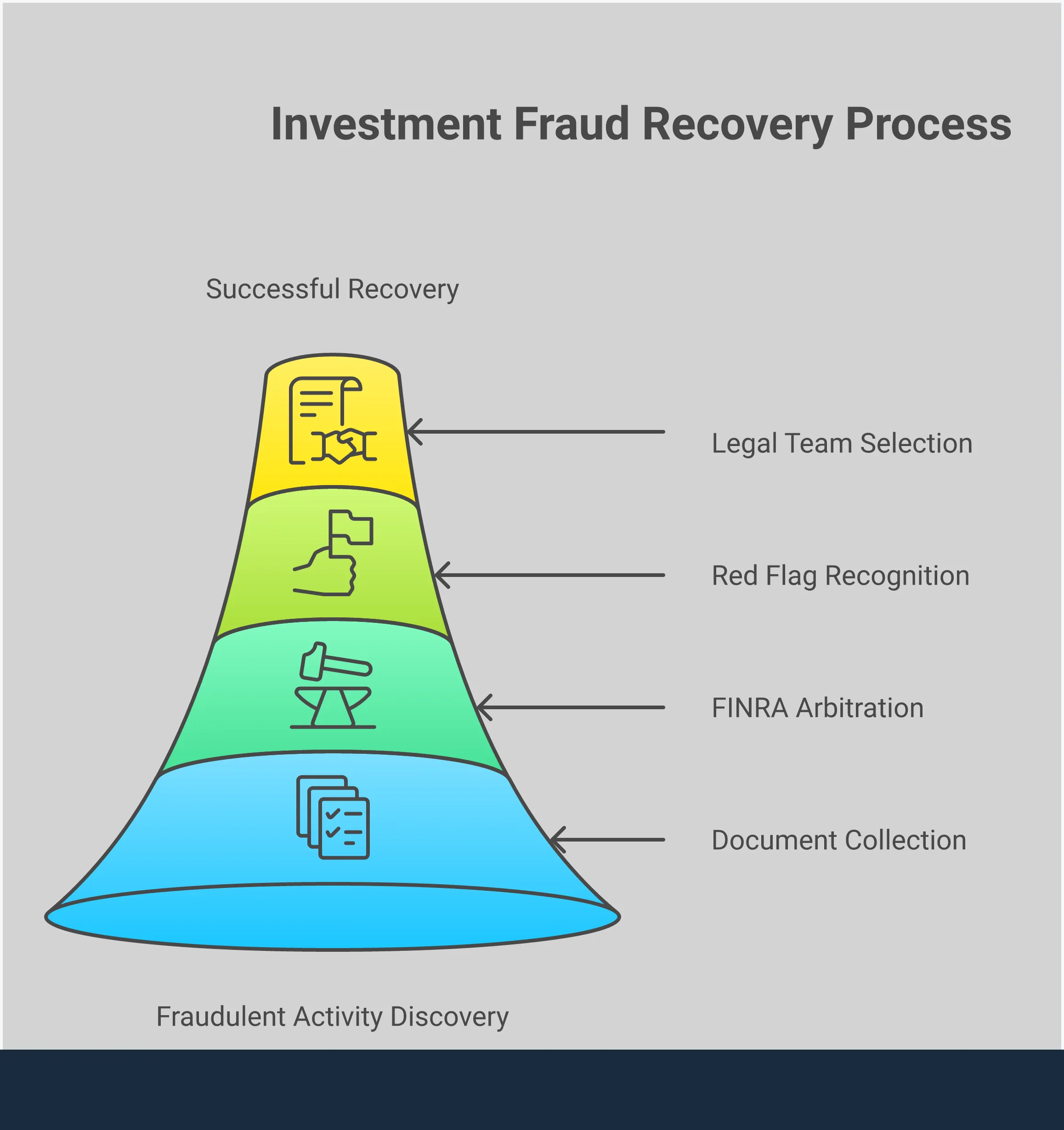
Realizing you might have been misled with your investments is a tough moment, but it’s also the first step toward making things right. Now, it’s time to channel that concern into action. Building a strong case starts with being organized and proactive, and the steps you take right now can make a significant difference in your ability to recover your losses. It might feel overwhelming, but you don’t have to sort through it all alone. Think of this as gathering the puzzle pieces so a legal professional can help you see the full picture. Let’s walk through exactly what you can do to prepare.
Document Everything
If you suspect you’re a victim of investment fraud, don’t wait. The longer you delay, the harder it can be to get your money back. Your memory is one of your most valuable assets right now, so start writing everything down. Create a detailed timeline of events from your very first interaction with the broker or advisor. Note key conversations, including dates, what was said, and any promises that were made. Did they call you at specific times? Did they pressure you to make a quick decision? Write down every detail you can recall. This narrative will be the foundation of your case and will help your attorney understand the full scope of what happened.
Gather Your Evidence
With your timeline in hand, it’s time to collect the paperwork to back it up. Gather any evidence you can find, including documents, emails, and records that show the misconduct and how you lost money. Look for account statements, trade confirmations, prospectuses, and any promotional materials you were given. Dig up old emails, text messages, and any written correspondence you had with the advisor. Did you sign a contract or client agreement? Find it. These documents are concrete proof that can substantiate your claims and paint a clear picture of the investment issues you faced. Put everything in a folder, either physical or digital, so it’s organized and ready to go.
Know Where to File a Complaint
Once you have your documentation, you might wonder where to turn. Depending on the specifics of your situation, you could file a lawsuit in state or federal court. However, for most disputes involving brokerage firms, the process is handled through a different channel. When you opened your account, you likely signed an agreement to resolve any disputes through securities arbitration, which is a formal process overseen by the Financial Industry Regulatory Authority (FINRA). An experienced attorney can review your case and determine the most appropriate venue to file your claim and fight for your recovery.
What Are Your Legal Rights?
It’s important to know that you have specific legal rights as an investor. You can bring a claim based on several grounds, such as securities fraud, breach of fiduciary duty, negligent misrepresentation, or common law fraud. In simple terms, this means you can take action if your broker lied to you, failed to act in your best interest, or was careless with your money. Cases involving broker fraud and negligence often center on whether the financial professional upheld their legal and ethical obligations to you. Understanding these rights is the first step toward holding the responsible parties accountable for their actions.
What to Expect from the Timeline
Building a case and moving through the legal process takes time, so it’s helpful to set realistic expectations. This isn’t a problem that gets solved overnight. The timeline can vary widely depending on the complexity of your case and the venue where it’s filed. The ultimate goal is to recover your losses. If you win, you could get back your lost investments, and in some cases, you may be awarded additional money to punish the wrongdoer. The journey requires patience, but with the right legal team, you can feel confident that your case is moving forward. The first step is to contact us to discuss the details of your situation.
What Does the Legal Process Look Like?
Facing the legal system after a financial loss can feel overwhelming, but knowing what to expect can make a world of difference. The path to recovering your losses has a clear structure, designed to resolve disputes fairly and efficiently. From the first conversation with an attorney to the final resolution, each step is a move toward holding the responsible parties accountable. Understanding this process helps you regain a sense of control and prepares you for the road ahead. Let’s walk through the key stages you’ll encounter when you decide to take action.
Your Initial Case Evaluation
The very first step is to have your situation reviewed by a legal professional. When you’ve lost money due to what you suspect is fraud or negligence, a thorough case evaluation is essential. During this initial review, an attorney will listen to your story, look over your documents, and assess the details of your financial loss. This is your opportunity to understand if you have a strong claim and what your options are. The goal is to determine the most effective course of action for your specific circumstances. Taking this step allows you to get a clear, professional opinion before committing to a particular path.
The FINRA Arbitration Process, Explained
Many investor agreements include a clause that requires disputes to be handled through arbitration instead of a traditional lawsuit. This process is managed by the Financial Industry Regulatory Authority (FINRA), the organization that oversees brokerage firms in the United States. Securities arbitration is designed to be a more efficient and less formal way to resolve conflicts between investors and brokers. Instead of a judge and jury, your case is presented to an impartial arbitrator or a panel of arbitrators who will hear the evidence and make a decision. This streamlined approach often leads to a quicker resolution than going through the court system.
Settlement vs. Arbitration Hearing
Once you file a claim, there are two main ways it can be resolved: through a settlement or an arbitration hearing. A settlement is a negotiated agreement between you and the opposing party. Many cases are resolved this way, as it avoids the time and expense of a full hearing. Your attorney will handle the negotiations on your behalf to secure a fair outcome. If a settlement can’t be reached, your case will proceed to a hearing. Here, both sides present their arguments and evidence to the arbitrator(s), who will then issue a final, binding decision. This is where having a strong case for broker fraud and negligence is critical.
Working Effectively With Your Legal Team
The process of resolving an investment fraud case is a team effort. To build the strongest case possible, it’s important to work closely with your attorneys. This means being open and honest, providing all requested documentation in a timely manner, and asking questions whenever something is unclear. Your legal team is your guide and your advocate, so keeping the lines of communication open is key. They can help you understand the nuances of different investment issues and prepare you for every stage of the process. A strong, collaborative relationship ensures you feel supported and confident from start to finish.
How Alabama Law Protects Investors
When you trust someone with your hard-earned money, you expect them to act in your best interest. Unfortunately, that doesn’t always happen. Investment fraud occurs when financial advisors or brokers intentionally mislead clients for their own benefit. The good news is that you aren’t alone, and there are laws designed to protect you. Alabama has a specific set of securities regulations that hold financial professionals accountable and provide a path for investors to recover their losses.
Understanding these protections is the first step toward taking action. State and federal laws create a framework to ensure that investments are legitimate and that the people selling them are properly licensed and transparent. These rules are enforced by regulatory bodies that oversee the industry. Knowing the basics of how these laws work, who enforces them, and what deadlines you need to meet can make a significant difference in the outcome of your case. If you suspect that your investments have been mishandled, learning about your rights under Alabama law is a crucial move.
Alabama’s Key Securities Regulations
Alabama’s securities laws are designed to prevent financial professionals from engaging in deceptive practices. These regulations make it illegal for brokers or advisors to make false statements, omit crucial information, or engage in any act that would defraud a client. This covers a wide range of misconduct, from recommending unsuitable investments to churning an account just to generate commissions. The core purpose of these rules is to ensure that the person managing your money is acting ethically and responsibly. If they breach that trust through broker fraud and negligence, these state regulations provide the legal foundation for holding them accountable.
Don’t Miss the Statute of Limitations
Time is a critical factor when you’re pursuing an investment fraud claim. A “statute of limitations” is a legal deadline for filing a case, and if you miss it, you could lose your right to seek justice forever. In Alabama, the time limit for bringing a securities fraud claim is two years from the date you discovered the fraud, or should have discovered it. Many agreements you sign with a brokerage firm include a clause that requires you to resolve disputes through securities arbitration with the Financial Industry Regulatory Authority (FINRA), which has its own strict filing deadlines. Acting quickly is essential to preserve your legal options.
Who Regulates Investments in Alabama?
To provide a layer of safety for investors, legitimate financial products and professionals are typically registered with government regulators. In Alabama, the primary state-level regulator is the Alabama Securities Commission. On a national level, the U.S. Securities and Exchange Commission (SEC) oversees the markets. These agencies are responsible for enforcing securities laws, licensing investment professionals, and investigating complaints of wrongdoing. When an investment is properly registered, it means the company has provided key information about its business, finances, and the risks involved, giving you a more transparent picture before you invest.
Your Protections Under State Law
Alabama law protects you by making it easier to identify and act on fraudulent behavior. Being aware of common warning signs is one of your strongest defenses. For example, you should be wary of any investment that promises high, guaranteed returns with little to no risk—that’s a classic red flag. Other signs include feeling intense pressure to invest immediately, receiving vague answers about how your money will be used, or dealing with an unlicensed seller. Recognizing these tactics can help you avoid serious investment issues and gives you a solid reason to question the legitimacy of an opportunity under the protections afforded by state law.
How to Protect Your Investment Rights Going Forward
After dealing with investment fraud, it’s natural to feel wary about the future. But you can move forward with confidence by equipping yourself with the right knowledge and habits. Taking proactive steps to protect your assets isn’t just smart—it’s empowering. By staying vigilant and informed, you can build a more secure financial future and safeguard yourself from potential misconduct.
Strategies to Prevent Future Fraud
Learning to recognize the warning signs of a bad deal is your first line of defense. Be on the lookout for common red flags, such as promises of unusually high or “guaranteed” returns with little to no risk. Scammers often create a false sense of urgency, pressuring you to invest immediately before you have time to think or do your research. If a broker or advisor is vague about how your money will be used or can’t explain their strategy clearly, take it as a serious warning. A legitimate professional will welcome your questions and provide transparent answers. Always remember that if an investment opportunity sounds too good to be true, it almost certainly is. Understanding the signs of broker fraud and negligence can help you steer clear of trouble.
Why Keeping Good Records Matters
Meticulous record-keeping is one of the most powerful tools you have as an investor. Keep copies of every document related to your investments, including account statements, trade confirmations, prospectuses, and all correspondence with your financial advisor—emails and handwritten notes included. These records create a clear paper trail of your financial journey and your instructions to your broker. If you ever notice that the investments in your portfolio seem inconsistent with your stated risk tolerance or financial goals, your records will be crucial. They provide the evidence needed to identify discrepancies and can be essential if you need to address any investment issues down the road.
Review Your Portfolio Regularly
Don’t just set your investments and forget them. Make it a habit to review your account statements and portfolio performance at least quarterly, if not monthly. This regular check-in helps you stay informed about your financial health and allows you to spot unauthorized trades, excessive fees, or other irregularities early on. When you review your statements, compare them against your records and the conversations you’ve had with your advisor. If you see something you don’t understand or that wasn’t approved, ask for a clear explanation immediately. Consistent monitoring ensures you remain in control of your finances and can take swift action if something seems wrong, which is a key step before considering a process like securities arbitration.
Know When It’s Time to Seek Legal Help
Trust your intuition. If you feel confused by an investment strategy, pressured by an advisor, or simply have a gut feeling that something isn’t right, it’s time to seek a second opinion. You should never feel hesitant to ask questions or feel like you’re in the dark about where your money is going. It’s hard to make sound financial decisions when you don’t fully understand what you’re investing in. If your concerns are dismissed or you suspect you’ve been misled, consulting with a legal professional who focuses on investment fraud is a critical step. An attorney can help you understand your rights and determine the best course of action. If you have questions about your investments, please contact us for a confidential evaluation.
Related Articles
- Find an Investment Fraud Attorney Near You – The Frankowski Firm
- Investment Fraud Lawyer Near Me: Recovering Your Losses – The Frankowski Firm
- Safeguard Finances: Role of Stock Broker Fraud Attorneys
- Investment Fraud Lawyers
Frequently Asked Questions
What’s the very first thing I should do if I suspect fraud? Before you do anything else, start gathering all your documents. This includes account statements, emails, trade confirmations, and any notes you took during conversations with your advisor. Avoid confronting the person you suspect, as this could complicate matters. Your priority is to organize your information so you can have a clear and productive conversation with a legal professional who can review your situation and explain your options.
How much does it cost to hire an investment fraud attorney? Many people worry about legal fees, especially after losing money. Most reputable investment fraud law firms, including ours, work on a contingency fee basis. This means you don’t pay any attorney’s fees unless we successfully recover money for you. The firm’s payment is a percentage of the final settlement or award, which means our goals are directly aligned with yours from day one.
Will I have to go to court to recover my money? It’s unlikely that your case will end up in a traditional courtroom. Most agreements signed when opening a brokerage account require disputes to be resolved through a process called FINRA arbitration. This is a private and binding forum designed specifically for investor claims. It is generally faster and less formal than court litigation, and it is handled by arbitrators who are knowledgeable about the securities industry.
How long will it take to resolve my case? The timeline for an investment fraud case can vary significantly. Some cases may settle within a few months, while more complex ones that proceed to an arbitration hearing can take a year or longer. The duration depends on many factors, including the complexity of the fraud and the willingness of the other side to negotiate. While it requires patience, the process is structured to ensure your claim is handled thoroughly.
What if I’m embarrassed or feel like it was my fault? Feeling embarrassed is a completely normal reaction, but it’s important to know that you are not to blame. Fraudsters are skilled at manipulation and build trust to take advantage of people from all backgrounds, including experienced investors. The laws are in place precisely because this happens. Reaching out for help is a courageous step toward holding the right people accountable and reclaiming your financial security.