A polished website and an impressive title can tell you part of the story, but they rarely show the full picture. When you’re evaluating a financial professional, you need to look beyond the marketing materials to understand their real-world approach and track record. This is a crucial step in protecting your investments and ensuring your financial future is in capable hands. We’ve gathered the public information on Truist Investment Services, Inc. broker Michael Perez to help you do just that. This article breaks down his background, his team’s philosophy, and the services he offers, giving you a solid foundation for your own due diligence.
Key Takeaways
- Look Beyond the Sales Pitch: Use free tools like FINRA’s BrokerCheck to research an advisor’s professional history for complaints or disciplinary actions before making any commitments.
- Your Goals Should Drive the Strategy: A trustworthy advisor builds an investment plan based on your unique financial situation and objectives, not a one-size-fits-all template.
- Know When to Seek Legal Help: If you believe your broker’s negligence or unsuitable recommendations caused financial harm, you have the right to pursue recovery of your losses through legal channels.
Who is Michael Perez at Truist Investment Services?
When you’re thinking about working with a financial advisor, it’s smart to get a clear picture of who they are, both professionally and in terms of their approach to managing your money. Michael Phillip Perez is a Financial Consultant and Vice President at Truist Investment Services, Inc., where he is part of The Shaffer-Perez Group. Looking into his background and qualifications is a good first step in deciding if he’s the right person to handle your financial future.
While a broker’s resume can look solid, it’s important to remember that experience and titles don’t eliminate risk. As an investor, you should always stay informed and aware of your rights. Problems like broker fraud and negligence can happen even with seasoned professionals at large, well-known firms. This review is here to give you a straightforward look at the public information about Michael Perez so you can make a well-informed decision.
Michael Perez’s Professional Background
According to his Truist biography, Michael Perez has over 15 years of experience in the financial services industry. This amount of time in the field generally means an advisor has a deep familiarity with market trends and different financial products. As a Vice President and part of The Shaffer-Perez Group, he holds a senior role within the company, which typically involves managing client assets and building relationships. His biography notes that this experience helps him provide “tailored financial solutions” for his clients. For any investor, a long track record is one piece of the puzzle, as it shows a commitment to the profession through various economic conditions.
What His Certifications Mean for You
Michael Perez is also pursuing a Certificate of Financial Planning from the University of Virginia. This is a detail worth noting. Earning a certification like this requires significant training in financial planning, retirement, insurance, and estate strategies, and it holds designees to a high ethical standard. An advisor working toward advanced credentials shows a commitment to professional development and a deeper level of financial knowledge. While this is a positive sign, it’s always wise to understand the full scope of any potential investment issues and make sure the advice you receive truly fits your personal financial situation and risk tolerance.
What Services Does Michael Perez Offer?
According to his professional profiles, Michael Perez, as a Financial Consultant and Vice President at Truist, offers a suite of services centered around wealth management. His role involves helping clients create financial plans and manage their investments to meet specific life goals. This approach is common among financial advisors who aim to provide a holistic view of a client’s financial picture.
The services he provides are broken down into a few key areas. These include building investment portfolios, planning for long-term financial security, and protecting assets. Understanding what a broker offers is the first step in evaluating whether their guidance aligns with your personal needs and risk tolerance. It’s also crucial for identifying any potential disconnect between the services promised and the advice you actually receive. If you ever feel that the guidance you’re getting doesn’t match your objectives, it could be a sign of a larger problem with investment issues that may require a second opinion.
Investment and Financial Planning
Michael Perez’s primary service is helping clients plan their finances and manage their investments. His stated goal is to assist people in achieving both their short-term and long-term financial objectives. This typically involves assessing a client’s current financial situation, understanding their goals—like saving for retirement or a child’s education—and then creating an investment strategy designed to meet those targets. A key part of this process should be a thorough discussion of your comfort level with risk. Any financial professional has a duty to recommend investments that are suitable for your specific circumstances, and a failure to do so can be a form of broker fraud and negligence.
Risk Management and Estate Strategies
Beyond growing wealth, Michael Perez also focuses on protecting it. His services include creating plans to safeguard your money and income, often in collaboration with other specialists at Truist. This area of financial planning is critical for long-term security. He also assists with estate strategies, which involves preparing for the future through wills, trusts, and wealth transfers. These are sensitive and complex matters where clear, trustworthy advice is essential. It’s important that any strategy put in place genuinely protects your assets and aligns with your wishes, rather than exposing you to unnecessary risk or unsuitable products.
Financial Education and Goal Setting
With a background in various banking and wealth management roles, Michael Perez emphasizes guiding clients through the complexities of financial planning. A significant part of his service is educating clients to help them understand their own financial needs and the strategies being recommended. He aims to demystify the process, which is a valuable service for any investor. A good advisor should empower you with knowledge, not confuse you with jargon. This educational component is meant to help you set clear, achievable goals and feel confident in the path laid out to reach them.
How Does His Goals-Based Planning Work?
Goals-based planning is a popular approach in the financial world, and it’s the method Michael Perez says he uses to help clients. Instead of focusing solely on market benchmarks, this strategy centers the entire financial plan around your specific life goals. Think of it like planning a road trip: you wouldn’t just start driving without a destination. You first decide where you want to go, and then you map out the best route to get there.
This process should be a collaborative effort between you and your advisor. It involves clearly identifying what you want to achieve with your money—whether that’s retiring early, funding a child’s education, or leaving a legacy. Once those goals are established, every investment decision is made with the intention of moving you closer to them. The success of your portfolio isn’t just measured by returns, but by how well it’s helping you reach your personal milestones. Let’s break down the steps involved in this approach.
Defining Your Financial Objectives
The first step in any goals-based plan is getting crystal clear on what you want to accomplish. According to his Truist profile, Michael Perez’s experience helps him understand the “unique money needs of each client.” This is a critical starting point. A financial advisor should take the time to listen and learn about your life, your values, and your vision for the future. This isn’t just about numbers; it’s about understanding your short-term needs, like saving for a down payment, and your long-term dreams, like a comfortable retirement. Failing to grasp these personal details can lead to serious problems, as it’s a broker’s duty to fully understand your financial situation before making recommendations.
Crafting a Tailored Investment Strategy
Once your objectives are defined, the next step is to build a strategy to match. Michael Perez’s profile states he “focuses on what you want to achieve and then helps you create a plan to get there.” This means the investment portfolio he builds for you should be a direct reflection of your goals, timeline, and comfort with risk. For example, a long-term retirement goal might call for a strategy with more growth potential, while a short-term goal like saving for a car requires a more conservative approach. This is where an advisor’s recommendations are put to the test. Any strategy that exposes you to unnecessary risk or involves unsuitable investment practices is a major red flag.
Integrating Short and Long-Term Goals
A solid financial plan doesn’t just focus on one finish line; it manages several at once. Michael Perez’s approach involves “developing and putting into action clear investment plans” that should account for both your immediate needs and future aspirations. This means creating a balanced portfolio that provides stability for your short-term goals while still allowing for growth to fund your long-term ones. Your plan should also be dynamic, with regular check-ins to ensure it still aligns with your life, especially after major events like a marriage, a new job, or an inheritance. If a broker deviates from the agreed-upon plan and causes financial harm, you may be able to recover your losses through legal channels.
What Makes The Shaffer-Perez Group Different?
Understanding a financial advisory group’s philosophy is just as important as reviewing their services. The Shaffer-Perez Group emphasizes a distinct, client-centric model that sets them apart from many other practices. Their approach is built on a foundation of personalized service, collaborative work, and planning that goes beyond just the numbers.
For any investor, it’s crucial to see if an advisor’s promises align with their actions. While this group outlines a clear methodology, you should always measure it against the actual service you receive. A disconnect between a stated approach and the real-world management of your portfolio can sometimes be a warning sign. Let’s look at the three core pillars of their approach.
Their Approach to Client Service
The Shaffer-Perez Group states that their process begins with listening. They aim to understand your financial situation, personal goals, and family values before creating a plan. This client-first mindset is what every investor should look for. A financial plan should be a reflection of your life, not a generic template. When an advisor takes the time to truly hear your needs and concerns, it builds a foundation of trust and helps ensure the strategies they recommend are genuinely suitable for you.
Unfortunately, not all advisors operate this way. When a broker fails to listen and instead pushes products that don’t fit your objectives or risk tolerance, it can lead to significant problems. This failure to align recommendations with your stated needs can be a form of broker fraud and negligence.
How Their Team Works with Specialists
Wealth management often involves more than just investments. The Shaffer-Perez Group says they bring in a team of specialists to help families with complex financial matters. This could include coordinating with tax advisors, estate planning attorneys, or insurance professionals to create a cohesive financial picture. A collaborative approach can be incredibly valuable, as it ensures all the moving parts of your financial life are working together.
When working with a team, it’s important to have clarity on who is responsible for each aspect of your plan. You should also understand how each specialist is compensated to be aware of any potential conflicts of interest. A lack of transparency around these details can sometimes obscure underlying investment issues that may not be in your best interest.
What is Values-Based Financial Planning?
A key part of this group’s philosophy is “values-based” financial planning. This means they focus on incorporating your family’s core values into the financial strategies they build. For some, this might mean investing in socially responsible companies; for others, it could involve setting up philanthropic endeavors or ensuring a legacy for future generations. This approach aims to make your financial plan a true extension of who you are and what you believe in.
This level of personalization requires a deep understanding of your principles. If you feel an advisor isn’t honoring your stated values or is pushing you into investments that make you uncomfortable, it’s a major red flag. Your financial plan should give you peace of mind, and if it doesn’t, it may be time to ask more questions or contact us for a review of your situation.
What Are the Potential Benefits of Working with Michael Perez?
When you’re evaluating a financial advisor, it’s helpful to understand the services they claim to provide. This gives you a benchmark for what you should expect and helps you spot any gaps between what’s promised and what’s delivered. Based on his public information with Truist Investment Services, Michael Perez and his team, The Shaffer-Perez Group, focus on a few key areas designed to support their clients’ financial lives.
These services are centered around creating a comprehensive financial plan that covers everything from daily budgeting to long-term legacy goals. The idea is to offer a single point of contact for managing your wealth, protecting your assets, and planning for your family’s future. Understanding these potential benefits can help you ask better questions and determine if an advisor’s approach truly aligns with your needs. If you ever feel that an advisor is not living up to their promises, it’s important to know your rights regarding broker fraud and negligence.
Comprehensive Wealth Management
Michael Perez’s role as a Financial Consultant involves helping clients with holistic wealth management. This isn’t just about picking stocks; it’s about creating a complete financial picture. A comprehensive approach means an advisor should take the time to understand your short-term needs, like saving for a down payment, and your long-term ambitions, such as retirement. They should then build a strategy that connects all the dots. This process should involve a deep look into your entire financial situation to ensure all parts of your plan work together toward your goals.
Income and Asset Protection
Beyond growing wealth, a key part of financial planning is protecting what you already have. Michael Perez reportedly develops tailored plans to safeguard clients’ income and assets. This often involves strategies like life insurance, disability insurance, and long-term care planning. By collaborating with other specialists, an advisor can help shield your resources from unexpected events. It’s crucial that any products recommended for protection are suitable for your specific situation, as inappropriate insurance or annuity sales can be a significant source of investment issues.
A Family-Focused Approach
The Shaffer-Perez Group states that it is dedicated to helping families plan for their future across multiple generations. This family-focused approach means looking beyond just one person’s financial needs. It can involve planning for a child’s college education, structuring an inheritance, or managing a family trust. When an advisor works with your entire family, they should be sensitive to different goals and dynamics. The ultimate aim is to create a financial strategy that supports each family member and ensures a smooth transfer of wealth according to your wishes.
Is Michael Perez the Right Fit for Your Financial Needs?
Michael Perez, a Financial Consultant and Vice President at Truist Investment Services, centers his practice on a “goals-based planning” approach. This means he works to understand what you want to achieve with your money before creating a strategy. He and his team at The Shaffer-Perez Group aim to build tailored plans that reflect your specific financial objectives.
Deciding on a financial advisor is a major step. It’s not just about their experience or strategy; it’s about whether their approach truly aligns with your personal circumstances and long-term vision. Before committing, it’s important to consider if his methods and areas of focus are the right match for what you and your family need.
Are You the Right Fit for His Services?
With over 15 years in financial services, Michael Perez has experience in various banking roles, from leadership to wealth management. This background gives him a broad view of different client needs. He presents himself as a guide for clients working through the complexities of financial planning. If you’re looking for someone to provide direction and clarity, his approach might appeal to you. However, it’s always important for investors to stay vigilant. Even with an experienced advisor, understanding the warning signs of broker fraud and negligence is a key part of protecting your assets and ensuring your financial plan serves your best interests.
What to Consider with Faith-Based Planning
Michael and his team emphasize listening to clients to understand their financial situation, goals, and family values. A specific focus for them is creating financial plans that align with a client’s faith. This approach can help you feel more confident and in control, knowing your financial strategy reflects your personal beliefs. When considering this type of planning, it’s helpful to ask detailed questions about how these values are translated into actual investment choices. Ensuring that the underlying products are suitable and transparent is just as important as the values-based label, as this helps you avoid potential investment issues down the road.
What to Watch for When Choosing Any Financial Advisor
Choosing someone to manage your money is a major decision, and it’s important to do your homework before signing any agreements. While many financial advisors are trustworthy professionals, a few bad actors can cause significant harm. Protecting your financial future starts with knowing how to vet an advisor properly. This means looking beyond their sales pitch and digging into their background, asking direct questions about their process, and fully understanding how they make their money. Taking these steps can help you find a reliable partner for your financial journey and steer clear of potential problems down the road.
Your goal is to find an advisor who puts your interests first, not their own. This requires a bit of investigative work on your part. You’ll want to check their professional history for any disciplinary actions, understand their investment philosophy, and get a crystal-clear picture of their fee structure. Being proactive and asking the right questions from the start is one of the most effective ways to safeguard your investments and ensure you’re building a relationship based on transparency and trust. If you ever feel pressured, confused, or dismissed, it’s a clear sign to walk away.
Spotting the Red Flags of Unsuitable Advice
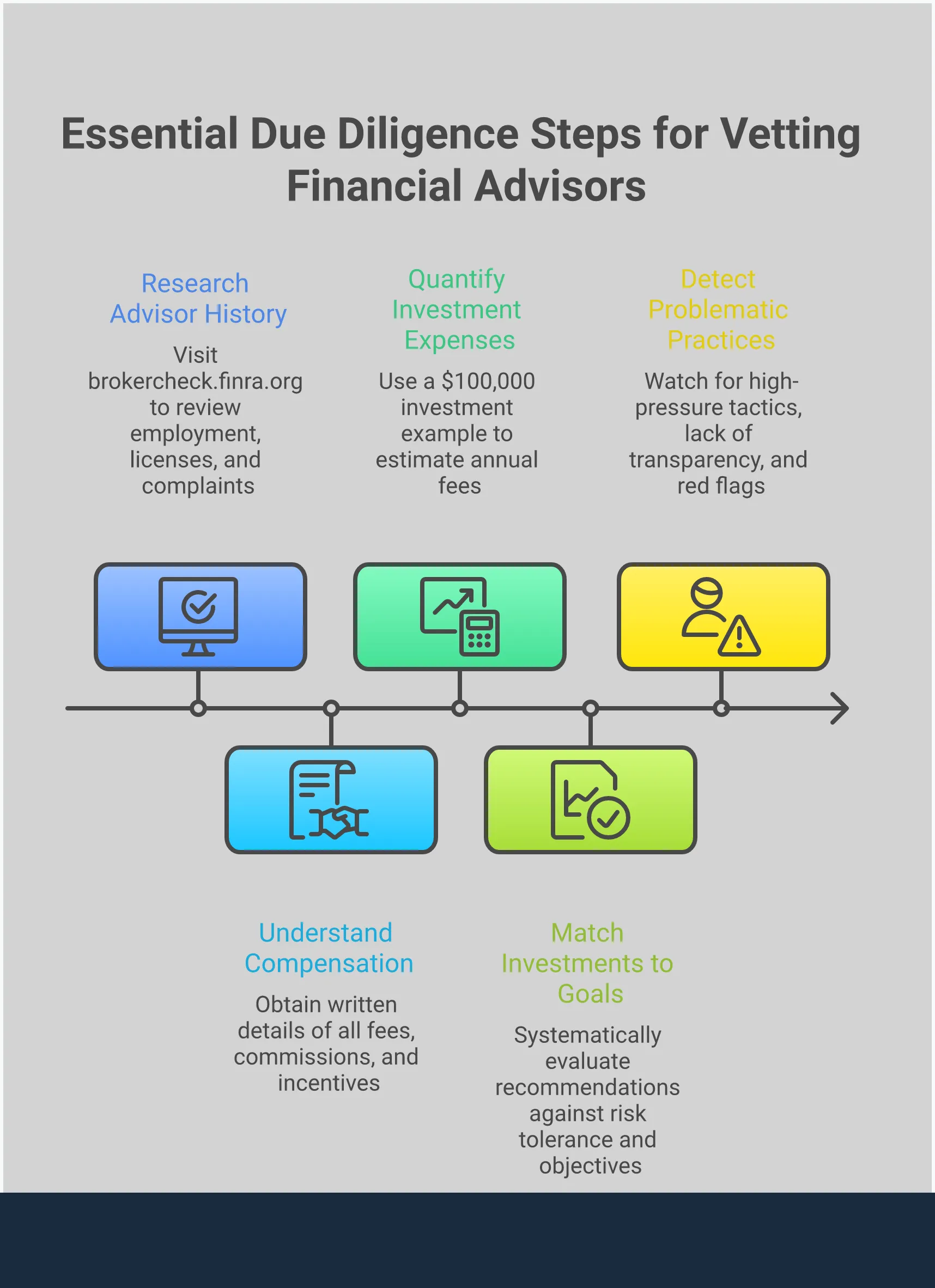
Before you commit to working with a financial advisor, it’s essential to check their compliance history. A major red flag is a record of rule-breaking or violations. You can easily find this information using FINRA’s BrokerCheck, a free tool that provides insight into an advisor’s professional background, credentials, and any disciplinary actions taken against them. A clean record isn’t a guarantee of future performance, but a history of complaints or regulatory issues is a serious warning sign. This simple background check is a critical first step in avoiding potential broker fraud and negligence and protecting your hard-earned money from unnecessary risk.
Key Questions to Ask Any Financial Advisor
A competent financial advisor should be focused on you. Their primary job in the initial meetings is to understand your unique financial situation, your long-term goals, and what matters most to you and your family. They should be listening far more than they are talking. Be wary of any advisor who immediately starts recommending specific products before they’ve asked detailed questions about your life. Ask them directly about their approach to client relationships and how they create a financial plan. Their answers will reveal whether they offer personalized, thoughtful guidance or a one-size-fits-all sales pitch that may lead to unsuitable investment recommendations.
Decoding Fee Structures and Conflicts of Interest
You have a right to know exactly how your financial advisor is paid. Understanding their compensation model is key to identifying potential conflicts of interest. Some advisors are “fee-only,” meaning they are paid directly by you and don’t earn commissions for selling certain products. Others are commission-based, which can create incentives to recommend investments that benefit them more than you. Ask for a clear, written breakdown of all fees. Also, remember that most financial advisors are not qualified to give legal or tax advice. If you suspect that hidden fees or conflicts of interest have already impacted your portfolio, it may be time to seek a professional legal opinion.
How to Contact Michael Perez
If you’re considering working with Michael Perez or need to get in touch with him, having the correct information is the first step. This is also your chance to prepare for an initial conversation and understand what to expect when discussing your financial future.
Contact Information and Office Location
You can find Michael Phillip Perez at his Truist office, located at 22550 Davis Dr, Sterling, VA 20164-4449. For direct inquiries or to schedule a meeting, you can call his office at 703-668-1587. If you prefer written communication, his email is Michael.P.Perez@Truist.com. Having these details makes it simple to take the first step in your due diligence process. Before you reach out, it’s a good idea to jot down your key financial questions and what you hope to achieve with an advisor. This preparation helps you make the most of your first interaction and start the evaluation process on your own terms.
What to Expect in an Initial Meeting
An initial meeting is your opportunity to interview a potential financial advisor. When you meet with Michael Perez, he will likely focus on understanding your current financial standing, long-term goals, and personal values. This conversation is designed to gather the information he needs to build a financial plan for you. It’s also the perfect time for you to assess his approach and communication style. Pay close attention to how he explains concepts and whether he prioritizes your comfort and understanding. This first discussion is critical for spotting any red flags related to potential broker fraud and negligence down the line.
Know Your Rights as an Investor
No matter who you choose to manage your money, it’s important to understand the systems in place to protect you and what to do if you suspect a problem. Your financial future is too important to leave to chance. Being an informed investor means knowing your rights and recognizing when you might need to advocate for yourself. This knowledge empowers you to act confidently if you ever feel that your trust has been misplaced or your funds have been mishandled. The financial industry is regulated to safeguard investors like you from unfair practices and various investment issues.
How FINRA Protects You
The Financial Industry Regulatory Authority (FINRA) is a key organization working on your behalf. As a private, self-regulatory body, FINRA’s main job is to make sure the brokerage industry operates fairly and honestly. It sets and enforces the rules that govern stockbrokers and their firms across the country. A big part of its mission is investor protection, and it has a track record of ordering firms to pay restitution to investors who have been harmed by broker fraud and negligence.
One of the most practical tools FINRA offers is BrokerCheck. This free online tool lets you research the professional history of brokers and brokerage firms. You can see their employment history, licenses, and—most importantly—any customer disputes or disciplinary actions. Using BrokerCheck before you invest is a simple, proactive step you can take to vet a potential advisor.
When to Seek Legal Help for Your Investments
While FINRA provides a strong regulatory framework, there are times when you may need direct legal support. If you believe your broker has acted negligently or fraudulently, causing you to lose money, it’s wise to speak with a lawyer who focuses on securities law. Signs of trouble can include unauthorized trades, excessive trading (churning), or being pushed into investments that don’t match your stated goals and risk tolerance.
An experienced attorney can review your situation, explain your options, and help you handle the process of recovering your losses, which often involves a process called securities arbitration. You don’t have to face a complex financial dispute alone. Understanding that you have the right to seek legal counsel is the first step toward holding a negligent broker accountable. If something feels wrong, contacting a legal professional for a consultation can provide clarity and a path forward.
Related Articles
- Arete Wealth Review – Services, Risks & Complaints
- UBS Broker Kieran Varga: A Profile for Investors | The Frankowski Firm
- Triad Advisors Faces $30 Million FINRA Complaint Over Alleged Supervisory Failures – The Frankowski Firm
- TRIAD ADVISORS FINED $150,000 FOR FAILING TO SUPERVISE SHORT-TERM TRADES OF CLASS A SHARE MUTUAL FUNDS – The Frankowski Firm
Frequently Asked Questions
What does “goals-based planning” really mean for my investments? Think of it this way: instead of just trying to beat the market, this approach ties every investment decision directly to a specific life goal you have, like buying a house in five years or retiring at 65. Your portfolio’s success is measured by how well it’s helping you reach those personal milestones, not just by its overall return. It makes your financial plan much more personal and purpose-driven.
Michael Perez has over 15 years of experience. Is that enough to ensure my money is safe? A long career is a positive sign, as it shows commitment and familiarity with different market cycles. However, experience alone doesn’t eliminate risk. It’s still crucial for you to stay engaged with your finances, ask questions, and make sure the advice you’re receiving truly fits your personal situation. The most important factor is an advisor’s commitment to your specific needs, regardless of how long they’ve been in the business.
How can I check a financial advisor’s background for myself? The best tool for this is FINRA’s BrokerCheck. It’s a free, public database where you can look up any advisor or firm. You can see their employment history, licenses, and, most importantly, any past customer complaints or disciplinary actions. It only takes a few minutes and is a simple but powerful step you can take to vet anyone you’re considering hiring to manage your money.
The article mentions “values-based” planning. How is that different from regular financial planning? Values-based planning adds another layer of personalization to your financial strategy. It goes beyond just your financial goals to incorporate your core beliefs and principles. For example, if environmental sustainability is important to you, your advisor would help you build a portfolio that reflects that. It’s about making sure your money is working not only toward your financial future but also in a way that aligns with what you stand for.
What should I do if I feel my advisor’s recommendations don’t match the goals we discussed? This is a significant red flag, and you should address it immediately. Start by asking your advisor to explain the reasoning behind their recommendations and how they connect to your stated objectives. If their explanation doesn’t make sense or you still feel uncomfortable, it may be time to get a second opinion. Your financial plan should always feel like it’s working for you, and you have the right to seek outside help if you suspect your advisor is not acting in your best interest.