
+1-888-741-7503
NO FEES UNTIL WE WIN
FREE CONSULTATION
NO FEES UNTIL WE WIN
FREE CONSULTATION
A portfolio worth $838 million is a staggering amount of money, representing the collective trust of countless clients. When a broker on a team managing that level of wealth faces serious allegations, the potential for harm is immense. This is the reality at the center of the case involving former Morgan Stanley advisor Roger Gallagher. The news that Broker Roger Gallagher was Barred by FINRA raises urgent questions for every single client whose assets were under his team’s management. Were their investments handled properly? Were they exposed to undisclosed risks? This situation underscores the vulnerability of investors, even at major firms, and highlights the critical need to question, verify, and seek help when misconduct is suspected.
When you trust a financial advisor with your money, you expect them to act with integrity. Unfortunately, that’s not always the case. The story of Roger Gallagher, a former Morgan Stanley broker, is a stark reminder of what can happen when that trust is broken. The Financial Industry Regulatory Authority (FINRA) took the decisive step of barring Gallagher from the industry. This action wasn’t just about the serious criminal charges he was facing; it was about his direct refusal to participate in the investigation that followed. This refusal to cooperate is a major violation of industry rules and often signals deeper problems. Understanding the details of his case can help you recognize the warning signs of broker fraud and negligence.
Roger Gallagher had a significant career at Morgan Stanley, where he worked from 2012 until early 2024. During his time there, he was part of a team that was responsible for managing a substantial portfolio, reportedly overseeing $838 million in client assets. His long tenure and the large amount of money under his team’s management placed him in a position of considerable trust and responsibility. For his clients, he was a seasoned professional at one of the most well-known firms in the industry, which makes the subsequent allegations and his ban from the industry even more concerning for the investors who relied on his guidance.
The situation took a serious turn when Gallagher faced felony charges. The accusations against him included two counts related to mail fraud and counterfeit money orders. One of the most striking allegations is that he used a fraudulent $200,000 check to purchase a Porsche SUV. These are not minor administrative errors; they are serious criminal charges that point to potential deception and illegal financial activities. It was these criminal proceedings that triggered FINRA’s own investigation into his conduct as a registered broker, as the regulator sought to determine if his actions violated industry rules and compromised investor safety.
The ultimate reason for Gallagher’s FINRA ban was his failure to cooperate with their investigation. When FINRA began looking into the criminal charges against him, they requested documents and testimony from Gallagher, which is standard procedure. However, he refused to provide the requested information and did not appear for on-the-record testimony. Under FINRA rules, all registered brokers are required to cooperate fully with such investigations. His refusal was a direct violation of industry regulations and resulted in him being permanently barred from working in the securities industry. This kind of stonewalling is a major red flag and often prevents regulators from uncovering the full scope of potential misconduct.
Roger Gallagher’s permanent ban from the securities industry wasn’t the result of a single misstep. Instead, it stemmed from a pattern of serious misconduct that violated industry rules and investor trust. FINRA, the regulatory body that oversees brokers, took action after uncovering several critical issues that pointed to a disregard for his professional obligations. These actions included a blatant refusal to cooperate with investigators, allegations of creating fraudulent documents, and a failure to disclose outside business activities to his employer, Morgan Stanley.
Each of these actions on its own is a major red flag. When combined, they paint a clear picture of a broker who was unwilling to operate within the established rules designed to protect investors. His termination from Morgan Stanley was the first domino to fall, but his subsequent refusal to participate in FINRA’s investigation sealed his fate. This lack of cooperation is something regulators take very seriously, as it obstructs their ability to uncover the full extent of potential harm to clients. It essentially shuts down the process of accountability. Understanding these specific failures is key to recognizing the warning signs of broker fraud and negligence. When a broker engages in such behavior, it not only jeopardizes their career but also puts their clients’ financial futures at risk.
One of the most direct reasons for Gallagher’s ban was his refusal to cooperate with FINRA’s investigation. When a regulator like FINRA requests information, brokers are required to comply. Gallagher, however, refused to provide documents and did not show up for on-the-record testimony. This is a violation of FINRA’s rules and is often seen as an admission of guilt. By obstructing the investigation, he made it impossible for regulators to fully assess his activities. This failure to cooperate is a fast track to being barred from the industry, as it undermines the entire system of oversight that protects the market and investors.
Beyond his refusal to cooperate, Roger Gallagher is also facing criminal charges for mail fraud, which include accusations of creating fake financial documents. This suggests an attempt to deliberately mislead and deceive. Fabricating statements is a severe form of misconduct because it distorts the truth about financial performance and can lure investors into situations based on false information. When a broker creates false documents, they are not just breaking industry rules—they are potentially committing a crime. This type of behavior strikes at the heart of an investor’s trust and can lead to significant financial losses for their clients.
Before FINRA barred him, Morgan Stanley had already fired Gallagher in September 2024. The reason cited was his involvement in “undisclosed outside financial arrangements.” Brokers are required to report all outside business activities to their firms to prevent conflicts of interest and ensure they aren’t selling unapproved or fraudulent products. By keeping these deals secret, Gallagher operated without the supervision of his firm, exposing his clients to potential risks that Morgan Stanley was unaware of. This lack of transparency is a serious breach of conduct and is often associated with other investment issues that can harm investors.
The recent actions against Roger Gallagher aren’t just headlines; they have real-world consequences for his career and, more importantly, for the clients who trusted him with their financial futures. When a broker is permanently barred from the industry, it can leave investors feeling confused and vulnerable. Understanding the specifics of his ban, his termination from a major firm like Morgan Stanley, and the questions surrounding the massive amount of client assets he managed is the first step toward figuring out where you stand. This situation highlights the critical importance of transparency and accountability in the financial industry and what you can do to protect your investments.
FINRA’s decision to bar Roger Gallagher is a definitive, career-ending action. A permanent ban means he can no longer work in any capacity for a FINRA-member brokerage firm. This wasn’t a light decision; it came after he refused to provide documents and appear for testimony during their investigation. This refusal to cooperate is a serious violation and often suggests an attempt to hide wrongdoing. For clients, this ban confirms that the industry’s self-regulatory body found his conduct so problematic that he could no longer be trusted to operate within its rules. It’s a clear signal that there were significant issues at play, raising serious questions about the integrity of his practices.
Before FINRA issued its permanent ban, Morgan Stanley had already fired Gallagher in September 2024. The firm cited his involvement in “undisclosed outside financial arrangements” as the reason for his termination. In plain terms, this means he was conducting business deals on the side without the firm’s knowledge or approval—a major breach of industry regulations. Brokerage firms have strict rules about outside business activities to prevent conflicts of interest and protect clients from unvetted, potentially fraudulent schemes. Morgan Stanley’s decision to fire him shows that his conduct raised internal red flags, indicating a pattern of behavior that put both the firm and its clients at risk of serious investment issues.
Roger Gallagher was part of a team at Morgan Stanley that managed an enormous portfolio—$838 million in client assets. This staggering number underscores the sheer scale of the potential impact on investors. If you were one of these clients, you are likely wondering what happens now. While your assets are still yours, the discovery of Gallagher’s misconduct casts a shadow of doubt over how they were managed. Were your funds involved in his undisclosed side deals? Were your investments suitable for your goals? These are urgent questions that need answers. It’s crucial for affected clients to review their accounts and determine if they have grounds to recover losses through securities arbitration.
If you’ve suffered financial losses because of a broker’s actions, it’s easy to feel overwhelmed and unsure of what to do next. The good news is that you have rights and clear pathways to seek recovery. Understanding your options is the first step toward holding responsible parties accountable and potentially reclaiming your hard-earned money. This process doesn’t have to be confusing, and there are established systems in place to help investors like you.
For many investors, the most direct path to resolving disputes is through securities arbitration. This process is often more efficient and less formal than a traditional court case. It allows you to present your case before a neutral arbitrator or panel that will decide the outcome. FINRA arbitration is a common method for investors to pursue the recovery of losses that result from a broker’s wrongful actions. It’s a structured process designed specifically for these types of disputes, giving you a dedicated forum to address your claims and work toward a resolution.
Protecting your investments starts with recognizing the warning signs of broker fraud and negligence. In Roger Gallagher’s case, a major red flag was his refusal to provide documents or testimony during an official investigation. Other common signs of misconduct include a broker pressuring you into making quick decisions, unusually frequent trading in your account (known as churning), or a lack of clear answers about fees and commissions. If something feels off or your broker is being evasive, it’s important to trust your instincts and look closer at your account activity.
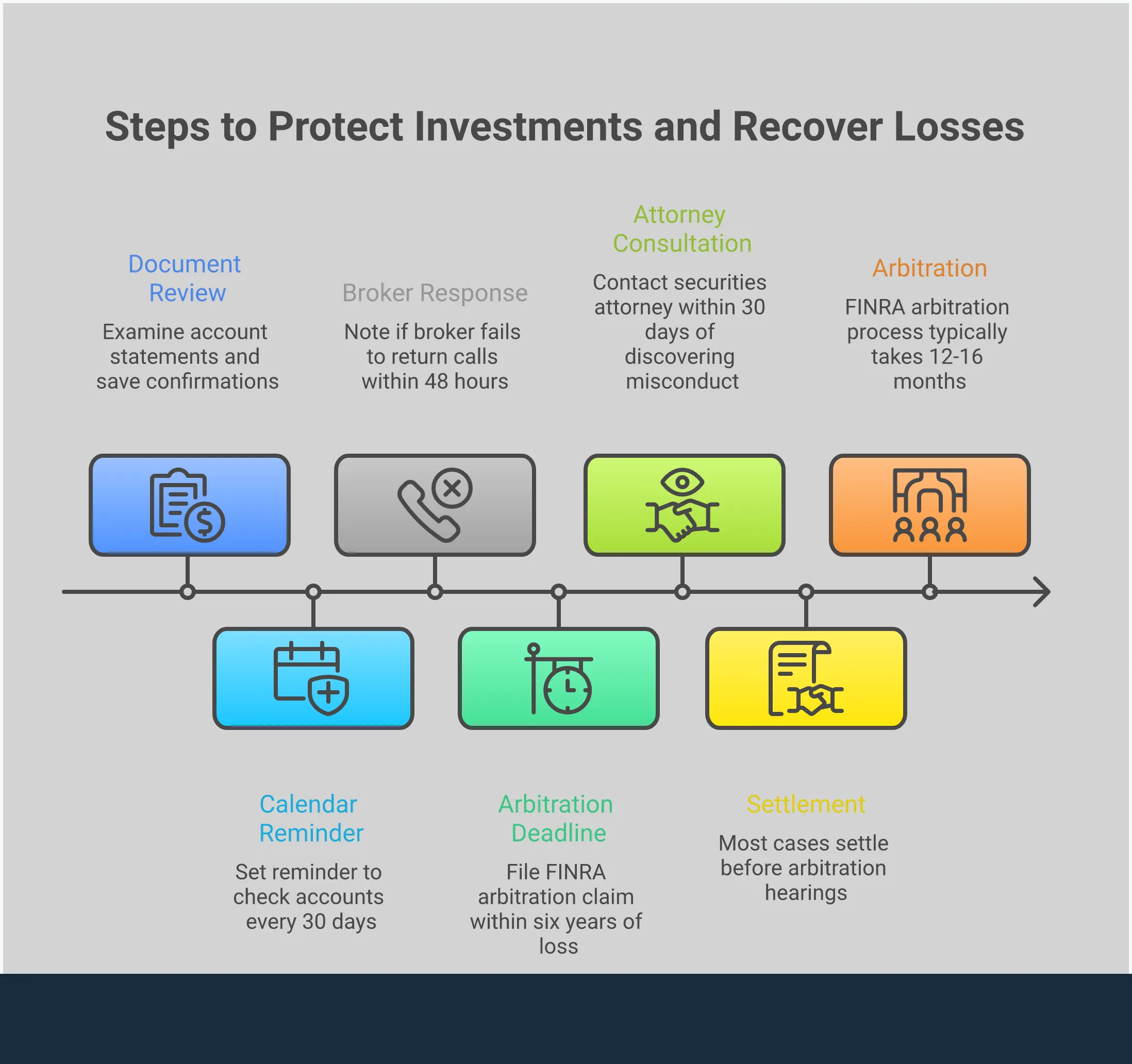
Trying to handle a complex investment dispute on your own can be challenging. Consulting with a securities attorney gives you a knowledgeable advocate who can explain your rights and guide you through the legal process. An experienced lawyer can review your case, help you understand the details of securities law, and determine the most effective course of action for your specific situation. Taking the step to get in touch with a legal professional can provide clarity and confidence as you decide how to move forward.
Cases like Roger Gallagher’s send ripples through the financial world, influencing how regulators operate and how firms approach their responsibilities. For investors, these outcomes are important because they set precedents for accountability and protection. This situation highlights a few key takeaways for the industry as a whole.
FINRA has made it abundantly clear that cooperation with its investigations is not optional. When a financial professional refuses to provide documents or testimony, it’s seen as a major violation, separate from any underlying accusations. This case reinforces that FINRA will act decisively to bar individuals who obstruct their inquiries, even if the original criminal charges are still pending. This strict stance is meant to preserve the integrity of the regulatory process. It ensures that claims of broker fraud and negligence can be fully investigated, which is a critical component of protecting investors from harm.
This isn’t an isolated incident. We are seeing a consistent pattern of stricter enforcement from FINRA, especially in cases involving serious allegations like criminal activity. Regulators are taking a hard line against advisors who fail to cooperate, signaling to the entire industry that accountability is paramount. This trend is a positive development for investors, as it shows that regulatory bodies are actively working to remove bad actors from the field. By holding individuals to a higher standard, FINRA helps address systemic investment issues and fosters a safer environment for everyone’s financial future.
Refusing to cooperate with a FINRA investigation carries severe and permanent consequences. For Roger Gallagher, the result was a lifetime ban from the securities industry. This isn’t a temporary suspension; it’s a definitive end to a career. The refusal to provide documents and testimony was the final straw that led to his bar. For investors, this outcome is significant. It not only provides a measure of justice but also serves as a powerful deterrent to others in the industry. When investors see that misconduct leads to real consequences, it can build confidence in the systems designed to protect them, including the securities arbitration process for recovering losses.
Why was Roger Gallagher barred by FINRA if the criminal charges against him are still pending? FINRA barred Roger Gallagher for a reason entirely separate from the criminal allegations. As a registered broker, he was required to cooperate with any investigation conducted by the industry regulator. When he refused to provide documents and testimony, he directly violated FINRA’s rules of conduct. This failure to cooperate is a serious offense on its own and gave FINRA grounds to permanently remove him from the industry, regardless of the outcome of his criminal case.
I was one of Gallagher’s clients. What is the first thing I should do? Your first step should be to carefully review all of your account statements and trade confirmations. Look for any investments you don’t recognize, transactions you didn’t authorize, or performance that doesn’t align with what you were told. Because he was involved in undisclosed outside business deals, it’s important to see if your money was moved into anything unusual. After you’ve gathered your documents, you should speak with a securities attorney who can help you understand your specific situation and what options you have.
What are “undisclosed outside financial arrangements” and why are they a problem? This term means a broker is involved in business activities or selling investment products that their firm doesn’t know about and hasn’t approved. This is a major problem because the firm provides supervision and performs due diligence to protect clients. When a broker operates outside of that system, they expose their clients to unvetted and potentially fraudulent investments without any oversight, creating significant risk.
How can I find out if my own financial advisor has a history of misconduct? A great resource for any investor is FINRA’s BrokerCheck tool. It’s a free, public database where you can look up the professional history of any broker or brokerage firm. The report will show you their employment history, licenses, and, most importantly, any customer complaints, regulatory actions, or disciplinary events on their record. It’s a simple way to get a clearer picture of who is managing your money.
If I decide to pursue a claim for my losses, will I have to go to court? It’s unlikely that you would have to go to a traditional court. Most disputes between investors and their brokerage firms are resolved through a process called securities arbitration. This is a formal but more streamlined process than a court trial, where your case is presented to a neutral arbitrator or a panel of arbitrators who will issue a final decision. It is the standard and required forum for resolving these types of claims.