
+1-888-741-7503
NO FEES UNTIL WE WIN
FREE CONSULTATION
NO FEES UNTIL WE WIN
FREE CONSULTATION
One of the biggest misconceptions for Americans living abroad is that they are at the mercy of their U.S. financial institutions. If you’ve run into trouble, like an improperly closed account or unsuitable investment advice, you might assume there’s little you can do from afar. This often leads to the question, “Do I need to return to the US to file a brokerage claim as an expat?” Believing you do is a myth that prevents many investors from seeking justice. The truth is, you have full access to the U.S. dispute resolution system. We’ll show you how it works and explain how you can file a claim effectively from anywhere in the world.
Living abroad as a U.S. citizen comes with a unique set of financial challenges, especially when it comes to managing your investments back home. If you’ve run into trouble with your U.S. brokerage account, you might be wondering what your options are. Filing a brokerage claim is a formal way to address these problems, but the process can feel intimidating from thousands of miles away. The good news is that your location doesn’t prevent you from seeking a resolution. Understanding what a claim involves and why you might need to file one is the first step toward protecting your financial future. It’s about holding firms accountable and ensuring your investments are handled correctly, no matter where you call home.
At its core, a brokerage claim is a formal request to resolve a dispute or seek compensation for problems related to your investment account. Think of it as raising your hand and saying, “Something isn’t right here, and we need to fix it.” This can cover a wide range of investment issues, from unauthorized transactions happening in your account to poor advice that led to significant losses. For an expat, a claim might also arise from a brokerage firm improperly freezing or closing your account without adequate notice. It’s not just about big, dramatic fraud cases; a claim can address any situation where you believe the firm failed in its duties to you as a client.
One of the most frequent and frustrating issues for U.S. expats is having their brokerage accounts suddenly restricted or closed. Many large U.S. financial institutions have become wary of the complex regulations tied to serving clients who live overseas. As a result, firms like Morgan Stanley, Merrill Lynch, and Wells Fargo have been known to terminate relationships with expat clients, often with little warning. This can leave you scrambling to manage your investments and can sometimes lead to forced sales of assets at inconvenient times. If an account closure was handled improperly or caused you financial harm, it could be grounds for a claim related to broker negligence.
Just because you live outside the United States doesn’t mean you give up your rights as an investor. As a U.S. citizen, you are still protected by U.S. securities laws and regulations. You have the right to expect your brokerage firm to manage your account responsibly and communicate with you clearly. If they fail to do so, you have the right to seek a resolution. This often involves a formal dispute resolution process like securities arbitration, which is designed to handle these types of conflicts. Your physical location shouldn’t be a barrier to justice. You can initiate and participate in these proceedings from abroad to hold your brokerage firm accountable for its actions.
Living abroad adds a layer of complexity to managing your U.S. investments, but it doesn’t prevent you from taking action if you suspect something is wrong. You can absolutely file a claim against a U.S.-based brokerage firm without returning to the States. The process requires careful organization and a clear understanding of the steps involved. By preparing correctly, you can manage your claim effectively from anywhere in the world. Think of it as a series of manageable tasks that, when tackled one by one, will move you closer to a resolution. Let’s walk through what you need to do to get started.
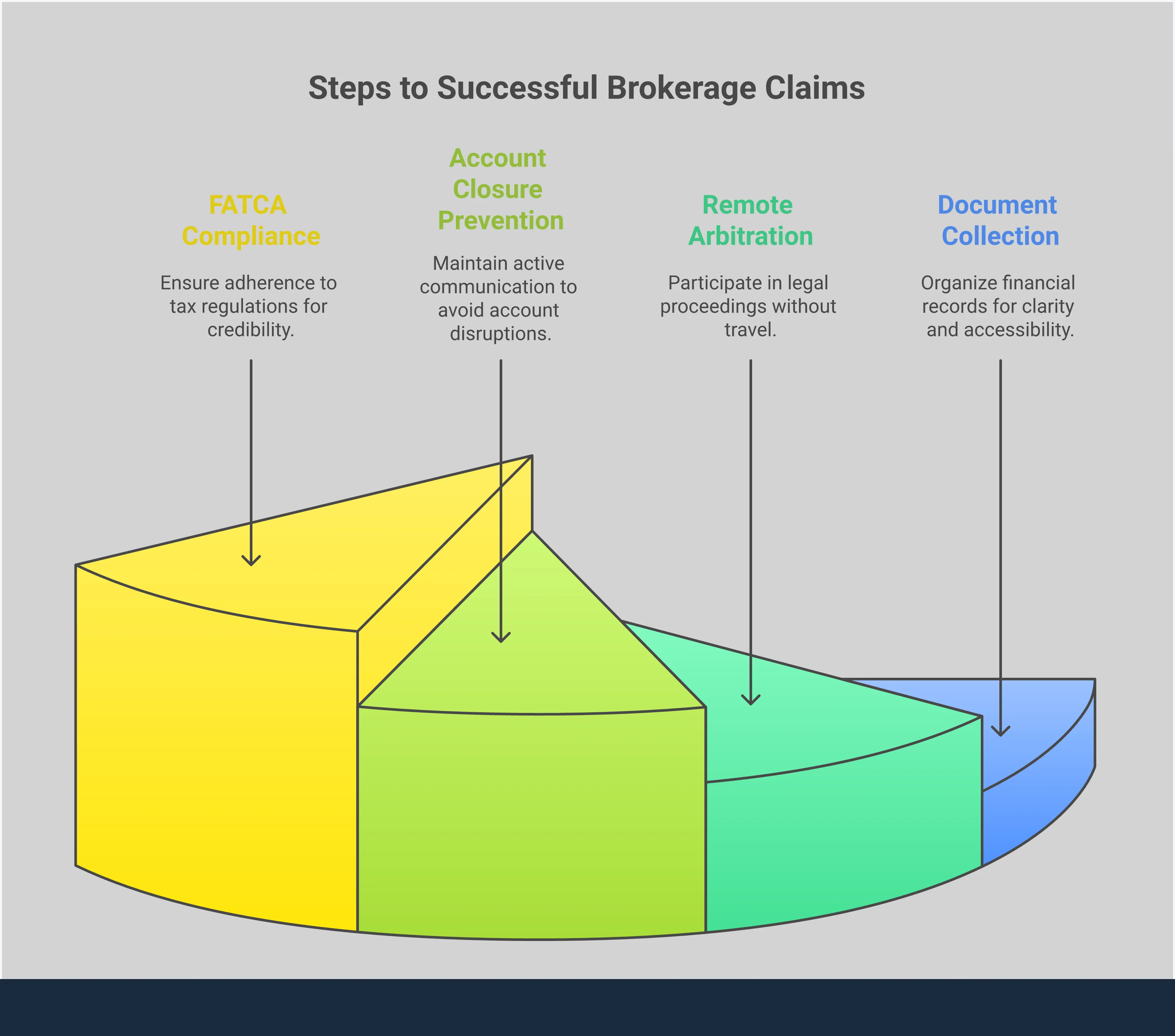
Your first step is to get organized. Having all your paperwork in order will make the entire process much smoother. Start by collecting all documents related to your investments and your financial standing as an expat. This includes your account statements, trade confirmations, and any correspondence you’ve had with your broker. You should also gather your tax documents, such as your previous year’s U.S. tax return, your foreign tax return, and income forms like the U.S. 1099s. Creating a clear, chronological file of these essential documents gives you a solid foundation for building your case and helps your legal team understand the full picture of your situation.
Communicating from a different time zone can be challenging, so it’s important to be proactive. Some U.S. banks and brokerage firms may restrict or even close accounts for Americans living abroad, often due to regulatory complexities. Let your financial institutions know how to best reach you and be persistent in maintaining contact. If you’re facing issues like broker fraud and negligence, clear communication records are vital. Keep a log of every call, email, and letter you send. This diligence ensures you have a paper trail and helps prevent your concerns from being overlooked simply because you’re not physically in the U.S.
If managing your financial affairs from afar feels overwhelming, consider appointing a power of attorney (POA). A POA is a legal document that gives a trusted person the authority to act on your behalf in financial or legal matters. This can be incredibly helpful when you’re in a different country. Your appointed representative can handle paperwork, communicate with your brokerage firm, and work with your attorney to ensure deadlines are met. Choosing someone with experience in international financial matters can help you sidestep common pitfalls that expats face. This step can provide peace of mind, knowing someone is managing the details while you focus on the bigger picture.
You can file your claim and participate in the entire dispute resolution process from your current country of residence. The Financial Industry Regulatory Authority (FINRA) has procedures in place for remote participation in securities arbitration. As an expat, you also need to be mindful of U.S. tax regulations like the Foreign Account Tax Compliance Act (FATCA). If you have significant foreign financial assets, you are required to report them on Form 8938. Staying compliant with these rules is crucial, as it demonstrates financial responsibility and prevents potential penalties that could complicate your claim.
One of the biggest misconceptions among U.S. expats is that they don’t need to file U.S. taxes if they don’t owe any. This is incorrect. It’s important to file every year to claim certain exclusions and credits that can affect your financial standing. When it comes to a brokerage claim, having a consistent and compliant tax history strengthens your position. It shows you are a responsible investor who has followed the rules. Don’t let common myths deter you from protecting your rights. Understanding your obligations as a U.S. citizen abroad is a key part of protecting your investments and holding negligent parties accountable.
Receiving a notice that your brokerage account is restricted or being closed can be incredibly stressful, especially when you’re managing your finances from another country. It often feels like you’ve been cut off without a clear reason. The good news is that you have options and can take steps to address the situation. Understanding why this happens and what to do next can help you regain control and protect your investments. It’s important to approach this methodically, starting with gathering information and then moving toward a solution.
It might feel personal, but brokerage firms often restrict or close accounts for Americans living abroad due to complex U.S. regulations. A primary driver is the Foreign Account Tax Compliance Act (FATCA), which imposes strict reporting requirements on foreign financial institutions that serve U.S. citizens. To avoid the heavy compliance burden, many U.S. brokerages have decided it’s simpler to limit services for non-U.S. residents. This can lead to sudden account freezes or closures, leaving you in a difficult position. This isn’t necessarily a sign of broker negligence, but it can certainly feel like it when your access is suddenly cut off.
Before you do anything else, take a deep breath and get organized. Your first step is to carefully review all communications from your brokerage firm. Look for the specific reason they’ve given for the restriction or closure. Is it related to your residency status, a lack of updated documentation, or something else? Understanding their reasoning is crucial for forming your response. Start a file to keep all correspondence, account statements, and any other relevant documents in one place. This will be your go-to resource as you work through the issue and explore your options for handling these investment issues.
Once you understand the stated reason for the account issue, it’s time to communicate with your brokerage. When you reach out, be clear, professional, and concise. Have your account information ready and stick to the facts. If the issue is related to your residency, you may need to provide documentation to clarify your status. Having your documents in order before you call or write can make the conversation much more productive. Keep a log of every interaction, including the date, the name of the person you spoke with, and a summary of the discussion. This record is vital if you need to escalate the matter later.
While you work to resolve the issue with your current brokerage, it’s wise to start exploring other options. You may need to find a new firm that is better equipped to handle accounts for U.S. expats. Some financial institutions specialize in serving Americans abroad and are familiar with the regulatory landscape. If you believe your account was closed unfairly or that your broker’s actions caused you financial harm, you may also want to consider legal guidance. An attorney can help you understand your rights and determine the best course of action. You can contact our firm to discuss the specifics of your situation.
If you have a dispute with your U.S. brokerage firm, you might feel stuck, especially when you’re living thousands of miles away. The good news is that the Financial Industry Regulatory Authority (FINRA) provides a dispute resolution process that is accessible to expats. You don’t have to let geography stop you from seeking a resolution for investment issues. The two main paths are arbitration and mediation, and both can often be handled without you ever setting foot back in the United States. Understanding how these processes work can give you the confidence to move forward and protect your financial interests from abroad.
Think of FINRA arbitration as a way to settle disputes with your brokerage firm outside of a traditional courtroom. Instead of a judge and jury, your case is heard by a neutral, third-party arbitrator (or a panel of them) who will make a final, binding decision. This process is typically faster, more streamlined, and less formal than going to court. For many investors dealing with broker fraud and negligence, arbitration is the required forum for resolving the conflict. It’s a structured way to present your evidence and arguments to someone who can issue a legally enforceable award to recover your losses.
Mediation is another route you can take, and it’s even less formal than arbitration. In mediation, a neutral professional—the mediator—doesn’t make a decision for you. Instead, their job is to help you and the brokerage firm communicate and negotiate a solution that you both can agree on. It’s a voluntary and confidential process focused on finding common ground. If you reach an agreement, you sign a settlement. If you don’t, you can still proceed with securities arbitration. Many people try mediation first because it can be a quicker and more collaborative way to resolve a dispute before moving to a more formal hearing.
One of the biggest concerns for expats is the logistics of participating in a legal proceeding. Thankfully, you don’t need to book a flight back to the U.S. FINRA has adapted to make the process accessible for everyone, regardless of location. They allow for remote participation in arbitration hearings, which means you can join through video conferencing or even by phone. This flexibility is a game-changer for expats, as it allows you to present your case, answer questions, and be fully involved in the hearing from the comfort of your home abroad. It removes a major barrier and ensures you have the same opportunity to be heard as a stateside investor.
The arbitration process follows a clear set of steps. It begins when you file a claim outlining your dispute. After that, both you and the brokerage firm will be involved in selecting a neutral arbitrator to hear the case. You’ll then go through a discovery phase, where you exchange relevant documents and information. The process leads up to a hearing—which can be remote—where both sides present their evidence and arguments. After the hearing, the arbitrator will review everything and issue a final, binding decision, known as an award. While it’s a structured process, having legal counsel can help you prepare your case effectively at every stage.
Living abroad adds another layer of complexity to managing your investments and handling disputes. When you’re dealing with a potential brokerage claim, understanding the legal and tax landscape is critical. The rules that apply to U.S.-based investors are just the starting point for expats. You also have to consider international agreements, foreign tax laws, and specific reporting requirements that can make or break your case. Getting guidance from professionals who are familiar with these cross-border issues can help you protect your rights and your finances.
As a U.S. citizen living abroad, you may have already discovered that some financial institutions view you as a high-risk client. It’s not uncommon for U.S. brokerage firms to restrict or even close the accounts of Americans living overseas due to complex regulations. If you find yourself in a dispute, this same bias can work against you. A lawyer who understands the nuances of broker fraud and negligence for expats can anticipate these challenges. They can help ensure your status as a non-U.S. resident isn’t used to dismiss your claim and can work to hold your brokerage accountable for its actions, no matter where you live.
You don’t need to fly back to the United States to get the legal help you need. Thanks to technology, working with a U.S.-based law firm is straightforward. Initial consultations and ongoing meetings can happen through secure video calls, phone calls, and email. Important documents can be shared safely through online portals, allowing you to collaborate with your legal team in real time. Partnering with a qualified legal advisor remotely helps you get clear, tailored guidance on your situation without the cost and hassle of international travel. You can start the conversation from the comfort of your home.
Your U.S. tax obligations don’t stop when you move abroad. As an American expatriate, you must report your worldwide income to the IRS. This includes any gains from your investments and, importantly, any money you might recover from a brokerage claim. A settlement or award could have significant tax consequences in both the U.S. and your country of residence. It’s wise to get advice on how to handle these funds to avoid unexpected tax bills or penalties. A financial professional can help you address these investment issues and plan accordingly.
The Foreign Account Tax Compliance Act (FATCA) is a key piece of legislation for expats. Under FATCA, you are required to report your foreign financial assets to the U.S. Treasury if they exceed certain thresholds. Failing to comply can result in steep penalties. When you’re pursuing a brokerage claim, it’s more important than ever to ensure your financial reporting is accurate and complete. Any discrepancies could complicate your case or draw unwanted attention from regulators. Staying on top of your FATCA obligations demonstrates that you are a responsible investor, which can strengthen your position. In some cases, reporting compliance failures can even lead to an SEC whistleblower action.
Managing your finances across international borders comes with a unique set of challenges, from reporting obligations to tax complexities. When you file a brokerage claim, these issues become even more pronounced. For example, how will a settlement be paid? What are the currency exchange implications? How do you handle the discovery process when documents and evidence are in different countries? These are questions a legal team experienced in securities arbitration for expats can help you answer. Understanding the cross-border rules is essential for a smooth and successful claims process.
Living abroad adds a layer of complexity to managing your finances, and it can feel isolating when you run into trouble with your investments. The good news is you aren’t alone, and there are plenty of resources available to help you protect your assets. Think of this as your go-to list for support, from legal guidance to regulatory bodies that have your back. Having these resources handy can make a world of difference when you need to take action.
When you suspect broker fraud or negligence, your first step should be to speak with a securities law attorney. A lawyer who understands the nuances of investment disputes can review your situation and explain your options. They can help you build a strong case, handle communication with the brokerage firm, and represent you in legal proceedings like arbitration. Finding a firm that offers remote consultations is key, allowing you to get the help you need no matter where you are in the world. This partnership can help you avoid other potential investment pitfalls and ensure your rights are protected.
Two major players in the U.S. investment world are the Securities and Exchange Commission (SEC) and the Financial Industry Regulatory Authority (FINRA). The SEC is a government agency that enforces federal securities laws, while FINRA is a self-regulatory organization that oversees brokerage firms. Both agencies work to protect investors and maintain fair markets. If you have a dispute with your broker, you’ll likely go through the FINRA arbitration process. Understanding the roles of these agencies helps you know who is setting and enforcing the rules that brokerage firms must follow, even for clients living abroad.
Beyond regulatory bodies, several non-profit organizations are dedicated to investor education and advocacy. Groups like the North American Securities Administrators Association (NASAA) provide resources to help investors make informed decisions and avoid fraud. While these groups don’t offer legal representation, they can be a valuable source of information and support. They can help you understand common investment issues and point you toward the right resources, complementing the work of your legal team. Think of them as a library of information you can access anytime.
As a U.S. expat, you’re already familiar with the mountain of paperwork that comes with filing taxes from abroad. You must report your worldwide income and foreign accounts to the IRS, which requires meticulous record-keeping. When filing a brokerage claim, that same level of organization is crucial. You’ll need to collect all financial records, account statements, and communications with your broker. While tax services can help with IRS forms, a securities attorney can guide you on the specific documentation needed to substantiate your claim and protect your rights.
Living abroad adds a layer of complexity to managing your U.S. investments. Many U.S. brokerage firms are hesitant to work with clients who reside overseas due to increased regulatory requirements. To get around this, some American expats maintain a U.S. mailing address to keep their accounts active. While this can be a practical short-term solution, it’s important to understand your brokerage’s specific policies for non-resident clients. Be proactive and transparent about your situation whenever possible. The last thing you want is to have your account suddenly frozen or closed, cutting you off from your funds while you’re thousands of miles away. Keeping communication lines open can help you stay ahead of any potential access issues.
Your U.S. citizenship follows you wherever you go, and so do your tax obligations. As a U.S. expat, you are required to report your worldwide income to the IRS. This includes any earnings from your investments, both in the U.S. and abroad. You’ll also need to report foreign financial accounts. This often involves filling out multiple, specific U.S. tax forms, such as the FBAR (Report of Foreign Bank and Financial Accounts). Staying on top of these requirements is non-negotiable. Failing to comply can lead to significant penalties and legal trouble, complicating your financial life and putting your investments at risk. Make sure you understand your reporting duties each year.
The best defense is a good offense. To protect your portfolio from abroad, start by reviewing your brokerage’s policies for expat clients. Some firms are simply not equipped to handle international clients and may restrict or close accounts with little warning. Consider consolidating your accounts with a firm that has clear, favorable policies for Americans living overseas. Regularly check your account statements for any unauthorized trades or unusual activity, as distance can make it easier to miss the warning signs of broker fraud and negligence. Staying organized and vigilant is your first line of defense against potential problems.
Managing investments from another country can be isolating, and it can be tough to know where to turn when something feels wrong. If you’re struggling to keep up with compliance or feel overwhelmed by the rules, working with a financial advisor who specializes in expat accounts can be a great help. However, if you suspect your broker has taken advantage of your distance, made unsuitable recommendations, or mismanaged your funds, it’s time to seek legal advice. An experienced securities attorney can help you understand your rights and explore your options for recovering losses. Don’t hesitate to contact our firm to discuss your situation and learn how we can assist you.
Why would my U.S. brokerage firm close my account just because I live abroad? It usually isn’t personal. U.S. firms face complex and costly regulations when serving clients overseas. To avoid the heavy compliance work and potential penalties associated with laws like the Foreign Account Tax Compliance Act (FATCA), many larger brokerages decide it’s simpler to stop working with non-resident clients. This can lead to sudden account closures, even if you’ve been a loyal client for years.
Do I really have to fly back to the U.S. to handle a claim against my broker? Absolutely not. This is a common worry, but the process is designed to be accessible from anywhere. Dispute resolution through FINRA, including arbitration hearings, can be conducted remotely using video conferencing. You can work with your legal team, share documents securely online, and participate in the entire process from your current home country.
What’s the first thing I should do if I suspect a problem with my account? Before you do anything else, start gathering your documents. Create a dedicated file for all your account statements, trade confirmations, and every email or letter you’ve exchanged with your broker. A clear paper trail is the foundation of any potential claim. Once you have your records organized, you’ll be in a much stronger position to discuss your concerns with a legal professional.
How is FINRA arbitration different from a regular lawsuit? Think of arbitration as a more streamlined and private way to resolve a dispute. Instead of a public courtroom with a judge and jury, your case is presented to a neutral arbitrator who makes a final, binding decision. The process is generally faster and less formal than a traditional lawsuit, which is why it’s the standard method for resolving conflicts in the securities industry.
Can I still file a claim if the losses in my account seem small? Yes, you can. There isn’t a minimum dollar amount required to file a claim for broker misconduct. What matters is whether the firm or broker failed in their duty to you, causing you financial harm. Sometimes, a small issue is a sign of a larger problem. It’s always worth discussing your situation with a securities attorney to understand your options, regardless of the amount lost.