When you first opened your brokerage account, you signed a stack of documents. Buried in that fine print was likely a mandatory arbitration clause. This means that if a dispute arises, you’ve already agreed not to sue your broker in court. Instead, you must use the Financial Industry Regulatory Authority (FINRA) arbitration system. While it’s designed to be more efficient than litigation, it is a formal legal proceeding with strict rules and procedures that can be difficult to follow. Knowing how this system works is essential for protecting your financial interests. A Houston FINRA arbitration lawyer can translate the complex rules into a clear strategy for your case.
Key Takeaways
- FINRA arbitration is your courtroom: Most investment disputes are resolved through this formal process, not a traditional court. The decisions are final and legally binding, so it is vital to build a thorough and compelling case from the very beginning.
- Level the playing field with legal counsel: Brokerage firms use skilled legal teams to defend their interests. Hiring a securities lawyer gives you a dedicated advocate who understands the system, can counter the opposition’s tactics, and can develop a strategy for your unique situation.
- Strict deadlines mean you cannot wait: FINRA has firm time limits for filing a claim, and missing them can prevent you from recovering your losses. If you suspect broker misconduct caused your financial harm, it is important to take action promptly to protect your rights.
What is FINRA Arbitration?
If you have a dispute with your brokerage firm, you likely won’t be heading to a traditional courtroom. Instead, you’ll probably go through a process called FINRA arbitration. The Financial Industry Regulatory Authority (FINRA) runs the largest dispute resolution forum in the securities industry. When you opened your investment account, you most likely signed an agreement to resolve any future conflicts through this specific process.
While it might sound intimidating, arbitration is simply a method for settling disputes outside of court. It’s designed to be a more efficient and straightforward alternative to litigation. Understanding how it works is the first step toward holding a negligent broker or firm accountable for your losses.
The Arbitration Process, Step by Step
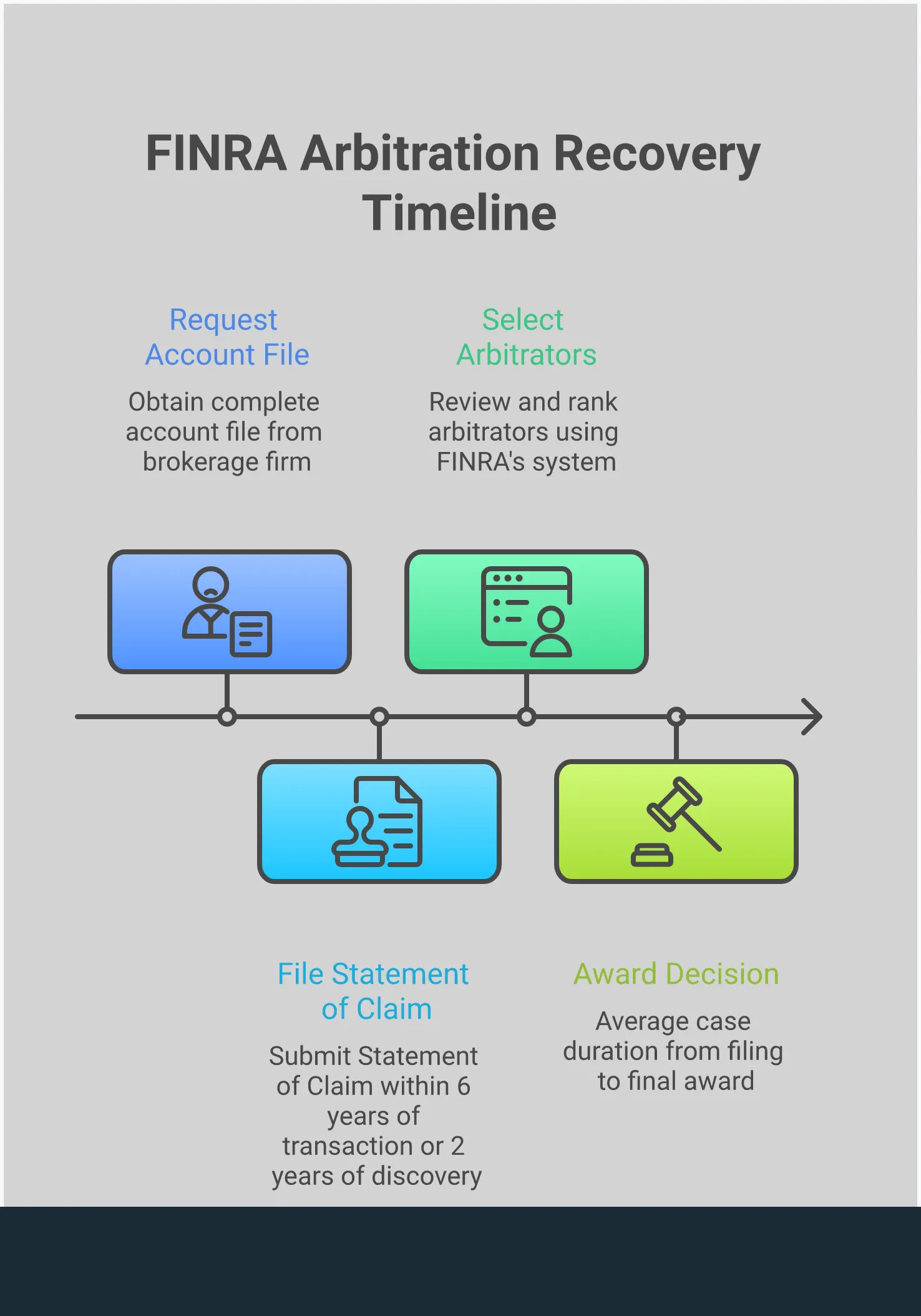
The FINRA arbitration process follows a structured path from start to finish. It begins when you, the claimant, file a Statement of Claim. This document details what happened and the compensation you’re seeking. The brokerage firm, or respondent, then has a period to file an answer. After that, both sides participate in selecting neutral arbitrators who will act as decision-makers.
Before the hearing, there is a discovery phase where you and the firm exchange relevant documents and information. The process culminates in a hearing where both sides present their cases. Afterward, the arbitrators deliberate and issue a final, binding decision. The entire securities arbitration process is governed by a specific set of rules and procedures.
How Arbitration Differs from a Court Trial
Arbitration isn’t the same as a courtroom trial, and it’s important to know the key differences. First, your case is decided by a panel of one or three arbitrators, not a judge and jury. These arbitrators often have experience in the financial industry. Second, the process is generally faster and less expensive than going to court, with more limited discovery and fewer formal motions.
Perhaps the most significant difference is that an arbitrator’s decision is almost always final and binding. Unlike a court verdict, there are very few grounds for an appeal. This finality makes it critical to build a strong case from the very beginning, especially when dealing with issues of broker fraud and negligence.
Why You Need a Houston FINRA Arbitration Lawyer
Going through the FINRA arbitration process on your own can feel overwhelming. You’re not just trying to recover your money; you’re up against a financial industry with complex rules and powerful players. Having a Houston FINRA arbitration lawyer by your side is about more than just legal representation. It’s about having an advocate who understands the system and is committed to fighting for your financial future. A dedicated attorney can handle the procedural details, build a strong case, and give you the confidence to see the process through.
Get Support from a Team with Local Knowledge
While FINRA operates nationally, arbitration hearings often happen locally. Hiring a Houston lawyer gives you an edge because they are familiar with the legal community and the specific arbitrators who may hear your case. They understand Texas laws that could influence your claim and have experience in local venues. This familiarity can make a real difference in how your case is presented. A local team also provides accessible support, ensuring you can easily contact them and stay connected throughout your case.
Level the Playing Field Against Big Brokerage Firms
When you file a claim against a brokerage firm, they will have a team of seasoned lawyers defending them. Facing them alone puts you at a significant disadvantage. These corporate legal teams are skilled at minimizing their company’s liability. A securities arbitration lawyer works to even the odds. They understand the tactics brokerage firms use and know how to counter them. By hiring your own legal counsel, you show the opposition that you are serious about holding them accountable and recovering your losses through securities arbitration.
Receive a Legal Strategy Tailored to Your Case
Your situation is unique, and your legal strategy should be too. A knowledgeable lawyer will review the details of your case, whether it involves unsuitable investment recommendations, excessive trading, or misrepresentation. They work to hold brokers accountable for wrongful conduct by building a claim tailored to your circumstances. This personalized approach is crucial for addressing different types of broker fraud and negligence, from unauthorized trading to hiding important information. Your attorney will focus on the specific actions that led to your losses to create a strong argument for recovery.
What Kinds of Cases Qualify for FINRA Arbitration?
If you’ve lost money because of your broker’s actions, you might be wondering what your options are. Many disputes between investors and their brokerage firms are handled through the Financial Industry Regulatory Authority (FINRA). The securities arbitration process was designed to resolve these issues outside of a traditional courtroom.
A wide range of situations can lead to a FINRA claim, but they usually have one thing in common: an investor was harmed because a financial professional failed to act in their best interest. This can happen through outright deception, simple carelessness, or recommendations that just weren’t right for you. Understanding the specific types of misconduct can help you recognize if your experience qualifies. From misrepresenting an investment’s potential to putting you into a product that doesn’t match your financial goals, these actions can form the basis of a strong arbitration case.
Investment Fraud and Misrepresentation
Investment fraud happens when a broker or advisor is dishonest to get you to invest. This isn’t just bad advice; it’s a deliberate act of deception. It can involve making false statements about an investment’s potential returns, downplaying its risks, or failing to disclose important information that would have changed your mind. For example, a broker might promise guaranteed high returns on a speculative venture or omit the fact that they receive a huge commission for selling a particular product. These acts of investment fraud can cause significant financial losses and are a common reason investors file for FINRA arbitration.
Broker Negligence and Misconduct
Sometimes, financial losses aren’t caused by intentional fraud but by a broker’s carelessness. Broker negligence occurs when a financial professional fails to uphold their duty to act with reasonable care, leading to harm. This can include a variety of missteps, such as failing to execute your trade orders correctly, not diversifying your portfolio properly, or making unauthorized trades in your account. Even if your broker didn’t mean to cause harm, you may still have a valid claim if their failure to follow industry standards and act in your best interest resulted in losses.
Unsuitable Investment Advice
Brokers have a responsibility to recommend investments that are a good fit for you. This is known as the suitability rule. An investment is considered “unsuitable” if it doesn’t align with your financial situation, investment goals, risk tolerance, and age. For instance, recommending a high-risk, speculative stock to a retiree who depends on a stable income would be a classic example of an unsuitable recommendation. Pursuing a claim based on unsuitable advice is a way to hold brokers accountable for putting their own interests, like earning a higher commission, ahead of your financial well-being.
Elder Financial Fraud
Older investors are often targeted for financial fraud and can be particularly vulnerable to high-pressure sales tactics and confusing investment products. Recognizing this, FINRA has created rules to help protect senior investors, including a process to expedite arbitration proceedings for older adults. This allows cases involving seniors to be resolved more quickly. If you or a loved one has been a victim of elder financial fraud, it’s important to know that the system has provisions in place to address these situations. Please don’t hesitate to contact us to discuss your situation in a confidential consultation.
How to Choose the Right FINRA Arbitration Lawyer in Houston
Finding the right legal partner is one of the most important steps you’ll take toward recovering your investment losses. You need someone who not only understands the law but also gets what you’re going through. The world of securities law is incredibly specific, so you’ll want a lawyer who is deeply familiar with the FINRA arbitration process. Think of it this way: you wouldn’t see a general doctor for heart surgery. The same principle applies here. Your financial future is on the line, so it’s worth taking the time to find a firm that aligns with your needs and has a strong background in this particular area of law. When you’re evaluating your options, consider their specific focus, their history with cases like yours, how they communicate, and their ability to handle complex financial disputes. These factors will help you choose an advocate who can effectively represent your interests and guide you through each step with confidence. A good fit means more than just legal knowledge; it means finding a team that is committed to your case and transparent about the process from start to finish.
Look for a Focus on Securities Law
When you start your search, look for a lawyer or firm that concentrates on securities law. A general practice attorney may be great at what they do, but they likely won’t have the specific knowledge needed for a FINRA arbitration case. Securities law has its own set of complex rules and procedures that are very different from a standard court case. A lawyer who focuses on this area will be familiar with the common tactics brokerage firms use and will understand the nuances of building a strong claim. They live and breathe securities arbitration, which gives you a significant advantage when you’re going up against a large financial institution.
Review Their Track Record and Client Testimonials
Experience in this field matters. Look for a firm with a proven history of handling cases similar to yours. While past results don’t guarantee future outcomes, a strong track record shows that the legal team knows how to build a compelling case and stand up for their clients. Don’t hesitate to look for client testimonials or case studies. Hearing from other investors who have been in your shoes can give you a better sense of the firm’s approach and how they treat their clients. A history of successfully managing claims involving broker fraud and negligence demonstrates a deep commitment to protecting investors.
Insist on Clear Communication and Transparent Fees
You should feel comfortable with your attorney and confident in their ability to communicate with you clearly. During your initial consultation, pay attention to how they explain the process and answer your questions. You also need to have a clear understanding of the fee structure. Many securities arbitration lawyers work on a contingency fee basis, which means you don’t pay any legal fees unless they successfully recover money for you. This arrangement can reduce your financial stress and shows that the firm is confident in its ability to handle your case. Be sure to contact the firm to ask about their fee policy upfront.
Find a Firm That Handles Complex Claims
Investment loss cases can be complicated. Your situation might involve anything from unsuitable investment recommendations and overconcentration in a single stock to unauthorized trading or churning (excessive trading to generate commissions). It’s important to find a firm that is prepared to handle a wide range of complex investment issues. A law firm that has seen it all will be better equipped to manage the unique details of your case, no matter how intricate they may be. This breadth of experience ensures they can develop a tailored strategy to address the specific wrongs you have suffered.
Common Myths About FINRA Arbitration
When you’re dealing with investment losses, the path to recovery can seem confusing. You may have heard about FINRA arbitration, but a lot of misinformation can make it hard to know what to expect. Let’s clear up a few common myths so you can understand your options and make decisions with confidence. Knowing the facts is the first step toward protecting your rights as an investor.
Myth: It’s Always Fast and Inexpensive
Many people believe arbitration is a quick, low-cost alternative to a lawsuit, but that’s not always the case. While it’s designed to be more streamlined than court, the process still takes time. On average, FINRA securities arbitration cases take around 18 months from the initial filing to a final decision. The process involves filing a claim, exchanging documents, and attending hearings. There are also filing fees and other costs to consider, so it’s important to have a realistic view of the investment in both time and money.
Myth: You Can’t Choose to Arbitrate
You might think that if your investment agreement doesn’t specifically mention arbitration, you’re out of luck. However, you usually have the right to demand it. Because most brokerage firms are FINRA members, they are required to participate in arbitration if a client files a claim. This rule gives you a powerful way to hold firms accountable for broker fraud and negligence. You don’t have to feel powerless; this option is available to most investors who have been wronged by a FINRA-member firm or broker.
Myth: You Can Appeal the Final Decision
Unlike a court verdict, a FINRA arbitration decision is usually final and binding. The grounds for an appeal are incredibly narrow, typically limited to proving corruption, fraud, or serious misconduct by the arbitrator. You generally can’t appeal just because you disagree with the outcome. This finality makes the initial hearing incredibly important. Since you likely won’t get a second chance, it’s critical to build a strong, thorough case from the beginning. Having a knowledgeable legal team on your side can make all the difference in presenting your case effectively.
Challenges You Might Face During FINRA Arbitration
While FINRA arbitration is designed to be a more direct path to resolving disputes than a traditional court case, it comes with its own set of hurdles. Knowing what to expect can make the process feel more manageable. You’re likely already dealing with the financial and emotional fallout of investment losses, and the arbitration process can add another layer of complexity. From intricate procedural rules to the pressure of building a solid case, several challenges can arise. Let’s walk through some of the most common ones so you can feel better prepared for the road ahead.
Understanding the Complex Rules and Procedures
FINRA operates under a unique set of rules that are very different from a typical courtroom. The process involves several key stages, including filing a claim, selecting arbitrators, exchanging evidence, and participating in a final hearing. Each step has strict guidelines that can be confusing for someone without a legal background. A procedural misstep could weaken your case, which is why understanding the framework of securities arbitration from the start is so important for a successful outcome.
Managing the Emotional Stress of a Dispute
Facing a financial dispute is incredibly stressful. You’ve placed your trust in a broker, and that trust has been broken, often with significant financial consequences. The arbitration process itself can add to this emotional strain as you recount difficult events and face the firm you believe wronged you. It’s completely normal to feel overwhelmed or anxious. Having a dedicated legal team on your side can help carry the weight of the legal battle, allowing you to focus on your own well-being while they handle the complexities of your case.
Gathering All the Necessary Evidence
To build a strong claim, you need solid evidence. This means collecting all relevant documents, such as account statements, trade confirmations, emails, and any notes from conversations with your broker. The goal is to create a clear timeline and demonstrate how the broker fraud and negligence occurred. It can be challenging to know what documents are most important or how to obtain them. An attorney knows what evidence is needed to prove misconduct and can work to gather all the necessary information to support your claim.
Meeting Strict Deadlines and Requirements
The FINRA arbitration process operates on a strict timeline. From the initial filing to responding to motions and submitting evidence, there are numerous deadlines that must be met. Missing one can have serious consequences for your case, and in some instances, could even lead to its dismissal. The entire process can take around 18 months, and keeping track of every date can be a significant burden. A legal team is essential for managing the calendar and ensuring every document is filed correctly and on time. If you’re concerned about deadlines, it’s always a good idea to contact a firm to discuss your situation.
What Are the Possible Outcomes of FINRA Arbitration?
When you enter into FINRA arbitration, you’re likely wondering what you can realistically expect at the end of the process. While every case is unique, the proceedings are designed to lead to a clear resolution. The outcomes generally fall into a few key categories, from recovering your investment losses to receiving a final, binding decision that provides closure. Understanding these potential results from the start can help you prepare for the path ahead and set clear goals for your case.
Recovering Your Financial Losses
The most common goal for investors in arbitration is to recover the money they lost due to misconduct. A successful claim can result in a monetary award that compensates you for financial damages. This process is often a more direct and efficient way to resolve disputes compared to a lengthy court battle. If you believe your portfolio has suffered because of broker fraud and negligence, arbitration provides a formal venue to hold the responsible parties accountable. The arbitrators will review the evidence and, if they rule in your favor, can order the firm to return your funds.
Understanding the Binding Decision
It’s important to know that a FINRA arbitration decision is legally binding and final. Unlike a court trial, the options for an appeal are extremely limited and are only granted in rare circumstances, such as clear evidence of arbitrator misconduct. This finality means you can’t simply try again if you’re unhappy with the outcome. It underscores the need to build the strongest possible case from the very beginning. Because the decision carries so much weight, having a well-prepared strategy for the securities arbitration process is absolutely essential to achieving a favorable result.
How a Lawyer Can Affect the Outcome
Your chances of a positive outcome are significantly influenced by the quality of your legal representation. Brokerage firms come to arbitration with skilled, expensive legal teams dedicated to defending their interests. An attorney who focuses on securities law can level the playing field by building a compelling case on your behalf. They will gather evidence, handle complex procedures, and present your arguments clearly and persuasively. Having a dedicated legal advocate in your corner ensures your story is heard and your rights are protected. If you’re ready to discuss your case, you can contact us for a confidential consultation.
How Much Does FINRA Arbitration Cost?
When you’ve already lost money due to investment fraud or negligence, the thought of spending more on legal action can be daunting. It’s completely understandable to be concerned about the costs of FINRA arbitration. The good news is that the process is designed to be more cost-effective than a traditional court case, and there are fee structures that make legal help accessible.
The total cost depends on a few factors, including the size of your claim and how you choose to structure your legal fees. Let’s break down the primary expenses you can expect: the fees charged by FINRA itself and the cost of hiring an attorney to represent you. Understanding these components will give you a clearer picture of the financial side of seeking justice for your losses. Knowing what to expect financially can remove a major source of stress and empower you to move forward with confidence.
A Breakdown of Filing and Admin Fees
When you initiate a case, you must pay certain fees directly to FINRA. The main one is the initial filing fee, which is calculated based on the amount of money you are trying to recover. According to FINRA’s fee schedule, these fees are tiered. For smaller claims up to $1,000, the fee is just $50. For larger, more complex cases exceeding $5 million, the filing fee is $2,250.
Other administrative costs may apply, such as a Member Process Fee. It’s also worth noting that if your case is settled or withdrawn more than 10 days before a hearing, FINRA may issue a partial refund of your filing fee. This structure helps keep the initial costs of starting the arbitration process manageable for investors.
How Contingency Fee Arrangements Work
Many investors who have suffered losses worry about paying for a lawyer upfront. This is where a contingency fee arrangement can be a huge help. Simply put, this means you don’t pay any attorney’s fees unless you win your case. If your case is successful and you recover funds, your lawyer receives a pre-agreed-upon percentage of that award.
This approach aligns your attorney’s interests with yours, as they are motivated to secure the best possible outcome for you. It removes the financial barrier to pursuing a claim related to broker fraud and negligence, allowing you to seek justice without taking on more financial risk. Be sure to discuss the specific percentage and any other potential costs with your attorney before signing an agreement.
Is Hiring a Lawyer Worth the Investment?
Hiring an attorney for your FINRA arbitration case is a significant decision, but it can make a substantial difference in your outcome. The arbitration process has its own set of complex rules and procedures, and a lawyer who specializes in securities law can guide you through every step. They know how to gather evidence, build a strong argument, and counter the strategies used by large brokerage firms.
While there is a cost, an experienced attorney increases your chances of a favorable result. In certain situations, you may even be able to recover your attorneys’ fees as part of the final award. Ultimately, having a dedicated legal advocate on your side helps level the playing field and gives you the support you need. If you’re unsure, you can always contact us for a consultation to discuss your specific situation.
When Is the Right Time to Consider FINRA Arbitration?
Deciding to take legal action after losing money on an investment can feel overwhelming. You might wonder if you’re overreacting or if it’s even worth the effort. The truth is, timing is a critical factor. Waiting too long can close the door on your opportunity to recover losses, while acting too quickly without a clear strategy can be just as risky. The right time to consider FINRA arbitration is when you first suspect that your financial losses are the result of your broker’s misconduct or bad advice, not just market fluctuations.
Understanding when to move forward involves a few key steps. You need to be aware of the strict deadlines for filing a claim, have a realistic sense of whether your situation constitutes a valid case, and fully grasp your rights as an investor. This isn’t a journey you have to take alone. A clear-eyed assessment of these factors will help you make an informed decision about protecting your financial future. Let’s walk through what you need to know to determine if now is the right time for you to act.
Know the Deadlines and Time Limits
One of the most important factors in pursuing a claim is the clock. FINRA has strict eligibility rules and statutes of limitation that dictate how long you have to file for arbitration. If you miss these deadlines, you could lose your right to recover your money, regardless of how strong your case is. That’s why it’s so important to act as soon as you suspect something is wrong with your accounts. The process itself takes time; on average, a FINRA arbitration case can take about 18 months from the initial filing to a final decision. Getting started sooner rather than later ensures you don’t run out of time. An attorney can help you understand the specific time limits that apply to your situation and make sure all paperwork is filed correctly and on schedule.
Determine if You Have a Strong Case
Not all investment losses can be recovered. Markets go up and down, and some risk is inherent in investing. A strong case for arbitration usually involves more than just losing money; it centers on broker fraud and negligence. Common grounds for a successful claim include situations where your broker recommended unsuitable investments for your age and risk tolerance, overconcentrated your portfolio in a single risky asset, made trades without your permission, or churned your account with excessive trading just to generate commissions. If your broker lied to you or hid important information about an investment, that could also be a reason to file. Reviewing your situation with a legal professional can help you determine if you have a valid claim.
Understand Your Rights as an Investor
When you opened your brokerage account, you likely signed an agreement that included a clause requiring you to resolve any disputes through arbitration instead of court. Most disagreements with stockbrokers are handled through this securities arbitration process, which is managed by FINRA. While arbitration is often faster and more cost-effective than a traditional lawsuit, it’s a formal legal proceeding with its own set of rules. It’s also important to know that arbitration decisions are typically final and binding, with very limited options for appeal. Because the stakes are so high, having a lawyer who understands the system on your side is essential to protect your rights and present your case effectively.
How to Prepare for Your FINRA Arbitration Case
Heading into a legal process can feel overwhelming, but being prepared can make a significant difference in your case. Taking a proactive role helps your legal team build the strongest argument on your behalf and gives you a greater sense of control over the situation. The key is to be organized, communicative, and informed about what lies ahead. By focusing on these three areas, you can set the stage for a smoother process and work effectively toward recovering your losses.
Gather Your Documents and Evidence
The foundation of any strong securities arbitration claim is solid evidence. Your first step should be to collect every document related to your investments and your interactions with your broker. This includes account statements, trade confirmations, new account forms, and any marketing materials or prospectuses you received. Don’t forget to gather all correspondence, such as emails, text messages, and even handwritten notes from phone calls. It’s better to have too much information than not enough. Organize these documents chronologically to create a clear timeline of events. This preparation helps your attorney understand the full scope of your case and identify the key facts needed to prove misconduct.
Work Effectively with Your Attorney
Think of your relationship with your attorney as a partnership. While they handle the legal complexities, your input and cooperation are essential. Be completely open and honest about every detail, even those you think might not be important. Your attorney needs the full picture to develop an effective strategy and anticipate the other side’s arguments. Respond to their requests for information or documents as promptly as you can, as deadlines in these cases are strict. Don’t hesitate to ask questions if you’re unsure about any part of the process. Clear and consistent communication is the best way to ensure you and your legal team are always on the same page when addressing broker fraud and negligence.
Know What to Expect from the Process
Understanding the road ahead can help manage the stress of a dispute. FINRA arbitration is typically faster than a court trial, but it’s not an overnight process. On average, a case takes about 18 months from the initial filing to a final decision. The main stages include filing a Statement of Claim, selecting a panel of arbitrators, exchanging documents and evidence with the opposing side (discovery), and attending a final hearing where both sides present their case. Unlike a court verdict, the arbitrators’ decision is final and binding, with very limited grounds for appeal. Knowing these steps helps you set realistic expectations for the timeline and outcome of your case.
Related Articles
- Find San Francisco FINRA Arbitration Lawyers Guide
- FINRA Arbitration Process Explained | Frankowski Firm
- Selecting a FINRA Arbitration Lawyer: What Investors Need
- FINRA Warns Against Using Non-Lawyer Reps in Arbitration
Frequently Asked Questions
What’s the very first step I should take if I think I have a case? Your first step is to gather any documents you have related to your investment account. This includes things like account statements, trade confirmations, and any emails or notes from conversations with your broker. Once you have some of this information together, the next move is to speak with a lawyer who focuses on securities law. A confidential consultation will help you understand if your situation has the grounds for a solid claim.
Can I handle the FINRA arbitration process without a lawyer? While you technically can represent yourself, it puts you at a serious disadvantage. Brokerage firms will always have experienced legal teams defending them, and they are very familiar with the complex rules of arbitration. Having your own attorney ensures you have someone who understands the system, can build a strong case, and can stand up to the firm’s lawyers on your behalf.
What if I don’t have a lot of written proof of my broker’s bad advice? This is a very common concern, as many important conversations with brokers happen over the phone. Don’t let a lack of emails or notes stop you from seeking help. A knowledgeable attorney knows how to build a case using other forms of evidence, such as your account statements, your financial profile, and the patterns of trading in your account. They can often establish a pattern of misconduct even without a perfect paper trail.
Will I have to face my broker in person at a hearing? Yes, it is very likely that you will have to attend a final hearing and provide testimony. This can be an intimidating thought, but your lawyer will be right there with you. They will prepare you for the questions you might be asked and will handle the legal arguments. Your role is simply to tell your story clearly and honestly, and having a supportive legal team makes that process much more manageable.
How much of my lost money can I realistically expect to recover? The amount you can recover depends entirely on the specific facts of your case, including the strength of your evidence and the nature of the misconduct. The goal of arbitration is to be compensated for the financial damages you suffered. While there are no guarantees, a successful claim can result in an award that covers your investment losses. An attorney can give you a more realistic assessment after reviewing the details of your situation.