Sometimes, the most dangerous broker misconduct isn’t a single, dramatic event but a series of small actions that slowly drain your account. This is exactly what happened in the case that led to the news that broker Justin Deiter was suspended by FINRA. His strategy involved churning—making a high volume of trades not to benefit his clients, but to generate commissions for himself. These actions created excessive costs that made it nearly impossible for his clients to profit. Learning to spot these subtle but damaging red flags is your best defense. We’ll show you what to look for in your own statements.
Key Takeaways
- Question Suspicious Account Activity: Pay close attention to frequent trades that don’t align with your long-term strategy or investment recommendations that seem too risky for your goals. These are major red flags that a broker may be prioritizing their commissions over your financial interests.
- Proactively Vet and Monitor Your Broker: Use free tools like FINRA’s BrokerCheck to research a financial professional’s history before and during your relationship. Make it a habit to carefully review your account statements to spot unauthorized fees or transactions early.
- Understand the Path to Financial Recovery: If you suspect misconduct, your first step is to gather all your records. While reporting to regulators is important, securities arbitration is the primary legal process for investors seeking to recover losses caused by broker fraud or negligence.
What Led to Justin Deiter’s FINRA Suspension?
When you trust a financial professional with your money, you expect them to act with your best interests at heart. Unfortunately, that doesn’t always happen. The case of former broker Justin Deiter is a clear example of what can go wrong when a broker prioritizes their own gains over their clients’ financial well-being. The Financial Industry Regulatory Authority (FINRA) suspended Deiter after finding he engaged in a pattern of excessive and unsuitable trading in his clients’ accounts.
This wasn’t just a simple mistake or a bad market call; it was a series of actions that directly violated industry rules and harmed investors. Understanding the specifics of Deiter’s case can help you recognize similar red flags in your own accounts. His suspension stemmed from three key issues: an excessive number of trades, a blatant disregard for his clients’ best interests, and the direct financial harm his recommendations caused. Let’s break down exactly what happened and what it means for you as an investor.
How Deiter Traded Excessively
Excessive trading, often called “churning,” is a serious form of broker fraud and negligence. It happens when a broker makes a high volume of trades in a client’s account mainly to generate commissions for themselves, not to benefit the client. In Justin Deiter’s case, his trading activity was so frequent that it resulted in extremely high turnover rates and cost-to-equity ratios.
Think of it this way: the cost-to-equity ratio shows how much your account needs to grow just to cover the trading fees and commissions. Deiter’s trading was so expensive that it made it nearly impossible for his clients to see any real profit. This kind of activity is a major warning sign that a broker may be using your account for their own financial gain.
Ignoring Regulation Best Interest
Brokers are required to follow a rule known as Regulation Best Interest (Reg BI), which legally obligates them to place their clients’ financial interests ahead of their own. Justin Deiter’s actions showed a clear disregard for this fundamental rule. The excessive trades he recommended generated significant commissions for him while causing his clients to pay steep costs, directly contradicting his duty to them.
FINRA determined that this pattern of self-serving trades was a direct violation of his responsibilities. When a broker recommends a strategy that benefits them far more than the investor, they are failing to meet their professional and legal obligations. This breach of trust is one of the primary reasons FINRA took disciplinary action and suspended Deiter for six months, sending a message that such investment issues will not be tolerated.
How His Actions Harmed Clients
The real-world consequences of Deiter’s misconduct fell squarely on his clients. He recommended an aggressive, high-frequency trading strategy to multiple customers, including an 89-year-old retiree. These recommendations were completely unsuitable for their financial situations, goals, and risk tolerance. An elderly investor living on a fixed income, for example, typically needs a conservative strategy focused on preserving capital, not one that involves high-risk, costly trading.
The financial harm was significant. The constant trading generated substantial fees that eroded the value of their accounts, making it incredibly difficult to achieve any positive returns. When a broker’s recommendations don’t align with your personal financial profile, it’s not just bad advice—it’s a violation of industry standards designed to protect you. If you believe you’ve been a victim of similar misconduct, you have options to seek recovery.
How to Identify Broker Misconduct
It can be difficult to know if your broker is acting in your best interest or their own. While you trust them to manage your investments, it’s important to recognize the signs of potential misconduct. Financial advisors have a responsibility to make suitable recommendations, but sometimes, the pursuit of commissions can lead them astray. Understanding a few key red flags can help you protect your portfolio and financial future. Being an informed investor means actively monitoring your accounts and questioning activity that doesn’t align with your goals.
Spot the Warning Signs of Churning
Churning is when a broker engages in excessive trading in your account primarily to generate commissions for themselves. These trades often provide no real benefit to you and can erode your returns through constant fees. A key sign is a high volume of buying and selling that doesn’t match your stated investment strategy. If you have a conservative, long-term plan but see frequent, unexplained transactions on your statements, it’s a major red flag. This type of broker fraud directly harms your financial interests for the broker’s personal gain. Always review your trade confirmations and monthly statements for unusual activity.
Question Unsuitable Recommendations
Your broker is required to recommend investments that are suitable for your specific financial situation, risk tolerance, and objectives. If an advisor pushes you toward high-risk products that make you uncomfortable or don’t fit your profile, you should be concerned. For example, placing a retiree with a low risk tolerance into speculative, aggressive investments is a classic example of an unsuitable recommendation. It’s your money, and you have the right to understand every investment and ask questions. Don’t feel pressured to agree to a strategy that doesn’t feel right or seems to involve unsuitable investment practices.
Check Your Turnover and Cost-to-Equity Ratios
Two important numbers can help you spot excessive trading: the turnover rate and the cost-to-equity ratio. The turnover rate shows how often your portfolio’s assets are being replaced. A rate of 6 or higher is generally considered a red flag that churning may be occurring. The cost-to-equity ratio measures how much your account has to appreciate just to cover commissions and fees. If this ratio is above 20%, it suggests the trading costs are excessive. You can ask your broker for these figures or calculate them from your statements. These metrics provide concrete evidence if a broker’s activity is more beneficial to them than to you.
Protecting Elderly and Vulnerable Investors
Older investors are often prime targets for broker misconduct. They may have accumulated significant savings and can be more susceptible to aggressive or confusing sales tactics. It is crucial for family members and caregivers to stay involved and watch for warning signs. Look for sudden changes in account activity, unexplained withdrawals, or investments that seem overly complex or risky for their situation. Protecting elderly clients from unsuitable recommendations and exploitation is a critical responsibility. If you suspect an older loved one is a victim of financial wrongdoing, it’s important to take action quickly to prevent further losses.
How to Research and Monitor Your Broker
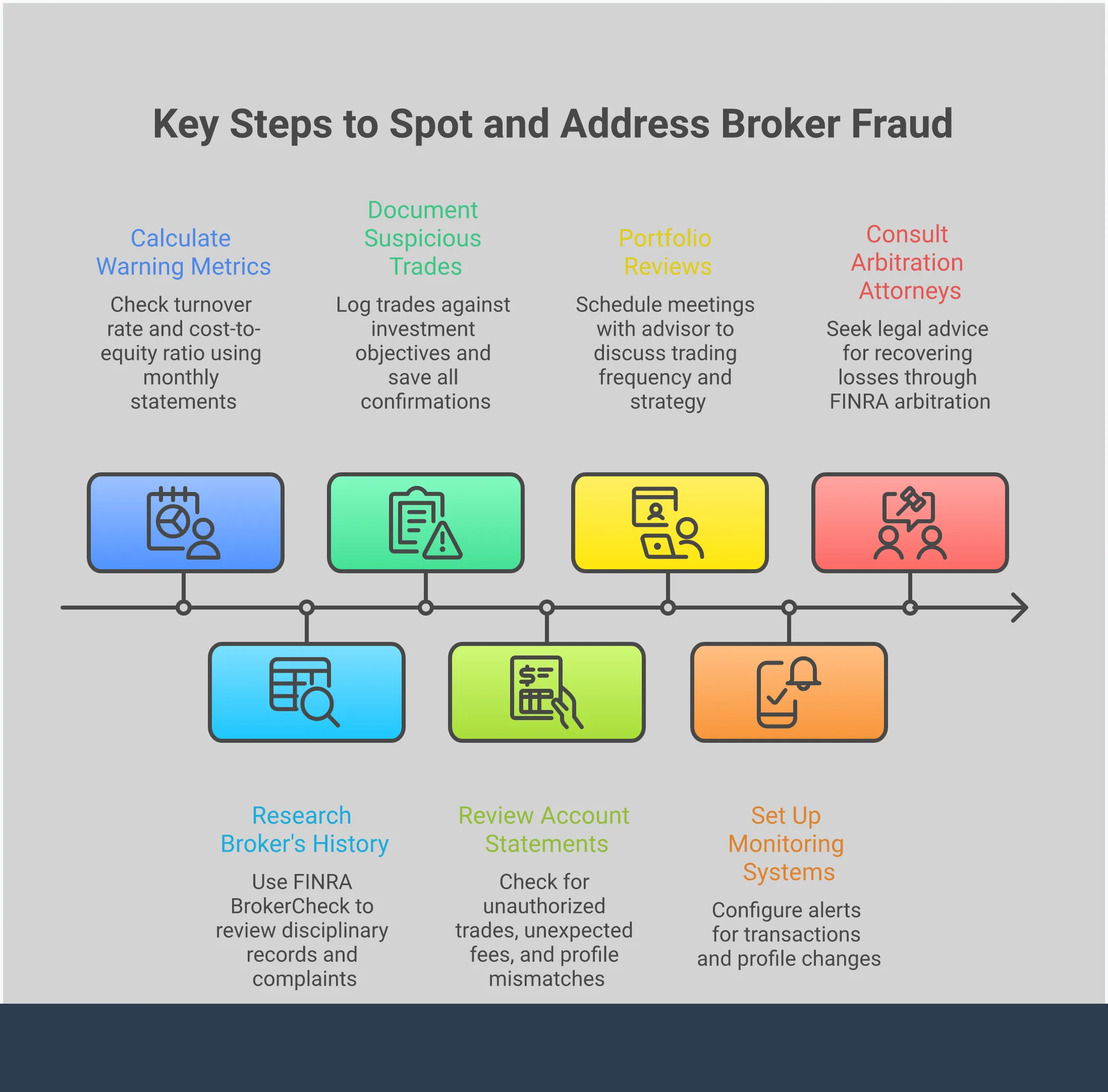
Staying informed about your broker’s history and actively monitoring your accounts are crucial steps in protecting your investments. It’s not about being distrustful; it’s about being a smart, engaged investor. Taking a hands-on approach helps you spot potential issues early and ensures your financial future is in safe hands. Fortunately, there are free tools and simple habits you can adopt to keep a close watch on your portfolio and the professional managing it.
Use the FINRA BrokerCheck Database
One of the most straightforward ways to vet a financial professional is by using FINRA’s BrokerCheck tool. This free resource gives you a detailed look into a broker’s background. BrokerCheck provides important details like their past jobs, special training they’ve completed, official permissions they have, and if they’ve ever broken any rules. A clean record is a good start, but reviewing a broker’s full history can give you a much clearer picture of who you’re trusting with your money. This simple check is a powerful first step in protecting yourself from potential broker fraud and negligence.
Find Help with SEC Resources
If you uncover something concerning in your research or suspect misconduct, you have options. FINRA has a program to look into complaints against brokerage firms and their brokers. As the regulatory body explains, FINRA can punish brokers and firms by making them pay fines, stopping them from working for a while, or even banning them from the investment business. You can file a complaint directly with them to start this process. The Securities and Exchange Commission (SEC) also provides resources and a complaint process for investors who believe their rights have been violated, giving you another avenue for seeking accountability.
Monitor Your Account Activity
Regularly reviewing your account statements is a fundamental part of protecting your assets. Look for any trades you didn’t authorize, unexpected fees, or a high frequency of transactions. As we saw in the case against Justin Deiter, excessive trades often benefit the advisor at the expense of the investor. This practice, known as churning, is a serious form of misconduct designed to generate commissions for the broker. Don’t just file your statements away; open them and look for patterns that don’t align with your investment strategy. These reviews are your first line of defense against many types of investment issues.
Set Up Account Alerts and Regular Reviews
Most brokerage platforms allow you to set up alerts for trades, withdrawals, and other account activities. These notifications can give you real-time insight into what’s happening with your money. It’s also wise to schedule regular meetings with your advisor to review your portfolio’s performance. During these reviews, ask questions about the strategy, especially if you see high turnover rates. In Deiter’s case, his trading resulted in cost-to-equity ratios that far exceeded industry guideposts. If your broker can’t justify their actions or you feel your concerns are dismissed, it may be time to consider your options, including securities arbitration.
What to Do If You Suspect Broker Fraud
Realizing that your broker may have acted improperly can be unsettling, but it’s important to know that you have rights and there are clear steps you can take to protect yourself. Taking calm, methodical action is the best way to handle the situation and work toward a resolution. If you’re concerned about misconduct, start with these four steps to address the issue and explore your options for recovering your losses.
Document and Preserve Your Records
Your first move should be to gather and organize all your financial records. Think of this as building the foundation for your case. Keep every document related to your account, including monthly statements, trade confirmations, and any correspondence like emails or letters from your broker. If you had phone calls, write down your notes from those conversations with dates and details. This paperwork is crucial evidence. It can help demonstrate a pattern of broker fraud and negligence, such as excessive trading, and will be essential if you decide to take further action.
File a Complaint with FINRA and the SEC
If you believe your broker has broken the rules, you can report their behavior to the regulatory authorities that oversee the industry. Filing a formal complaint with the Financial Industry Regulatory Authority (FINRA) and the U.S. Securities and Exchange Commission (SEC) puts the misconduct on the official record. These organizations investigate claims and can take disciplinary action against brokers, like the suspension of Justin Deiter for excessive trading. While filing a complaint is an important step for accountability, it may not result in the recovery of your money. It does, however, create a paper trail and can support a future legal claim.
Know When to Consider Securities Arbitration
When you opened your brokerage account, you likely signed an agreement that requires you to resolve disputes through arbitration instead of a traditional court trial. Securities arbitration is a formal process where your case is presented to an impartial arbitrator or panel that will issue a binding decision. This is often the primary path for investors seeking to recover financial losses caused by broker misconduct. A broker’s disciplinary history, including any suspensions or settlements, can be a key piece of evidence in these proceedings. Understanding how this process works is a critical step toward getting your money back.
What Are Your Options for Recovery?
Discovering potential fraud can feel overwhelming, but you are not without options. Beyond filing complaints, pursuing a securities arbitration claim is the most direct way to seek financial recovery. An experienced securities fraud attorney can help you understand the strengths of your case and guide you through the process of holding a negligent broker or firm accountable. They can handle the complexities of building your claim and representing your interests. If you have questions about your specific investment issues or want to discuss your situation, the first step is to contact a legal professional for guidance.
How New Rules Protect You as an Investor
It can feel like the financial industry has its own set of rules, but regulatory bodies are stepping up to protect individual investors from misconduct. Understanding these protections is your first line of defense. When brokers and firms fail to follow the rules, they can and should be held responsible for the harm they cause. Knowing what regulators are looking for can help you spot red flags in your own accounts and take action.
Stronger Enforcement of Regulation Best Interest
At its core, Regulation Best Interest (Reg BI) is a rule that requires brokers to place your financial interests ahead of their own. This means they can’t recommend an investment just because it earns them a higher commission. When a broker engages in excessive trading, also known as churning, it often violates this fundamental duty. These kinds of trades benefit the advisor at the expense of the investor. Regulators like FINRA are actively enforcing this rule, handing out suspensions and fines to brokers who prioritize their profits over their clients’ financial well-being. If you suspect your broker isn’t acting in your best interest, it may be a sign of broker fraud and negligence.
Holding the Industry Accountable
Regulators use specific metrics to identify excessive trading and hold brokers accountable. For example, a broker’s trading activity can be measured by turnover rates and cost-to-equity ratios. In one recent case, a broker’s trading resulted in cost-to-equity ratios that far exceeded the 20% guidepost, meaning the client’s account would have needed to grow by more than 20% just to break even. These aren’t just abstract numbers; they are clear indicators that a broker’s actions are financially damaging to a client. When these red flags appear, it provides concrete evidence to build a case through securities arbitration and recover your losses.
Know Your Rights as an Investor
As an investor, you have fundamental rights. You have the right to receive clear, accurate information about your investments and to have your trades executed fairly. Sometimes, a brokerage firm might take actions that seem questionable, like suddenly suspending buy orders for a particular stock. While there can be legitimate reasons for such actions, they can also be a sign of market manipulation or other issues. It’s crucial to question any activity that seems unusual or isn’t clearly explained. If you feel that your rights have been violated or that you’ve been kept in the dark, it’s time to seek answers. You can contact a legal professional to understand your options.
Related Articles
- FINRA January 2017 Disciplinary Actions – The Frankowski Firm
- JP Morgan Chase Bank Fires Devi Hariprasad (CRD# 6101299): Understanding the Impact | The Frankowski Firm
- Patrick Pistor (CRD# 7579589): What Investors Need to Know | The Frankowski Firm
- Stifel Broker Loren Morrison Faces Investor Complaints | The Frankowski Firm
- FINRA Charges NY Broker-Dealer With Churning – The Frankowski Firm
Frequently Asked Questions
What does “churning” actually mean? Churning is when a broker makes an excessive number of trades in your account with the main goal of generating commissions for themselves, rather than growing your money. If you notice a constant stream of buying and selling that doesn’t seem to align with your long-term goals, it could be a sign that your account is being used to create fees for your broker instead of returns for you.
How can I tell if my broker is trading too much in my account? Start by looking at your account statements for a high volume of transactions that don’t make sense for your investment strategy. A key indicator is the cost-to-equity ratio, which tells you how much your investments need to grow just to cover the trading costs. If that number is high, for instance over 20%, it suggests the fees generated by the trading activity are making it nearly impossible for you to come out ahead.
I’m worried about my broker’s activity. What is the very first thing I should do? Your immediate first step is to gather and save all your records. This includes every account statement, trade confirmation, email, and any notes you have from phone calls. This documentation creates a clear and detailed history of your account activity and your interactions, which is essential evidence if you decide to take further action.
If I file a complaint with FINRA, will that get my money back? Filing a complaint with FINRA is an important step for holding a broker accountable, as it can lead to disciplinary actions like fines or suspensions. However, the FINRA complaint process itself is not designed to recover your individual investment losses. To seek financial recovery, you will typically need to file a separate securities arbitration claim.
What is Regulation Best Interest and why does it matter to me? In simple terms, Regulation Best Interest is a rule that legally requires your broker to put your financial interests ahead of their own. This means they cannot recommend an investment product to you just because it earns them a bigger commission. The rule is meant to ensure the advice you receive is genuinely focused on your financial well-being, not on enriching your advisor.