It’s a common misconception that when a broker engages in misconduct, they are the only party at fault. In reality, the brokerage firm that employs them has a legal duty to supervise their activities and protect investors from harm. When a firm fails to do so, it can be held liable for the resulting losses. This principle of supervisory failure is central to the situation surrounding MML Investors Services, LLC Broker Hugo Hernandez. His termination for allegedly “selling away” unapproved investments raises critical questions about his firm’s oversight. If you lost money under his guidance, your path to recovery may involve holding the brokerage accountable for its role.
Key Takeaways
- Identify Prohibited Advisor Behavior: Actions like offering personal loans or pitching investments not approved by the brokerage firm (“selling away”) are serious violations that put your money at risk by operating outside of the firm’s protective oversight.
- Trust Your Gut on Common Red Flags: Be wary of advisors who guarantee high returns, rush you into decisions without proper paperwork, or ask for checks made out to them personally. These are not normal business practices and often signal potential fraud.
- Understand Your Path to Recovery: If you believe you’re a victim of misconduct, you have options. You can pursue a claim through FINRA’s arbitration process, and working with a securities law firm can help you build your case to recover your losses.
Who is Hugo Hernandez?
If you’ve worked with Hugo Hernandez, a financial advisor based in El Paso, Texas, you may have heard about recent allegations against him. Understanding his professional history is the first step in figuring out if your investments were handled properly. Let’s walk through his background and his time at MML Investors Services to give you a clearer picture of the situation.
His Career at MML Investors Services
Hugo Hernandez was a financial advisor with MML Investors Services LLC in El Paso, Texas. His employment with the firm began on May 9, 2017, and ended on July 31, 2024, when he was fired. The termination followed serious allegations, which we’ll cover in more detail later. When a broker is let go under these circumstances, it often raises red flags for clients who trusted them with their financial future. This situation highlights the importance of being aware of your advisor’s professional conduct and the potential for broker fraud and negligence. It’s a reminder that even established firms can employ individuals who may not act in their clients’ best interests.
Background in the Financial Industry
Before the recent events, Hugo Hernandez had built a career in the investment industry spanning over eight years. He joined MML Investors Services in 2017, where he managed client funds and provided financial advice. With nearly a decade of experience, many clients likely placed a great deal of trust in his guidance. This level of experience is common for financial advisors, but it doesn’t guarantee that every decision made is in the client’s best interest. When you entrust your savings to an advisor, you have a right to expect transparency and ethical conduct. If you’re concerned about any investment issues you’ve faced, it’s important to know your rights and the options available to you.
Why Was Hugo Hernandez Fired from MML Investors Services?
When a financial advisor is fired by their firm, it’s a major red flag that something is seriously wrong. For investors working with Hugo Hernandez of El Paso, Texas, his termination from MML Investors Services was a clear sign of trouble. The firm didn’t let him go over a minor disagreement; the reasons cited point to a pattern of behavior that violated company policy and industry rules designed to protect investors like you. These actions create massive conflicts of interest and can expose clients to significant financial risk.
The core of the issue involves allegations of unauthorized loans to clients and engaging in unapproved business activities outside of his firm’s supervision. These aren’t just small missteps—they are serious breaches of trust and professional conduct. By looking at the details of why he was fired, you can learn to spot similar warning signs and better protect your own investments from potential misconduct. Understanding these violations is the first step toward recognizing when an advisor is not acting in your best interest.
Unauthorized Loans from Clients
One of the main reasons MML Investors Services fired Hugo Hernandez was for allegedly providing personal loans to his clients. While this might seem like a helpful gesture, it’s a serious violation of industry regulations. Financial firms have strict rules against advisors entering into personal financial deals, like loans, with their clients. Why? Because it creates a huge conflict of interest. Suddenly, the advisor’s personal financial well-being is tied to their client’s, which can cloud their judgment. This can lead to an advisor recommending unsuitable investments or pressuring a client into a financial decision simply to ensure their loan gets repaid, putting the advisor’s needs ahead of the client’s.
Violations of Company Policy
Beyond the loans, Hernandez was also accused of participating in private investment deals without getting approval from MML Investors Services. This is a practice known as “selling away,” and it’s a major breach of an advisor’s duties. When an advisor recommends investments that haven’t been reviewed and approved by their firm, they are operating completely outside of the company’s supervision. This means the investor loses all the protections and oversight the firm is supposed to provide. These unapproved outside deals often involve high-risk or even fraudulent investment issues that a reputable firm would never allow, leaving the investor to carry all the risk alone.
Customer Complaints and Regulatory Issues
It’s not surprising that customer complaints followed Hernandez’s termination. One client filed a formal dispute alleging that he misappropriated funds that were meant for an investment. In plain English, this means he was accused of taking the client’s money and not using it for its intended purpose. Allegations like this are a severe form of broker fraud and negligence and can lead to devastating financial losses for the investor. When multiple complaints surface against one advisor, it signals a potential pattern of misconduct that often draws the attention of regulatory bodies like FINRA and prompts legal action from firms looking to help affected clients recover their money.
What Are the Allegations Against Hugo Hernandez?
When a financial advisor’s actions come under scrutiny, it’s often due to a pattern of troubling behavior. In the case of Hugo Hernandez, the allegations paint a picture of broken trust and significant financial harm. The complaints filed against him involve several serious issues, from misusing client money to making promises he couldn’t keep. These aren’t just minor slip-ups; they represent fundamental breaches of an advisor’s duty to their clients.
The core of the matter revolves around claims that Hernandez engaged in business activities without his firm’s knowledge, a practice known as “selling away.” He is accused of arranging private investment deals and even giving loans to clients, which was a direct violation of his employer’s policy. For investors, these situations are incredibly risky because they operate outside the normal protections and oversight of the brokerage firm. When an advisor steps outside these boundaries, clients can be left vulnerable to unsuitable investment practices and potential fraud, facing the difficult task of trying to recover their hard-earned money.
Claims of Misusing Client Funds
One of the most serious accusations against Hugo Hernandez is that he may have misappropriated client funds. This means he allegedly took money that was supposed to be invested on a client’s behalf and used it for other, unauthorized purposes. According to reports, a client raised this specific concern after entrusting their money to him. This type of misconduct is a severe violation of the trust placed in a financial advisor. When you give an advisor money to invest, you have a right to expect it will be handled responsibly and according to your agreement. Any deviation from that can be a sign of serious broker fraud and negligence.
Unfulfilled Promises to Return Investments
High-pressure tactics and guarantees of unrealistic returns are major red flags. In one reported instance, a client invested $20,000 with Hernandez based on a promise of a 15% return within just 90 days. Not only did the client never see that return, but the checks Hernandez issued to repay the investment allegedly bounced. This left the client with nothing but broken promises and the suspicion that their funds had been stolen. When an investment sounds too good to be true, it often is. Legitimate advisors are careful not to guarantee returns, as all investments carry some level of risk. Promises of quick, high profits should always be met with caution.
Reports of Significant Financial Losses
The consequences of these alleged actions were not minor. One client reported suffering significant financial losses, particularly from investments related to promissory notes and other alternative products Hernandez was involved with. The situation was serious enough that the client filed a formal complaint against MML Investors Services, Hernandez’s former employer. The firm ultimately settled the complaint for $29,550. This settlement underscores the validity of the client’s concerns and highlights the financial damage that can occur when an advisor’s conduct is improper. If you find yourself in a similar situation, know that you have options for recovering investment losses.
What Does “Selling Away” Mean?
When you hear about an advisor facing disciplinary action, the term “selling away” often comes up. It’s a serious issue that can leave investors with significant losses. Understanding what it means is the first step toward protecting yourself and knowing your rights if you’ve been affected by this type of broker fraud and negligence.
Defining “Selling Away” in the Financial World
“Selling away” refers to a financial advisor selling investments that their company, the brokerage firm, has not approved. Brokerage firms have a list of vetted investment products they allow their advisors to offer clients. This internal review process is a safeguard designed to protect you. When an advisor pitches an investment that isn’t on that approved list—like a private business deal or a promissory note—they are “selling away.” This practice is a major violation because it bypasses the oversight and due diligence the firm is required to perform, putting your money at risk in unvetted and often fraudulent schemes.
The Rules and Consequences of This Violation
Selling away is strictly against industry rules. Brokerage firms are required to watch their employees closely to stop this from happening as part of their supervisory duties. If a firm doesn’t properly supervise its brokers, it can be blamed for the broker’s bad actions and held liable for the investor’s losses. So, if your advisor convinces you to put money into an outside deal and you lose everything, it’s not just the individual who is at fault. The firm that employed them may also be responsible for failing to prevent the misconduct. This is a critical point for investors looking to recover their funds through securities arbitration.
How These Allegations Involve “Selling Away”
The allegations against Hugo Hernandez are a clear example of how this practice can harm investors. In one specific complaint, a customer invested $20,000 with him after being promised a 15% return in 90 days. The customer was never paid back. The customer believes Hernandez stole their investment money, which is a classic outcome of “selling away.” An investment promising such a high, short-term return is almost certainly not an approved product. By soliciting funds for this outside deal, Hernandez was allegedly operating outside the supervision of his firm. If you believe your advisor has misused your funds in a similar way, you should contact our firm for a free consultation.
Red Flags: How to Spot Financial Advisor Misconduct
Trust is the foundation of your relationship with a financial advisor, but it’s also important to be your own advocate. Knowing the warning signs of misconduct can help you protect your hard-earned money and make informed decisions. Financial wrongdoing isn’t always obvious; it can range from subtle pressure to outright fraud. Being aware of these red flags is the first step in safeguarding your financial future. If something feels off, it probably is. Pay attention to your instincts and don’t be afraid to ask tough questions. Recognizing these behaviors early can prevent significant financial loss and distress down the road.
Pressure to Invest Without Proper Paperwork
A legitimate investment always comes with a paper trail. This includes documents like a prospectus, account statements, and trade confirmations. If an advisor is pressuring you to invest quickly without giving you time to review these materials, you should be concerned. This tactic often creates a false sense of urgency, making you feel like you’ll miss out on a “once-in-a-lifetime” opportunity. For example, one investor was allegedly convinced to invest $20,000 with a promise of a high return, but the investment was never paid back. Always insist on receiving and reviewing all official paperwork before you transfer any funds. This documentation is your proof of the investment and outlines its terms, risks, and fees. Any reluctance from an advisor to provide it is a major red flag for broker fraud and negligence.
Guarantees of Unusually High Returns
One of the oldest sayings in finance is, “If it sounds too good to be true, it probably is.” All investments carry some level of risk, and there is no such thing as a guaranteed high return. Be extremely wary of any advisor who promises specific, unusually high returns in a short period. For instance, a broker recently faced a complaint after promising a client a 15% return in just 90 days—a promise that was never fulfilled. This kind of guarantee is a classic sign of potential fraud. A responsible advisor will discuss potential returns in the context of market volatility and risk. They should help you understand the potential downsides, not just the upsides. Unrealistic promises are often used to lure investors into unsuitable or even non-existent investment issues.
Requests for Personal Loans or Outside Investments
Your relationship with your financial advisor should remain strictly professional. An advisor should never ask you for a personal loan or ask you to write a check directly to them or a third-party company. Industry regulations strictly forbid advisors from borrowing from or lending to clients. In one case, a broker was fired for giving loans to his clients, which violated his firm’s policies. This also applies to “selling away,” which is when an advisor encourages you to invest in a product not approved or offered by their brokerage firm. These outside deals are often high-risk and lack the oversight and protection offered by the firm, leaving your money vulnerable.
A Lack of Transparency About Fees and Risks
You have a right to know exactly how your advisor is being paid and what risks are associated with your investments. If your advisor is vague about fees, uses confusing jargon to explain costs, or downplays the risks, it’s a clear warning sign. Transparency is key to a healthy client-advisor relationship. An advisor should be able to clearly explain their commission structure, management fees, and any other costs associated with your accounts. Breaking the rules around disclosure can lead to an advisor being fired and clients losing money. If you can’t get a straight answer about how much you’re paying or what could go wrong, it may be time to find a new advisor and explore your options through securities arbitration.
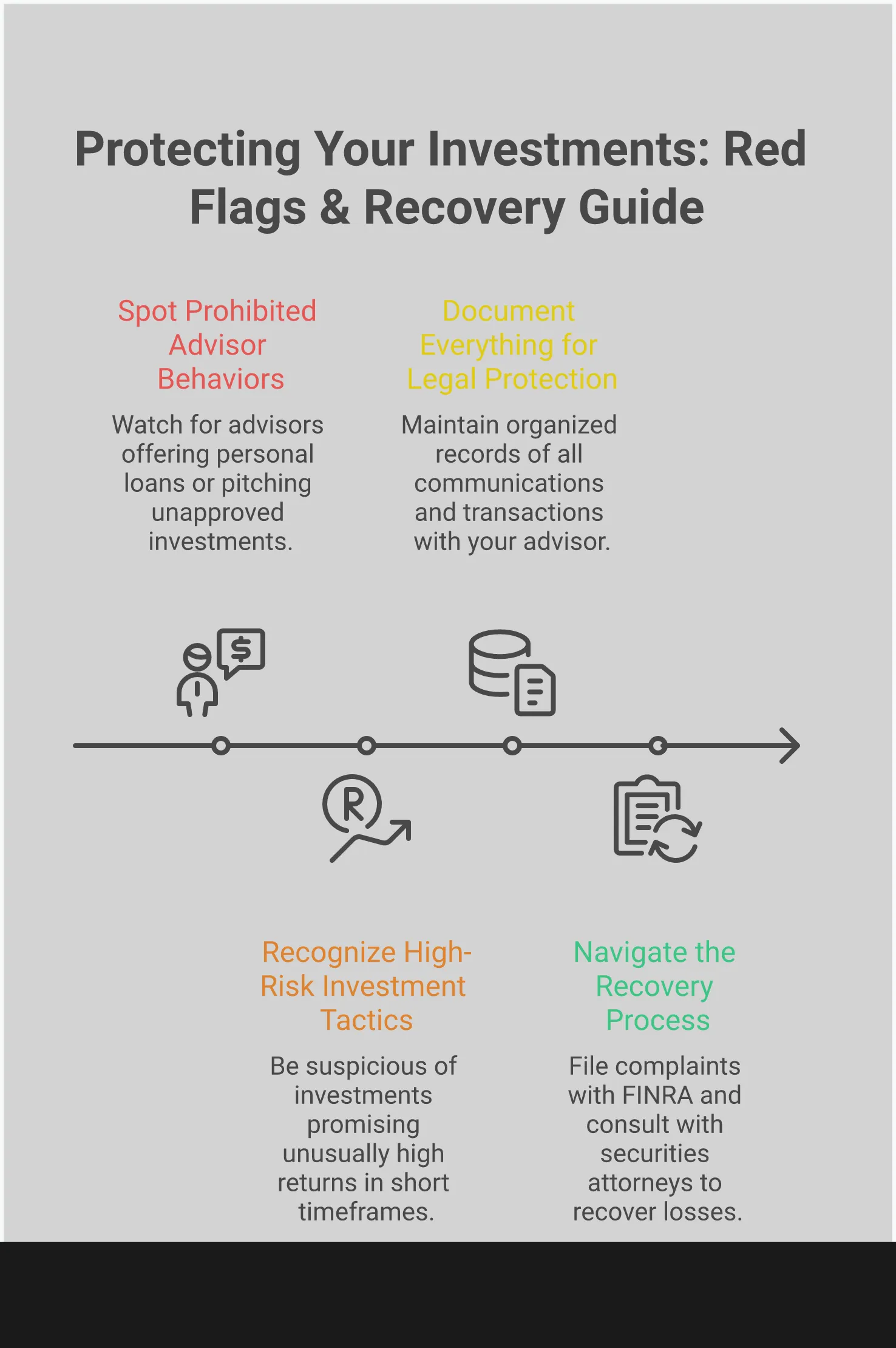
What Are Your Rights as an Investor?
When you invest your hard-earned money, you place a great deal of trust in your financial advisor. It can feel overwhelming and isolating when that trust is broken. The good news is that the financial industry is highly regulated, and there are specific rules and systems in place designed to protect you. Understanding your rights is the first step toward holding a negligent broker accountable and working to recover your losses. You are not alone in this process, and there are clear paths you can follow to seek justice.
Understanding the FINRA Arbitration Process
If you have a dispute with your broker, you likely won’t end up in a traditional courtroom. Most agreements you sign when opening a brokerage account include a clause that requires you to resolve conflicts through arbitration. The Financial Industry Regulatory Authority (FINRA) runs the largest dispute resolution forum for the securities industry. This process is designed to be a faster and more cost-effective alternative to litigation. If you have complaints about your broker, the first step is to discuss your circumstances with a legal professional who can guide you through the specific steps of filing a claim and representing you in the securities arbitration process.
Laws That Protect You from Securities Fraud
Federal and state laws are in place to keep the investment landscape fair and transparent. A cornerstone of this protection is the requirement for full disclosure. According to FINRA rules, all individuals registered to sell securities or provide investment advice must disclose customer complaints, arbitrations, and regulatory actions on their public record. This transparency is meant to help you make informed decisions. When brokers fail to act in your best interest, recommend unsuitable investments, or misrepresent information, they may be violating securities laws. These regulations form the basis of your right to a fair and honest relationship with your financial advisor and are critical in cases of broker fraud and negligence.
Your Options for Recovering Investment Losses
If you’ve lost money due to misconduct, you have options for seeking recovery. To move forward with a formal dispute, you generally need to show that your advisor’s actions violated industry rules and resulted in financial harm. A customer dispute must involve allegations that a representative engaged in activity that violates industry rules and that the activity resulted in damages of at least $5,000. Proving this often requires a detailed analysis of your account statements, communications, and the nature of the investments. An attorney who handles investment issues can help you gather the necessary evidence to build a strong case and pursue the compensation you deserve.
How Can You Take Action to Recover Losses?
Discovering that you may be a victim of financial misconduct can feel overwhelming, but you have options for seeking justice and recovering your funds. Taking deliberate, informed steps is the key to holding the responsible parties accountable. The process involves gathering your evidence, filing official complaints, and getting the right legal support to guide you. Here’s how you can start moving forward.
Filing a Complaint with FINRA
The Financial Industry Regulatory Authority (FINRA) is the organization that regulates brokerage firms and their employees. If you believe your broker has acted improperly, you can file a complaint directly with FINRA. This action initiates a formal review process. FINRA will investigate your claim and can take disciplinary action against the broker or firm. Before filing, it’s often a good idea to contact the brokerage firm’s branch manager or compliance department to see if they will resolve the issue. If you don’t get a satisfactory response, a formal FINRA complaint is your next logical step.
Working with a Securities Attorney
The claims process can be challenging to handle alone. A securities attorney can help you understand your rights and build the strongest possible case. They will assist you in gathering the necessary documents, filing the claim correctly, and representing your interests. An attorney can also explain the different paths to recovery, including the securities arbitration process, which is a common way to resolve these disputes outside of a traditional courtroom. Having a legal professional on your side ensures you don’t miss critical deadlines or procedural steps.
What Documents You Need to Start a Claim
A strong case is built on solid evidence. Before you file a claim, gather all documentation related to your investments and your interactions with the broker. This includes account statements, transaction confirmations, emails, letters, and notes from any phone calls. These documents create a clear timeline and provide proof of the broker fraud and negligence you experienced. Having everything organized will make the process smoother and significantly strengthen your position, whether you are filing with FINRA or pursuing legal action with an attorney.
Where Can You Turn for Help?
Discovering that your financial advisor may have mishandled your money can feel overwhelming and isolating. You might be unsure of what to do next or who to trust. The good news is, you don’t have to figure this out alone. There are clear, established paths for investors to seek accountability and recover their losses. Taking the first step by exploring your legal options can provide clarity and put you back in control of your financial future. The right legal team can help you understand the complexities of your situation and guide you through the process of making things right.
Finding a Free Consultation with a Law Firm
If you have concerns about your investments or your dealings with a broker, a great first step is to speak with a law firm that focuses on financial disputes. Many securities law firms offer a free, confidential consultation to review your case. This is your opportunity to share your story, ask questions, and understand your legal options without any financial commitment. An initial discussion can help determine the strength of your claim and outline a potential path forward. You can contact a securities attorney to discuss your circumstances and see how they might be able to help you.
How Contingency Fee Representation Works
The potential cost of hiring a lawyer is a valid concern for many people, especially when you’ve already suffered financial losses. Fortunately, many investment fraud attorneys work on a contingency fee basis. This means you don’t pay any attorney’s fees unless they successfully recover money for you. The law firm covers the upfront costs of building and arguing your case. This approach ensures that everyone has access to quality legal representation, regardless of their current financial situation. It also means your legal team is fully invested in achieving a positive outcome for you, as their payment is contingent on winning your case.
Getting Legal Support for Your Financial Dispute
Navigating the world of investment issues and financial regulations is complicated. That’s why it’s so important to have legal support from a team that concentrates on these specific types of cases. An attorney with a deep understanding of broker misconduct and industry rules can effectively manage your claim. They can help you gather the necessary documents, build a strong case, and represent you in processes like FINRA securities arbitration. Having a knowledgeable advocate on your side can make a significant difference in your ability to hold negligent advisors accountable and work toward recovering your hard-earned money.
The Wider Impact of Financial Misconduct
When a financial advisor engages in misconduct, the damage goes far beyond a single account statement. These actions create a ripple effect, harming not just the individual investor but also eroding confidence in the financial system as a whole. The breach of trust can have lasting consequences for the investor, the advisor’s firm, and the entire industry. Understanding this wider impact is a key step in recognizing why holding responsible parties accountable is so important. It’s not just about recovering your own losses; it’s about protecting other investors and maintaining the integrity of the market.
How It Affects Investor Trust
Trust is the foundation of the relationship between an investor and a financial advisor. When an advisor misappropriates funds or makes unauthorized transactions, that trust is shattered. This kind of broker fraud and negligence can leave you feeling betrayed and questioning your judgment. For many, the experience is so damaging that they become hesitant to invest again, potentially missing out on opportunities for their financial future. Rebuilding that confidence takes time and a renewed sense of security. It’s a reminder that the relationship is built on a professional and ethical duty, and any violation of that is a serious offense with deep personal consequences.
The Consequences for the Financial Industry
Financial misconduct doesn’t happen in a vacuum. Each case of an advisor breaking regulatory rules contributes to a negative perception of the entire industry. When investors suffer significant losses due to unethical behavior, it often leads to increased scrutiny from regulators like FINRA and the SEC. This can result in stricter rules and more complex oversight for all financial professionals. While these measures are designed to protect the public, they also highlight the damage caused by a few individuals. The actions of one dishonest advisor can tarnish the reputation of many honest ones and create a more challenging environment for everyone involved in legitimate investment issues.
Damage to the Reputation of Firms and Advisors
An advisory firm’s reputation is one of its most critical assets. When a broker acts unethically, the firm they work for can be held accountable for a failure to supervise. This means the company didn’t have adequate systems in place to prevent or detect the misconduct. Allegations of this nature can severely damage a firm’s credibility, causing clients to pull their investments and seek advisors elsewhere. For the individual advisor, a record of customer disputes and regulatory sanctions can end a career. For the firm, it can lead to costly legal battles, regulatory fines, and a long-term loss of business as trust evaporates. Pursuing a claim through securities arbitration is one way investors can hold both the individual and the firm responsible.
Related Articles
- Edward Jones Broker Joshua Marino (CRD# 6141373): Investor Guide
- Stifel Broker Loren Morrison Faces Investor Complaints
- Who Is UBS Financial Services Inc. Broker Michael Meniktas?
- Wells Fargo Broker Wilson Kwok: Investor Allegations & Disputes
- 5 Signs You Need a Georgia Variable Annuity Lawyer
Frequently Asked Questions
I invested with Hugo Hernandez. What’s my first step? Your first step is to gather all the documents related to your accounts. This includes account statements, trade confirmations, and any emails or notes from your conversations with him. Having this information organized will give you a clear picture of your situation. Once you have your paperwork, the next move is to speak with a securities attorney who can review your case and explain your options.
Can I hold MML Investors Services responsible for what Hugo Hernandez did? Yes, you may be able to. Brokerage firms have a legal duty to supervise their advisors to prevent misconduct like “selling away” or misappropriating funds. If a firm fails in this duty, it can be held liable for the losses an investor suffers as a result of their employee’s actions. This is a key part of many securities arbitration claims.
My advisor promised high returns, but I haven’t seen any. Is that a problem? Guarantees of high, quick returns are a major red flag in the investment world. All investments come with risk, and a responsible advisor will never promise a specific outcome. If you were convinced to invest based on a promise that sounds too good to be true and your money is now gone or inaccessible, it could be a sign of an unsuitable investment or even fraud.
How can I find out if my financial advisor has complaints against them? You can look up any advisor’s professional history using FINRA’s BrokerCheck tool. It’s a free, public database that shows an advisor’s employment history, licenses, and, most importantly, any customer disputes, regulatory actions, or terminations. It’s a great way to do your own research and verify who you are trusting with your money.
I’m not sure if my losses are big enough to file a claim. What should I do? There’s no specific dollar amount that makes a claim “worth it.” If you lost money because of misconduct, your case deserves to be heard. Many securities law firms offer free consultations to review your situation, regardless of the amount lost. This conversation can help you understand the strength of your claim and decide on the best course of action without any financial pressure.