
+1-888-741-7503
NO FEES UNTIL WE WIN
FREE CONSULTATION
NO FEES UNTIL WE WIN
FREE CONSULTATION
Financial disputes are not like other legal problems. The rules are different, the language is specialized, and the stakes are incredibly high. You wouldn’t ask a general family doctor to perform heart surgery, and the same principle applies here. Brokerage firms have teams of lawyers who handle these specific claims every day. To level the playing field, you need someone with the same focused experience on your side. This is about finding a professional who lives and breathes securities law. Your search for a New Orleans FINRA Arbitration Lawyer is the first and most important step in building a strong case to recover your hard-earned money.
When you open an investment account, the paperwork you sign usually includes a pre-dispute arbitration clause. This clause means that if a problem arises between you and your brokerage firm, you agree to resolve it through a process called arbitration instead of filing a lawsuit in court.
FINRA arbitration is the specific forum used to handle these disputes. It’s a formal process overseen by the Financial Industry Regulatory Authority (FINRA), the self-regulatory body for the securities industry. Think of it as a private justice system designed specifically for investment-related conflicts. It provides a structured way to present your case, submit evidence, and receive a binding decision from a neutral panel.
FINRA’s job is not to take sides but to administer the process fairly. Its Dispute Resolution Services division helps investors and brokerage firms solve problems related to investments by offering two main paths: arbitration and mediation. In an arbitration proceeding, FINRA provides the rules, the forum, and a pool of qualified, neutral arbitrators who will hear the evidence and decide the outcome of your case. They are the administrators, making sure the process moves forward according to established procedures and that both parties have a chance to be heard. Their goal is to provide an impartial setting for resolving your claim.
For most investors, arbitration isn’t a choice but a requirement based on the agreements signed when opening an account. This process differs from a court case in a few key ways. Unlike public court records, securities arbitration proceedings are private. While some believe arbitration is always quicker than a lawsuit, that’s a common misconception; these cases can be quite complex and take time. The most critical detail to remember is that an arbitration award is almost always final and binding. By participating in arbitration, you are generally giving up your right to pursue the same claim in court.
When you trust a financial professional with your money, you expect them to act with your best interests at heart. Unfortunately, that doesn’t always happen. FINRA arbitration lawyers in New Orleans represent investors in a wide range of disputes, helping them recover losses caused by misconduct or negligence. These cases cover everything from outright fraud to subtle breaches of trust that can quietly drain your accounts. If you suspect something is wrong with your investments, understanding the types of issues an attorney can address is the first step toward getting help.
Investment fraud happens when someone intentionally uses deceptive practices to cheat investors out of their money. This can take many forms, including Ponzi schemes, mutual fund fraud, or unauthorized trading in your account. A common issue is misrepresentation, where a broker provides false or misleading information about an investment’s risks or potential returns. You might be told a high-risk venture is a “sure thing” or that your principal is completely safe when it isn’t. A lawyer can help you address these complex investment issues and hold deceptive parties accountable for the financial harm they cause.
Your broker or financial advisor has a responsibility to recommend investments that are appropriate for you. This means they must consider your age, financial situation, investment goals, and tolerance for risk. When they fail to do this, it’s known as providing unsuitable advice. This includes practices like “churning,” where a broker makes excessive trades just to generate commissions, or “over-concentration,” which involves putting too much of your money into a single, risky investment. These actions often fall under broker fraud and negligence, and a FINRA arbitration lawyer can help you build a case to recover your losses.
Many financial advisors are held to a fiduciary standard, which is a legal and ethical obligation to always act in their client’s best interest. A breach of this duty occurs when an advisor prioritizes their own financial gain over yours. This could involve recommending an investment product with a high commission for them, even when a better, lower-cost option is available. It can also include failing to disclose conflicts of interest. Proving a breach of fiduciary duty is a key part of many securities arbitration claims, as it shows a fundamental violation of the trust you placed in your advisor.
You expect to pay for financial advice, but those charges should always be clear, fair, and fully disclosed. Disputes often arise when investors discover hidden fees, excessive commissions, or charges for services that were never actually provided. A broker might push you into certain mutual funds simply because they come with a higher commission, or you might see unexplained administrative fees chipping away at your returns. If you believe you’ve been overcharged or misled about the costs associated with your investments, an attorney can help you challenge those fees and recover what you’re owed.
Choosing the right legal representation is one of the most important decisions you’ll make. When your financial future is on the line, you need an advocate who is skilled in the law and deeply committed to your case. The right attorney can make a significant difference in the outcome of your FINRA arbitration claim. As you consider your options, focus on a few key qualities: specialized experience, deep industry knowledge, and a genuine connection to your community.
When you’re searching for a lawyer, look for someone with a solid history in securities law. This isn’t the time for a general practitioner; you need an attorney who lives and breathes this specific area of law. A lawyer with a strong background in securities arbitration will have handled cases involving issues like excessive trading, misrepresentation, and unauthorized trades. This focused experience means they understand the detailed arguments and procedural rules unique to FINRA. Their track record shows they know how to build a compelling case and have successfully guided clients through this process before.
Legal skill is essential, but a deep understanding of the financial world is just as critical. A lawyer who knows the ins and outs of financial products, market practices, and industry regulations offers a real advantage. This specialized knowledge allows them to identify subtle details in a broker fraud and negligence claim that might otherwise be missed. They can effectively analyze trading records, understand complex investment strategies, and challenge arguments made by brokerage firms. This industry insight is fundamental to developing a strong strategy and presenting your case clearly.
While FINRA arbitration is a national process, having a lawyer who understands the local New Orleans financial community can be incredibly helpful. A local attorney is familiar with the regional landscape and may have insights an out-of-state lawyer wouldn’t. More importantly, they are accessible. Being able to meet with your lawyer in person, ask questions, and receive timely updates provides peace of mind during a stressful time. When you contact a firm, look for a team that is responsive, easy to reach, and genuinely invested in serving the local community.
When you have a dispute with your brokerage firm, you typically can’t just sue them in court. Instead, you’ll go through a process called securities arbitration, which is overseen by the Financial Industry Regulatory Authority (FINRA). Think of it as a private, specialized court system for the investment world. While it has its own set of rules and procedures, the goal is the same: to resolve your dispute fairly and help you recover your losses.
The process moves through several distinct stages, from filing your initial complaint to presenting your case at a hearing. Each step requires careful attention to detail and a solid understanding of FINRA’s guidelines. Having a lawyer who is familiar with this specific process can make a significant difference. They can handle the paperwork, gather the right evidence, and build a strong argument on your behalf, letting you focus on moving forward. Let’s walk through what you can expect at each stage.
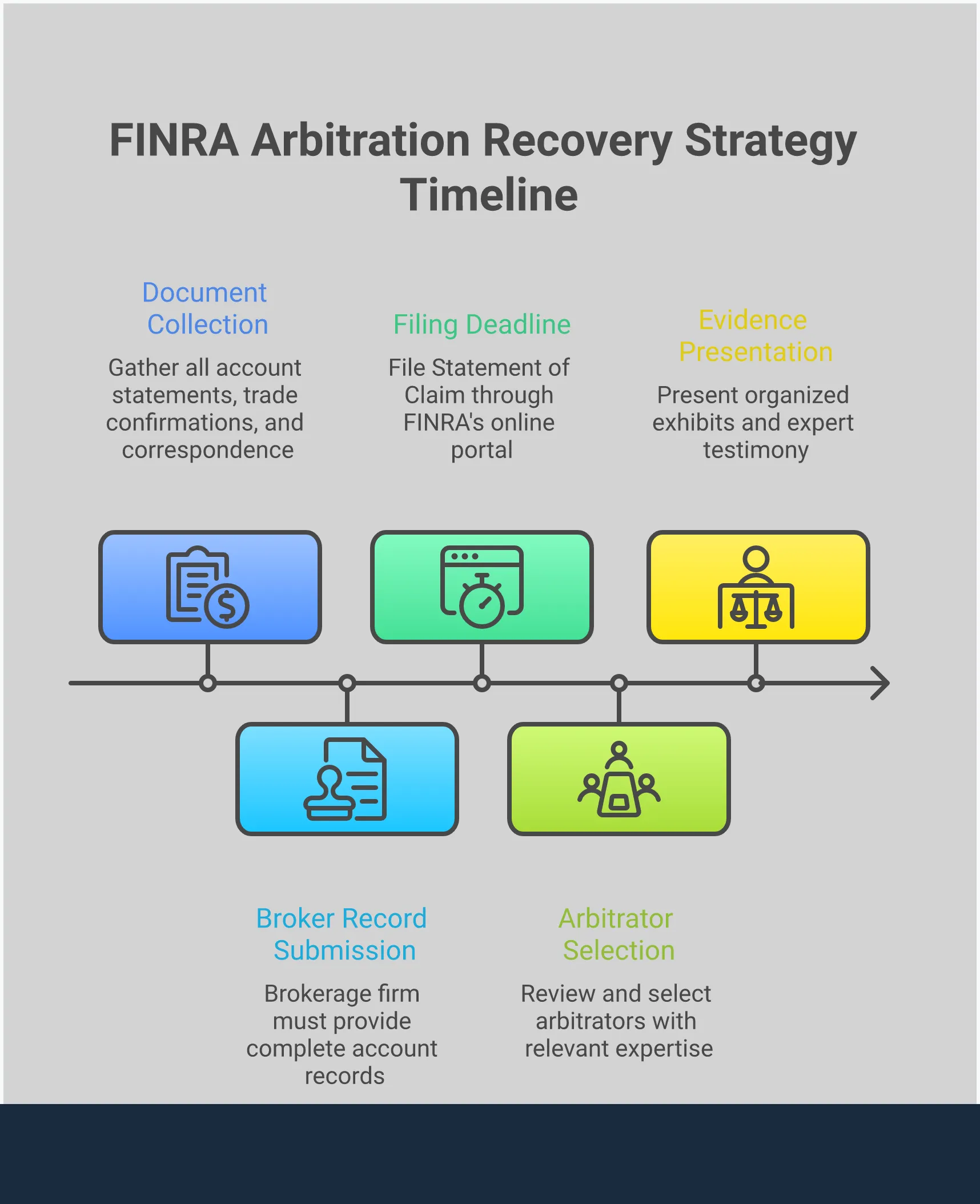
The first step is to file a Statement of Claim with FINRA. This document outlines what happened, who was involved, and the losses you suffered. It’s your official story, and it kicks off the entire process. It’s crucial to be aware of the deadlines. Generally, you have six years from the date of the incident to file a claim. However, other state-specific time limits, known as statutes of limitations, can be much shorter. This is why it’s so important to act quickly. If you believe you have a case, it’s wise to contact an attorney right away to ensure you don’t miss your window to seek recovery.
After your claim is filed, both sides will select a panel of one or three neutral arbitrators who will hear the case and make a final decision. At the same time, you and your attorney will work on discovery, which is the process of gathering evidence. Arbitrators rely heavily on written proof, so thorough documentation is the backbone of a successful case. This includes everything from account statements and trade confirmations to emails and notes from conversations with your broker. An attorney can help you identify and organize the key documents needed to prove your claim of broker fraud and negligence.
The hearing is where you and your attorney present your case to the arbitration panel. It’s similar to a trial but usually less formal. Your lawyer will make an opening statement, present evidence, and question witnesses. The other side will do the same. Having a legal advocate present your case can significantly improve your chances of a favorable outcome. They know how to frame the arguments, cross-examine the opposing side, and highlight the most important facts for the arbitrators. This advocacy is essential in clearly communicating the harm you’ve suffered and why you deserve to be compensated for your losses.
While arbitration is often seen as a faster alternative to court, that isn’t always true. The process can still be lengthy, as hearings are scheduled based on the availability of the arbitrators, the parties, and their attorneys. This can sometimes lead to delays. Furthermore, brokerage firms come to these hearings with experienced legal teams ready to defend their actions. An attorney who regularly handles these investment issues understands these challenges. They can set realistic expectations about the timeline and prepare a strategy to counter the arguments you’ll face, giving you a level playing field.
When you’re considering FINRA arbitration, it’s easy to get tangled in misinformation. These myths can create false expectations and might even discourage you from seeking justice. Understanding the reality of the process is the first step toward making an informed decision about your financial recovery. Let’s clear up some of the biggest misconceptions so you can move forward with confidence.
One of the most common beliefs is that if misconduct occurred, you are guaranteed to recover all your losses. Unfortunately, this isn’t the case. While arbitrators aim for fairness, they have discretion and consider many factors when awarding damages. The final amount may not equal your total loss, and a 100% recovery is never a certainty, even with a strong claim. An experienced attorney can help you build a compelling case around broker fraud and negligence, present evidence effectively, and set realistic expectations for the potential outcome of your arbitration.
The thought of legal fees can be intimidating, leading many to believe the process is too expensive. While there are costs involved, arbitration is often more manageable than traditional court litigation. Another major concern is privacy. Unlike a public lawsuit, securities arbitration is a confidential process. Your personal and financial details are not entered into the public record, which allows you to resolve your dispute without unwanted attention. This privacy is a key benefit for many investors who prefer to keep their financial matters out of the spotlight while they seek a fair resolution.
It can be tempting to handle your own arbitration case, but this is a significant risk. The financial industry has experienced lawyers, and the procedural rules are complex. While you can represent yourself, the FINRA Code of Arbitration Procedure confirms your right to an attorney. Having a legal professional on your side levels the playing field and ensures your case is presented effectively. Before going it alone, it’s always wise to contact us for a consultation to understand your options.
Arbitration is often seen as a quick fix compared to a lawsuit, but it’s still a formal legal proceeding that takes time. The process involves several key stages, including filing a claim, selecting arbitrators, exchanging evidence, and participating in hearings. Complex investment issues require a thorough investigation to build a strong case, and this can’t be rushed. Rushing the process can compromise your claim’s strength. It’s better to view it as a detailed and structured process rather than a shortcut, allowing the necessary time for a proper resolution.
Deciding to work with an attorney can feel like a big step, but it’s really about finding a partner to guide you through a complex process. A dedicated FINRA arbitration lawyer will handle the legal heavy lifting, allowing you to focus on moving forward. From the first conversation to the final resolution, their job is to clarify your options, manage the details, and represent your interests. You should feel supported and informed at every stage. The right legal team will demystify the process, making sure you understand what’s happening with your case and why.
Your first meeting with a FINRA lawyer is a crucial starting point. When you believe that losses in your investment portfolio are the result of financial misconduct, it is important to consult with a lawyer about filing a FINRA arbitration claim as soon as you can. This initial consultation is your opportunity to share your story and present any documents you have. The attorney will listen, ask clarifying questions, and give you an honest assessment of your situation. This conversation will help you understand your options and the potential for recovering your losses, giving you a clear path forward.
One of the most significant advantages of working with a trusted FINRA arbitration lawyer is having a vocal advocate in your corner. This support is essential, as it ensures that your case is presented effectively and that you are kept informed throughout the process. Your attorney will be your main point of contact, translating legal jargon and providing regular updates on your case of broker fraud and negligence. They manage the deadlines, paperwork, and communications with the opposing side. This steady support allows you to feel confident that your case is in capable hands while you focus on your daily life.
A transparent discussion about costs and timing should happen right at the beginning of your relationship with an attorney. Typical FINRA arbitration expenses include filing fees, forum fees, and hearing session costs. A reputable lawyer will explain their fee structure clearly, so you know what to expect as you address your investment issues. They will also help you understand the potential timeline for your case, as arbitration is a multi-step process that takes time. Understanding these financial and time-related aspects upfront helps you prepare for the journey ahead and avoids any surprises down the road.
Choosing the right legal partner is one of the most important decisions you’ll make. You need someone who not only understands the law but also gets what you’re going through. Finding a lawyer who focuses on FINRA arbitration can make a real difference in your case. It means they spend their days working on claims just like yours, from excessive trading to misrepresentation. This isn’t just another case type for them; it’s their core practice. A dedicated securities lawyer brings a specific kind of insight that can be crucial. They understand the tactics brokers and firms use and know how to build a strong case against them. When you’re looking for representation, you want someone who is already familiar with the landscape of investment issues and can get straight to work on your behalf. The right attorney will be transparent about their process, answer your questions clearly, and make you feel supported. It’s essential to do your homework, ask pointed questions during your initial meeting, and trust your instincts. Be wary of anyone who makes grand promises or seems unfamiliar with the specifics of the FINRA process. Your advocate should be a steady, knowledgeable guide through a challenging time, helping you understand your options and fighting for your interests every step of the way.
When you start your search, look for attorneys who specifically handle securities arbitration. This isn’t the time for a general practitioner. You’re dealing with a specialized area of law, and you need a lawyer whose experience matches your situation. Look at their website and past cases. Do they frequently handle claims of broker fraud and negligence? A lawyer with a deep background in securities disputes will understand the details that can strengthen your claim. Their focused knowledge means they are better equipped to handle the complexities of your case and fight for your interests.
Your initial consultation is your chance to interview a potential lawyer. Don’t be shy about asking direct questions to see if they’re the right fit. You could ask about their experience with cases similar to yours or what their approach to the securities arbitration process looks like. A good lawyer will be able to explain their strategy in a way that makes sense to you. This conversation is also about seeing if you feel comfortable with them. You’ll be working closely together, so you want an advocate who listens and prioritizes your needs.
As you meet with different lawyers, keep an eye out for a few warning signs. If a lawyer seems unfamiliar with the FINRA process or can’t clearly explain how they would approach your case, that’s a major red flag. They should be able to discuss the nuances of negotiations and hearings with confidence. Be wary of anyone who guarantees a specific outcome or pressures you to make a quick decision. A trustworthy attorney will give you a realistic assessment of your case and the space to decide. If something feels off, it probably is. Trust your gut and find someone who makes you feel supported and understood.
How is FINRA arbitration different from a regular lawsuit? The main differences come down to privacy and finality. Unlike a court case, which is part of the public record, FINRA arbitration is a private process. Instead of a judge or jury, your case is heard by a neutral arbitrator or a panel of arbitrators with experience in the financial industry. Perhaps the most important distinction is that an arbitration award is almost always final and binding, with very limited options for an appeal.
What kind of evidence is most important for my case? A strong case is built on solid documentation. Arbitrators rely heavily on written proof, so gathering every relevant document is essential. This includes your account statements, trade confirmations, emails or text messages with your broker, and any personal notes you took about your conversations. These records create a clear timeline and can be more powerful than memory alone when demonstrating what happened with your investments.
Is the arbitrator’s decision really final? Yes, for the most part, it is. When you agree to arbitration, you are generally giving up your right to take the same claim to court. The grounds for appealing or overturning an arbitration award are extremely narrow and rarely successful. This finality is a core feature of the process, which is why it is so important to present the strongest case possible during the hearing itself.
How long will this whole process take? It’s a common misconception that arbitration is always a fast process. While it can be quicker than a court case, it is still a formal legal proceeding that requires time. From filing the initial claim and gathering evidence to scheduling the final hearing, the entire process can often take a year or more to complete. The exact timeline depends on the complexity of your case and the schedules of everyone involved.
Do I have to pay a lawyer even if I don’t win my case? Many securities arbitration lawyers work on a contingency fee basis. This means their fee is a percentage of the money they recover for you. If you do not win your case, you may not owe them any attorney fees. You should always have a clear conversation about costs during your initial consultation, so you understand the fee structure and any potential expenses, like filing fees, before moving forward.