
+1-888-741-7503
NO FEES UNTIL WE WIN
FREE CONSULTATION
NO FEES UNTIL WE WIN
FREE CONSULTATION
Seeing a large portion of your savings disappear is a deeply unsettling experience. It’s natural to blame a volatile market, but sometimes the real cause is a structural flaw in your portfolio that could have been avoided. A common but devastating pitfall is overconcentration and lack of diversification, which means your financial well-being is dangerously tied to the performance of just one or two investments. This isn’t just bad luck; it can be the direct result of a financial advisor’s negligence. If your portfolio was set up to gamble on a few holdings instead of being built to last, you were exposed to unnecessary risk. This article will break down what that means, how to spot the warning signs, and what your options are for recovery.
When you build an investment portfolio, the goal is to grow your wealth over time. But what happens when your portfolio is set up in a way that exposes you to unnecessary risk? This is often the case with overconcentration, a common but dangerous investment pitfall. Simply put, overconcentration means your financial well-being is too dependent on the performance of a single investment, a handful of stocks, or one specific industry.
If a financial advisor recommended a strategy that put too much of your money in one place, it could be a sign of negligence. Understanding the basics of portfolio concentration is the first step toward protecting your assets and identifying when the advice you’ve received might not have been in your best interest. Let’s break down what overconcentration looks like, how it happens, and why it can be so damaging to your financial future.
You’ve probably heard the old saying, “Don’t put all your eggs in one basket.” That’s the perfect way to understand overconcentration. It’s the practice of investing a large portion of your money into a single asset, stock, or market sector. While it might seem like a good idea if that one investment is doing well, it leaves you incredibly vulnerable. If that basket drops, all your eggs could break at once.
Diversification is the exact opposite. It’s the strategy of spreading your investments across various assets, industries, and geographical regions. The goal is to ensure that if one part of your portfolio performs poorly, the others can help balance out the losses. A well-diversified portfolio is designed to manage risk and create more stable, predictable growth over the long term.
Overconcentration can happen for several reasons, and sometimes it’s the result of questionable advice. A portfolio might become dangerously weighted toward one area if a broker pushes specific products, leading to a high concentration in complex investments like non-traded Real Estate Investment Trusts (REITs), Business Development Companies (BDCs), or private placements. This can be a form of broker fraud and negligence if the strategy isn’t suitable for your financial situation.
It can also occur if you hold too much of your employer’s stock or if you become overly optimistic about a particular industry, like tech or energy, and invest too heavily in it. Whatever the cause, the result is the same: your portfolio’s health becomes tied to the fate of just a few holdings.
The biggest trap of overconcentration is the immense risk it creates. When a large portion of your net worth is tied to a single stock or sector, a sudden downturn can be catastrophic. A single piece of bad news, a regulatory change, or a shift in the market could wipe out a significant part of your savings. This kind of volatility can completely derail your long-term financial goals, whether that’s planning for retirement, funding a child’s education, or preserving your wealth.
These kinds of investment issues are not just theoretical; they have real-world consequences for investors who were placed in unsuitable positions. A properly managed portfolio should be built to withstand market swings, not amplify them.
It can be tempting to go all-in on a hot stock or a booming industry, dreaming of a big payoff. But concentrating your investments too heavily in one area is one of the quickest ways to put your financial future in jeopardy. A portfolio that isn’t diversified is like a house built on a single pillar—if that one support fails, everything comes crashing down. While diversification doesn’t guarantee gains or prevent all losses, it’s a fundamental strategy for managing risk and building sustainable wealth.
An undiversified portfolio is extremely vulnerable to market volatility. A single piece of bad news about a company, a sudden downturn in a specific industry, or a shift in the economy can have a devastating impact on your savings. Understanding these risks is the first step toward protecting yourself and ensuring your investment strategy is built to last. If your broker has exposed you to these dangers through unsuitable recommendations, it’s important to recognize the potential for serious broker fraud and negligence.
When your portfolio is overconcentrated, your financial well-being is tethered to the fate of a single asset or sector. If that investment performs poorly, your bottom line takes a direct and significant hit. Imagine having 70% of your retirement savings in one company’s stock. If that company faces a scandal or an unexpected bankruptcy, you could lose the majority of your nest egg overnight. This isn’t just a theoretical risk; it happens to investors who receive unsuitable advice. A properly diversified portfolio spreads that risk out, so the failure of one investment doesn’t lead to a catastrophic loss for your entire portfolio.
The market is always moving, with different sectors rising and falling at different times. A diversified portfolio is designed to handle these swings. When one part of your portfolio is down, another part may be up, helping to smooth out the ride and protect you from severe losses. For example, if the tech sector is in a slump, your investments in healthcare or consumer staples might be performing well, balancing things out. Without this balance, your portfolio is exposed to the full force of a sector-specific downturn. Spreading your investments is your best defense against being wiped out by volatility you can’t control.
Overconcentration isn’t just a numbers problem; it’s a direct threat to your life goals. Whether you’re saving for retirement, a child’s education, or financial independence, a major loss can set you back years or even make those goals unattainable. Your investment strategy should be built to support your future, not gamble with it. If you suspect your broker has put your money into overly concentrated positions that don’t align with your long-term objectives, it’s crucial to investigate. These types of investment issues can have lasting consequences that go far beyond a simple account statement.
The danger of an undiversified portfolio goes beyond the initial loss. When a large, concentrated position plummets in value, it can create a domino effect. You might be forced to sell your other, healthier investments at an inopportune time just to cover the losses or meet your living expenses. This can lock in losses and prevent you from participating in a potential market recovery. A concentrated position dramatically increases the market risk in your portfolio, and a downturn can have an outsized, cascading impact on your family’s financial stability, turning a bad situation into a devastating one.
It’s easy to feel great about an investment that’s performing well. When a particular stock or sector is on the rise, the last thing you might think about is selling. But having too much of your money tied up in one place is one of the biggest risks you can take with your portfolio. This is known as overconcentration, and it can turn a market downturn into a personal financial disaster. Spotting this issue is the first step toward protecting your hard-earned money from unnecessary risk.
The good news is you don’t need to be a financial analyst to get a handle on your own investments. It’s about learning to recognize the warning signs, understanding a few key numbers, and seeing past common myths that can lead you down a risky path. By regularly checking in on your portfolio and knowing what to look for, you can identify whether your investments are truly working toward your long-term goals or if they’re exposing you to serious investment issues. Let’s walk through how you can review your own portfolio for signs of overconcentration.
An unbalanced portfolio often hides in plain sight. The most obvious red flag is when a single stock or asset makes up a disproportionately large chunk of your investments—say, more than 15% of the total value. This often happens with company stock from an employer, but it can also occur if a broker recommends putting too much faith in one “sure thing.”
Pay close attention if most of your holdings are clustered in a single industry, like technology or energy. While that sector might be booming now, a targeted downturn could wipe out a significant portion of your savings. If you notice your portfolio’s value swings wildly based on the news of one company, that’s another clear sign of overconcentration. Unsuitable recommendations that lead to this kind of risk can sometimes be a form of broker fraud and negligence.
You don’t need complex software to get a clearer picture of your portfolio’s balance. Start by looking at your statements and calculating some basic percentages. First, check your asset class distribution. What percentage of your money is in stocks, bonds, cash, or other categories? A heavy tilt in any one direction, especially in volatile assets like individual stocks, can be a source of risk.
Next, look at your sector allocation. Break down your stock holdings by industry—financials, healthcare, consumer goods, etc. Are you heavily weighted in one area? Finally, consider your geographic exposure. Having all your investments tied to a single country’s economy is a form of concentration. A healthy mix of domestic and international holdings can provide a valuable buffer against regional economic slumps.
One of the most persistent myths is that you need to be an investing genius to diversify properly. In reality, simple instruments like index funds and ETFs offer instant diversification by spreading your money across hundreds or even thousands of companies. Another common misconception is that diversification automatically means lower returns. While it does protect you from the extreme highs of a single winning stock, its real job is to protect you from the devastating lows of a single loser.
You might hear stories about famous investors who made their fortunes on a few concentrated bets. While that strategy can work for billionaires with high risk tolerance, it’s often completely unsuitable for the average person saving for retirement. A broker recommending such a strategy may be ignoring your actual financial needs and goals.
Many online brokerage platforms have built-in tools that can analyze your portfolio and show you a visual breakdown of your holdings by asset, sector, and region. These can be a great starting point for a quick health check. However, the most powerful tool you have is a regular review. Set a reminder to look over your investments at least once or twice a year.
As FINRA suggests, you should perform periodic reviews and make adjustments to ensure your portfolio aligns with your goals. Don’t be afraid to ask your advisor for a clear report on your portfolio’s concentration risk. If their answers are vague or they dismiss your concerns, it could be a red flag. If you’ve reviewed your portfolio and believe you’ve lost money due to poor advice, it may be time to contact a legal professional to understand your options.
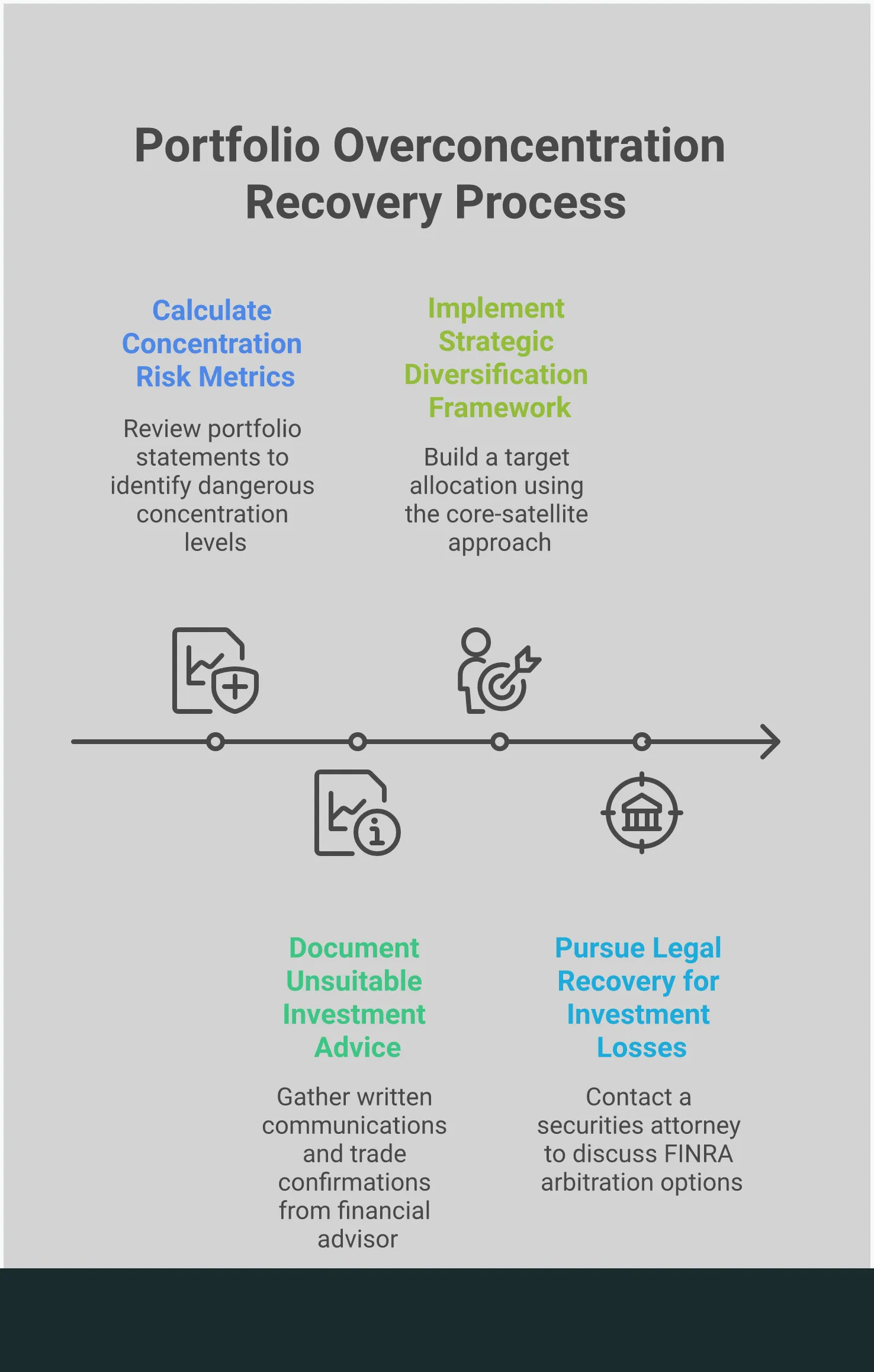
Building a resilient portfolio is one of the most effective ways to protect your financial future from unnecessary risk. It’s a proactive approach that helps you manage the natural ups and downs of the market. By understanding the core principles of diversification, you can construct a portfolio that is built to last and aligned with your personal goals. Let’s walk through the key steps for creating a properly balanced investment strategy.
Think of asset allocation as deciding how many baskets you’ll use for your eggs. It’s the process of dividing your investment funds among different financial asset categories, like stocks, bonds, and cash. Diversification takes this a step further by spreading your investments within each of those categories. For example, instead of owning stock in just one company, you would own shares in several different companies. The main goal is to ensure your entire financial well-being isn’t dependent on the success of a single asset. This is a fundamental strategy for managing the inherent risks of investing.
A well-diversified portfolio goes beyond just mixing stocks and bonds—it spreads them out strategically. This means investing across various economic sectors (like technology, health care, and energy), different company sizes (from large, established corporations to smaller, growing businesses), and multiple geographic regions. When one part of the market is struggling, another might be doing well, which can help cushion your portfolio from major losses. A financial professional who fails to recommend this kind of broad diversification could be engaging in a form of broker fraud and negligence by exposing your savings to avoidable risk.
You don’t need to spend your time hand-picking hundreds of individual stocks to achieve diversification. Exchange-traded funds (ETFs) and index funds offer a much simpler path. You can think of them as pre-made baskets containing a wide range of investments that track a specific market index, like the S&P 500. By buying a single share of an ETF, you instantly gain a small piece of all the companies it holds. This is a common and effective strategy for building a balanced portfolio. Including funds that hold fixed-income assets, like bonds, can also add a layer of stability to counter stock market volatility.
Creating a diversified portfolio isn’t a one-time task. Over time, as the market moves, your initial asset allocation will drift. For instance, if your stocks perform very well, they might grow to become a much larger percentage of your portfolio than you originally planned, which quietly reintroduces concentration risk. This is why regular check-ins are critical. Periodically reviewing and rebalancing your holdings—by selling some high-performing assets and buying more underperforming ones—helps you stay aligned with your long-term goals. This discipline is key to managing many common investment issues and maintaining a healthy portfolio.
Discovering significant losses in your investment portfolio is a deeply unsettling experience. It’s easy to feel overwhelmed and unsure of what to do next, but it’s important to know that you have options, especially if those losses stem from a portfolio that was not properly diversified. If you suspect your investments were too concentrated in a single stock, sector, or asset class, the first step is to pause and gather information. Acting impulsively can sometimes make a difficult situation worse. Instead, focus on understanding what happened and what your rights are as an investor. The path forward involves careful documentation, understanding the role your financial advisor played, and exploring the avenues available for recovering your losses.
The moment you realize you’ve lost a substantial amount of money, your first instinct might be to panic. Instead, try to focus on collecting all relevant documents. This includes account statements, trade confirmations, and any written communication you have with your broker or financial advisor. If you’ve lost money and suspect your investments were too concentrated, a lawyer can help you figure out if your adviser made bad recommendations. It’s helpful to create a timeline of your interactions and the advice you were given. This initial step of organizing your information is crucial for building a clear picture of what occurred and will be invaluable if you decide to seek legal guidance.
Financial advisors have a responsibility to recommend investments that are suitable for their clients. A key part of this is ensuring a portfolio is properly diversified to manage risk. If a financial adviser or brokerage firm does not sufficiently diversify an investor’s assets and the investor suffers losses as a result, he or she may have a claim for broker fraud and negligence. This isn’t about a single investment performing poorly; it’s about a strategy that exposed you to unnecessary risk. An advisor who puts too much of your money into one or two investments, especially if they are high-risk, may have failed in their duty to protect your financial interests.
To build a case, you need to show that the advice you received was not appropriate for you. Brokers break rules if they give you “unsuitable investment advice.” This happens when they recommend investments that are too risky or too concentrated for your situation, goals, and age. Start gathering any evidence that illustrates the advice you were given, including emails, notes from phone calls, and any documents you signed. The goal is to demonstrate the gap between your stated investment objectives and the concentrated strategy your broker implemented. These types of investment issues are often the foundation of a potential claim.
If you believe your losses happened because your financial adviser didn’t properly diversify your investments, you might be able to take legal action to get your money back. Most disputes between investors and brokerage firms are resolved through a process called securities arbitration, which is typically handled by the Financial Industry Regulatory Authority (FINRA). This is a formal process where you can present your case to an arbitrator who will decide the outcome. You don’t have to go through this alone. Working with an attorney who understands this process can help you present your case effectively and work toward recovering your hard-earned savings.
Taking control of your financial future starts with being an active participant in your own investment strategy. Whether you work with an advisor or manage your own portfolio, staying informed and engaged is your best defense against the risks of overconcentration. By establishing clear goals, recognizing warning signs, and making portfolio reviews a regular habit, you can build a more resilient financial foundation. These proactive steps can help you feel more confident and secure in your long-term plans.
A good relationship with your financial advisor is a partnership built on clear communication. Your advisor should take the time to understand your complete financial picture, including your goals, timeline, and how much risk you’re comfortable with. Their job is to recommend investments that are suitable for you and help you build a properly diversified portfolio. Don’t be afraid to ask questions and make sure you understand every recommendation. If an advisor can’t explain their strategy in a way that makes sense to you, that’s a major red flag for potential broker fraud and negligence.
Trust your gut. If an investment recommendation feels wrong, it probably is. Brokers are required to provide suitable advice, and they violate this duty when they suggest investments that are too risky or concentrated for your specific situation. Pressure to act quickly, promises of guaranteed high returns, or a focus on a single stock or sector are all warning signs. If you believe your losses are a direct result of your broker’s poor advice or mismanagement, you may have options to recover your money. It’s important to understand the common investment issues that can arise from unsuitable recommendations.
A well-built portfolio is designed to weather different market conditions. The key is diversification. This means holding a mix of different types of assets, like stocks and bonds, from various industries, company sizes, and even different parts of the world. You don’t have to be a market whiz to do this; many people use index funds or ETFs to easily spread their money across hundreds or thousands of investments. By including different asset classes, you increase the chances that some of your investments will perform well even when others are struggling, creating a more stable path toward your goals.
Your financial life isn’t static, and your portfolio shouldn’t be either. Get into the habit of reviewing your investments at least once or twice a year. This allows you to check if your asset allocation still aligns with your goals and risk tolerance. Over time, some investments will grow faster than others, which can unintentionally lead to overconcentration. Regular check-ins give you a chance to rebalance your holdings and ensure your strategy remains sound. If a review uncovers significant problems or you suspect mismanagement, it may be time to contact a legal professional to discuss your options.
How much of one stock is too much to hold in my portfolio? While there isn’t a single magic number that applies to everyone, many financial professionals suggest that holding more than 10-15% of your portfolio’s value in a single stock is a sign of overconcentration. The right amount for you depends on your personal financial goals, age, and how comfortable you are with risk. The key is to avoid a situation where the failure of one company could seriously damage your entire financial future.
My portfolio is heavily weighted with my employer’s stock. Is that a problem? This is a very common situation, but it can be incredibly risky. When a large portion of your savings is tied up in the same company that provides your paycheck, you’re doubling down on that company’s success. If the business struggles, you could face a job loss and a major portfolio loss at the same time. It’s wise to have a plan to gradually reduce that position over time to spread your risk more effectively.
I think my portfolio is overconcentrated. What’s the very first thing I should do? Before making any sudden moves like selling off assets, your first step should be to pause and gather information. Collect all of your recent account statements and any written communication you have from your financial advisor. The goal is to get a clear, documented picture of your holdings and understand exactly how your money is allocated. This organized information is the foundation for making a smart decision about what to do next.
Can my financial advisor be held responsible if I lose money from an overconcentrated portfolio? It’s certainly possible. Financial advisors have a professional duty to recommend investment strategies that are suitable for their clients’ specific circumstances. This includes managing risk through proper diversification. If an advisor placed your money in an overly concentrated position that didn’t align with your goals or risk tolerance and you suffered significant losses as a result, it could be considered negligence.
Does diversifying my portfolio mean I’ll get lower returns? Not necessarily. This is a common myth that confuses smart investing with gambling. While diversification means you likely won’t see the explosive gains that can come from betting everything on a single winning stock, it also protects you from the catastrophic losses that come from betting on a single loser. The goal of diversification isn’t to limit your gains; it’s to create more consistent, stable growth that can help you reach your long-term goals without taking on unnecessary risk.