Losing money in the market is one thing, but discovering your losses may have been caused by your broker’s actions is another matter entirely. For clients of former UBS Broker David Fagenson, this is a difficult reality. Fagenson’s career is marked by serious allegations of misconduct, from making trades without permission to pushing unsuitable investments on elderly clients, leading to his suspension by FINRA and termination from his firm. If you were one of his clients, it’s important to know that you are not alone and that systems are in place to hold brokers accountable for their actions.
Key Takeaways
- Question Your Broker’s Recommendations: Be wary of frequent trading that racks up fees, investment strategies that seem too risky for your goals, or any activity in your account that you didn’t explicitly approve. These are major red flags that your broker may not be acting in your best interest.
- Use Free Tools to Research Your Broker: A few minutes on FINRA’s BrokerCheck website can reveal a broker’s entire professional history, including customer complaints and disciplinary actions. This simple background check is a crucial first step in protecting your investments.
- Understand Your Path to Financial Recovery: If you’ve lost money due to misconduct, you have rights. The FINRA arbitration process is designed for investors to hold brokers accountable and recover losses, but strict deadlines apply. Documenting everything and seeking legal advice promptly is critical.
Who is David Fagenson?
David Howard Fagenson is a former broker and investment advisor with a career in the financial industry dating back to 1987. While he has worked for several firms, his time at UBS Financial Services between 2012 and 2016 has drawn significant scrutiny from regulators and investors. Public records show a pattern of customer disputes and regulatory actions related to his handling of client accounts.
Understanding the history of a broker like David Fagenson is an important first step if you suspect you’ve suffered investment losses. Many investors place a great deal of trust in their financial advisors, assuming their recommendations are always in their best interest. Unfortunately, when that trust is broken, the financial consequences can be devastating. The allegations against Fagenson highlight common types of broker fraud and negligence that can harm investors, particularly those who are retired or nearing retirement.
His Career at UBS
Fagenson was employed as a broker at the UBS branch in Boca Raton, Florida, from January 2012 to September 2016. It was during this period that the Financial Industry Regulatory Authority (FINRA) found he engaged in serious misconduct. According to FINRA’s findings, Fagenson effectively took control of the accounts of three elderly clients without their permission. He then proceeded to make trades that were not suitable for their financial situations or goals. This activity allegedly caused his clients to lose money while generating substantial commissions for himself. This type of unauthorized and unsuitable trading is a serious violation of an advisor’s duties to their clients.
His Investment Focus
The core of the allegations against Fagenson centers on his investment recommendations. He is accused of steering clients, especially older investors, toward unsuitable investments. These strategies often involved frequent trading that led to significant losses for his clients while he and his firm collected high fees and commissions. When an advisor recommends an investment, they have a responsibility to ensure it aligns with the client’s age, risk tolerance, and financial objectives. The claims against Fagenson suggest a focus on generating revenue for himself rather than protecting and growing his clients’ assets, a clear conflict of interest that can lead to serious investment issues.
What Are the Allegations Against David Fagenson?
David Fagenson faces serious allegations centered on how he managed his clients’ money, particularly those of older, more vulnerable investors. The claims paint a picture of a broker who prioritized his own financial gain over the well-being of his clients. These accusations include making trades without permission, recommending investments that were a poor fit for his clients’ financial situations, and generating excessive fees for himself and his firm at the expense of investors. These actions represent a significant breach of the trust that clients place in their financial advisors and have led to substantial financial losses for those involved.
A Look at the FINRA Complaints
The Financial Industry Regulatory Authority (FINRA), the organization that polices stockbrokers, took disciplinary action against Fagenson. According to their findings, he improperly exercised control over the accounts of three elderly investors. FINRA determined that he executed trades that were not suitable for their financial profiles, leading to significant losses in their accounts while he collected commissions. This type of misconduct is precisely what FINRA’s rules are designed to prevent. When disputes like this arise, they are often handled through a process known as securities arbitration, which provides a forum for investors to seek recovery for their losses.
Claims of Unauthorized Trading
One of the most direct allegations against Fagenson is that he engaged in unauthorized trading. His former employer, UBS, terminated him for violating company policies, which included making trades without getting the required approval from his clients. Unauthorized trading occurs when a broker buys or sells securities in a client’s account without their permission. This practice strips investors of control over their own finances and can lead to devastating losses. It is a clear form of broker fraud and negligence and a serious violation of industry regulations that are in place to protect you and your investments.
Unsuitable Investment Recommendations
Fagenson is also accused of recommending unsuitable investments, a claim frequently directed at brokers who take advantage of their clients. The allegations state that he pushed inappropriate investment strategies, particularly on his elderly clients, that did not align with their financial goals or risk tolerance. These recommendations allegedly resulted in major losses for the investors while generating high fees and commissions for Fagenson and his firm. Brokers have a duty to recommend only those investments that are a good fit for their clients. When they fail to do so, it can be grounds for a legal claim to recover the resulting financial damages from these investment issues.
What Were the Consequences for Fagenson?
The allegations against David Fagenson didn’t just stay as complaints on paper. They led to significant professional repercussions from both industry regulators and his employer, painting a clear picture of misconduct. For investors who trusted him, understanding these consequences is a key step in recognizing the severity of the situation and exploring their own options for recourse. The actions taken by regulatory bodies and his firm underscore the validity of the claims made against him.
FINRA’s Suspension
The Financial Industry Regulatory Authority (FINRA), the organization that polices stockbrokers, took decisive action against Fagenson. He was suspended after an investigation found he had taken control of three elderly investors’ accounts without their permission. FINRA determined that he executed trades that were completely unsuitable for these clients, leading to financial losses for them while he personally profited. A FINRA suspension is a serious disciplinary measure that signals to the entire industry that a broker has violated fundamental rules of conduct and ethics. This type of behavior is a classic example of broker fraud and negligence.
Termination from UBS
It wasn’t just regulators who found fault with Fagenson’s actions; his own employer, UBS, terminated his employment. The firm fired him for violating company policies, which included communicating with clients and executing trades without proper authorization. This termination came after a previous suspension for failing to pay a financial obligation related to a separate legal ruling. When a major firm like UBS fires a broker for policy violations directly related to client interactions, it serves as a major red flag about their professional conduct and trustworthiness. It suggests the firm itself found his actions indefensible and a risk to its clients and reputation.
A History of Customer Disputes
The actions taken by FINRA and UBS were not based on isolated incidents. Fagenson has a long and troubling history of customer complaints, with 18 official disclosures on his record. These include at least 10 formal customer disputes. The allegations in these complaints are serious and varied, ranging from negligence and misrepresentation to excessive trading, also known as churning. When investors are harmed by such actions, their claims are often resolved through a process known as securities arbitration. This extensive record of disputes shows a clear pattern of behavior that put his clients’ financial well-being at risk.
How Much Have Fagenson’s Clients Lost?
When a broker prioritizes their own financial gain over a client’s best interests, the financial damage can be devastating. The allegations against David Fagenson paint a clear picture of how unsuitable investment strategies and excessive trading can lead to substantial losses for investors, particularly those in vulnerable positions. While every case is unique, the public records associated with Fagenson’s customer disputes reveal a pattern of significant financial harm that can serve as a warning for all investors.
These aren’t just numbers on a page; they represent retirement savings, nest eggs, and financial security that clients trusted their broker to protect for years, sometimes decades. The claims suggest a troubling scenario where, as investors watched their account values drop, the broker and his firm were simultaneously collecting considerable fees. This dynamic, where the broker profits regardless of client outcomes, is a major red flag. Understanding the scale of these reported losses is the first step for affected investors to see that they are not alone and that there are avenues for seeking recovery. The following examples, drawn from public records, shed light on the real-world impact of the alleged misconduct and the financial devastation left in its wake.
Significant Reported Client Losses
The financial fallout for some of Fagenson’s clients has been substantial. In one particularly troubling case, an older client reportedly lost more than $280,000 as a direct result of Fagenson’s investment recommendations. This wasn’t just a market downturn; it was a significant loss tied to specific actions and advice. When you entrust your life savings to a financial professional, you expect them to act with your financial well-being as their top priority. Losses of this magnitude can completely derail a person’s retirement plans and create immense stress and uncertainty for their future, leaving them to wonder how they will support themselves.
Excessive Fees and Commissions
What makes the client losses even more concerning is how Fagenson and his firm allegedly profited. In the same case where the client lost over $280,000, Fagenson and UBS reportedly generated $260,000 in fees from the transactions in that account. This raises serious questions about the motivation behind the trading activity. When a broker engages in excessive trading, also known as churning, it often serves to generate commissions for themselves rather than to benefit the client. This type of broker fraud and negligence directly harms investors by depleting their accounts through both market losses and unnecessary costs.
The Impact on Elderly Investors
Elderly and retired investors are often targeted in these situations because they rely heavily on their investment income and may place a great deal of trust in their financial advisors. According to allegations, Fagenson took control of the accounts of three elderly investors without their permission, making trades that were not appropriate for their risk tolerance or financial goals. This unauthorized trading allegedly led to significant losses while benefiting Fagenson financially. Protecting vulnerable investors from these kinds of investment issues is critical, as they may not have the time or ability to recover from such substantial financial setbacks.
How Unsuitable Trading Harms Investors
When you entrust your money to a financial advisor, you expect them to act in your best interest. Unfortunately, that doesn’t always happen. Unsuitable trading occurs when a broker recommends investments or makes trades that don’t align with your financial goals, risk tolerance, or personal circumstances. This isn’t just bad advice; it’s a violation of industry rules and can cause devastating financial harm.
Cases like the one involving David Fagenson highlight how this misconduct can unfold. Allegations that he made unsuitable trades for older clients, leading to significant losses while he generated commissions, show a clear conflict of interest. Understanding the core responsibilities of a broker is the first step in recognizing when those duties have been breached. This knowledge empowers you to protect your financial future and hold accountable those who violate your trust.
What Are a Broker’s “Suitability” Requirements?
Financial Industry Regulatory Authority (FINRA) rules require brokers to have a reasonable basis for recommending any investment or strategy. This is known as the “suitability” rule. Before making a recommendation, your broker must consider your age, other investments, financial situation, tax status, investment objectives, and risk tolerance. They can’t simply push a hot stock or a high-commission product if it’s not a good fit for you.
When a broker ignores these factors, they are engaging in a form of broker fraud and negligence. For example, FINRA found that David Fagenson made trades that were not right for his clients, causing them to lose money while he profited. This is a classic example of a suitability violation.
Spotting Excessive Trading and Churning
“Churning” is a deceptive practice where a broker makes excessive trades in your account primarily to generate commissions for themselves, not to help you. It’s a clear sign that your broker is putting their financial interests ahead of yours. Because each trade comes with a fee, a high volume of transactions can quickly eat away at your returns, even if the investments themselves aren’t losing value.
Complaints against brokers like Fagenson often include accusations of trading too much and charging excessive fees. To spot this, review your account statements carefully. Look for frequent buying and selling that doesn’t seem to have a clear strategy or purpose. If you see high commission costs and a lot of activity you didn’t authorize or don’t understand, it could be a red flag for these types of investment issues.
Why Vulnerable Investors Are Targeted
Brokers engaging in misconduct often target vulnerable individuals, particularly seniors and retirees. These investors may have accumulated significant savings and are often more trusting of financial professionals. They might also be less likely to closely monitor their accounts or question a broker’s recommendations, making them easier targets for unsuitable strategies and excessive trading.
The allegations against Fagenson, which claim he specifically recommended bad investments to older clients, underscore this troubling pattern. This predatory behavior can wipe out a lifetime of savings, jeopardizing an investor’s financial security and retirement plans. It is a profound breach of trust that takes advantage of the very people a broker is supposed to protect. If you or a loved one has been a victim, it’s important to know that you have rights and options for seeking justice.
What Are Your Legal Options as an Affected Client?
Discovering that your investment losses may be due to your broker’s actions can feel overwhelming and disheartening. It’s easy to feel like you have no recourse, but that simply isn’t true. The financial industry has specific procedures in place for investors to hold brokers and their firms accountable for misconduct. If you’ve suffered losses because of unsuitable recommendations, unauthorized trading, or other forms of negligence, you have clear legal pathways to pursue the recovery of your funds.
These options are not just about getting your money back; they are about seeking justice and ensuring that financial professionals adhere to their ethical and legal obligations. The system is designed to address various investment issues and provide a forum for clients to have their cases heard. Whether your claim involves a few thousand dollars or a significant portion of your life savings, understanding your options is the first step toward taking control of the situation. You don’t have to accept the losses as a sunk cost. Instead, you can explore the established channels for resolving these disputes and work toward a financial recovery.
The FINRA Arbitration Process
For most investors, the primary venue for resolving disputes with a brokerage firm is through the Financial Industry Regulatory Authority (FINRA). When you opened your brokerage account, you likely signed an agreement that requires you to resolve any conflicts through securities arbitration instead of a traditional court. This process is typically faster and less formal than a lawsuit. A neutral arbitrator or a panel of arbitrators will hear both sides of the dispute and make a binding decision. FINRA is the same body that suspended David Fagenson after finding he made unsuitable trades in his clients’ accounts, demonstrating its role in policing broker conduct and providing a forum for investor claims.
Filing a Securities Fraud Lawsuit
While arbitration is the standard, filing a lawsuit in court is sometimes a possibility, depending on the specifics of your case and the agreements you signed. A lawsuit may be appropriate in situations involving widespread fraud or when a claim doesn’t fall under the mandatory arbitration clause. Pursuing a case of broker fraud and negligence in court is a formal legal process that involves judges and juries. Because this path is more complex and less common for typical investor-broker disputes, it’s important to discuss with an attorney whether it’s a viable or strategic option for your situation.
Know the Deadlines for Filing a Claim
Time is a critical factor when you’re considering legal action. There are strict deadlines, known as statutes of limitation, for filing an arbitration claim or a lawsuit. If you miss these deadlines, you could lose your right to pursue a recovery, no matter how strong your case is. These time limits can vary based on the state you live in and the nature of the claim. Because of this urgency, it’s essential to act quickly once you suspect misconduct. The best way to protect your rights is to contact a securities attorney promptly to understand the specific time constraints that apply to your potential claim.
How to Protect Yourself from Broker Misconduct
Taking an active role in your financial future is one of the most powerful things you can do. While it’s reasonable to trust the professional you’ve hired, it’s also wise to stay informed and aware. Protecting your investments starts with knowing who you’re working with and recognizing when something doesn’t feel right. A little diligence can go a long way in safeguarding your hard-earned money from potential broker fraud and negligence.
Fortunately, you don’t have to be a financial whiz to do this. There are straightforward tools and clear warning signs that can help you stay in control. By taking a few simple steps, you can verify your broker’s history and learn to spot the red flags of bad advice before they cause serious harm to your portfolio. Think of it as doing your homework—it’s a crucial step in building a secure financial foundation.
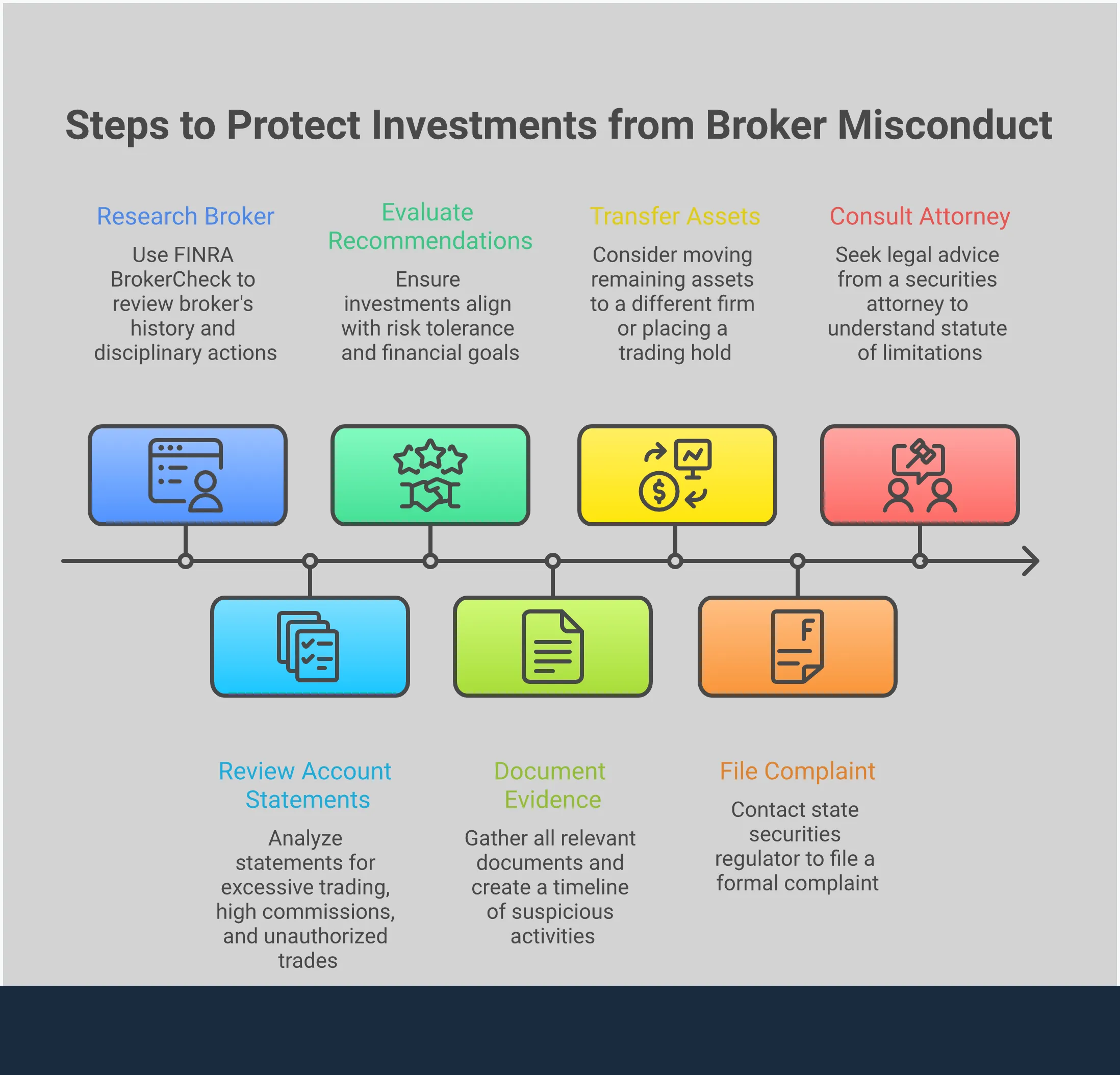
Use BrokerCheck to Research Your Broker
Before you entrust anyone with your money, it’s essential to do a background check. The best place to start is with FINRA’s BrokerCheck, a free and easy-to-use tool. This resource gives you a detailed look at a broker’s professional history, including their past employment, licenses, certifications, and—most importantly—any regulatory actions, violations, or customer complaints filed against them. Using this trusted tool allows you to verify that your broker is credible and helps you make an informed decision. It only takes a few minutes and can provide invaluable peace of mind.
Recognize the Warning Signs of Bad Advice
Even if a broker has a clean record on paper, you should always pay close attention to their behavior and recommendations. Be wary of any professional who suggests investments that seem overly risky or don’t align with your stated financial goals. For instance, some brokers are accused of recommending bad investments, especially to older clients, which lead to big losses while generating high fees for the broker and their firm. A long history of customer disputes is another major red flag. These complaints often involve things like being careless, not following instructions, lying, or excessive trading. These are serious investment issues that put your financial well-being at risk.
What to Do if You Lost Money with David Fagenson
Discovering you may have lost money due to your broker’s actions can be incredibly stressful. If you were a client of David Fagenson, you might be wondering what your next move should be. Taking clear, deliberate steps can make a significant difference in your ability to recover your losses. The process starts with two fundamental actions: gathering all your records and taking immediate steps to protect your remaining investments.
Document Your Losses and Gather Records
Your first step is to create a detailed paper trail. Strong documentation is the backbone of a successful claim. Start by collecting all relevant financial records, including account statements, trade confirmations, and any written communication you had with Fagenson, such as emails or letters. If you have notes from phone calls or meetings, gather those as well. Fagenson has faced allegations of making trades without permission and recommending unsuitable investments. Your records can help establish a pattern of broker fraud and negligence by showing transactions you didn’t authorize or investments that didn’t align with your stated financial goals and risk tolerance. Be as thorough as possible; every document helps build a clearer picture.
Take Steps to Protect Your Remaining Assets
While you gather your documents, it’s also critical to safeguard your remaining capital from further harm. You may have options for freezing your account or transferring it to a different firm, but it’s wise to get guidance before making any sudden moves. A securities attorney can review your situation and explain the best course of action. They can also help you understand the securities arbitration process, which is the typical forum for resolving these disputes. Remember, brokerage firms like UBS can sometimes be held liable for failing to supervise their brokers properly. If you are concerned about your investments with David Fagenson, contact us to discuss your legal options.
How a Securities Attorney Can Help
Discovering that your investment losses might be due to your broker’s actions can feel overwhelming. You might not know where to start or who to trust. This is where a securities attorney can make a significant difference. They have the specific knowledge required to analyze complex financial situations and hold accountable the financial professionals who have caused harm. An attorney acts as your advocate, handling the intricate details of your case so you can focus on your future. They work to level the playing field against large brokerage firms and guide you through the process of seeking justice and recovering your hard-earned money.
Investigating Your Broker Misconduct Claim
A securities attorney begins by thoroughly investigating your claim. For example, a broker like David Fagenson has a public record showing numerous customer disputes, alleging everything from misrepresentation to excessive trading. An attorney knows how to analyze this history alongside your account statements to identify patterns of misconduct. They can uncover evidence of broker fraud and negligence that you might not recognize on your own. This detailed investigation is the foundation of a strong case, connecting your financial losses directly to the broker’s wrongful actions and building a clear picture of what happened to your investments.
Pursuing Your Financial Recovery
Once the investigation uncovers evidence of misconduct, a securities attorney will help you pursue financial recovery. If you lost money investing with someone like David Fagenson, you have legal options. An attorney can explain the most effective path forward, which often involves filing a claim through securities arbitration. They manage the entire legal process, from filing the initial claim to representing you in hearings. Experienced law firms have helped investors recover significant losses caused by poor financial advice and misconduct. Having a dedicated legal professional on your side gives you the support needed to stand up for your rights and work toward reclaiming your financial stability.
Related Articles
- FINRA Panel Orders UBS To Pay For Bond Losses
- Allegations Against UBS Broker Michael Scott Rosenbach
- UBS To Pay $15M To Settle SEC Case
- UBS BROKER SENTENCED TO PRISON FOR PUERTO BOND FRAUD
Frequently Asked Questions
How can I tell if my investment losses are from normal market risk or actual broker misconduct? This is a common and important question. While all investments carry some risk, misconduct often leaves specific clues. Look for a pattern of frequent trades that don’t seem to have a clear purpose, high commission fees that are eating into your principal, or investments that feel far too risky for the goals you discussed with your advisor. If your portfolio is consistently losing money while your broker is still earning significant fees, it’s a major red flag that warrants a closer look.
My broker wasn’t David Fagenson, but some of these issues sound familiar. What should I do? The patterns of misconduct discussed here, like unsuitable recommendations or excessive trading, are unfortunately not unique to one broker. If you recognize these warning signs in your own situation, the recommended steps are the same. Start by gathering your account statements and any communications you have, and then consider speaking with a securities attorney who can help you understand if you have a valid claim.
I’m worried about the cost. How do securities attorneys typically get paid for these cases? It’s completely understandable to be concerned about legal fees, especially when you’ve already suffered financial losses. Most securities law firms handle these types of cases on a contingency fee basis. This means you don’t pay any attorney’s fees upfront. The firm is only paid a percentage of the money they recover for you. If there is no recovery, you owe no fee.
Is it too late to file a claim if the losses happened a few years ago? There are strict time limits, known as statutes of limitation, for filing claims, and they can be complex. The clock doesn’t always start when the loss occurred but rather when you discovered or should have discovered the wrongdoing. Because these deadlines are firm, it’s critical to act quickly once you suspect a problem. The best way to know for sure if you’re still within the window to file is to have your case reviewed by a qualified attorney.
What’s the most important first step if I suspect my broker has wronged me? The most crucial first step is to gather your documents. Collect all of your account statements, trade confirmations, and any emails or letters you have from your broker. These records are the foundation of any potential claim because they create a factual timeline of what happened with your money. Once you have your paperwork organized, you’ll be in a much stronger position to have your situation evaluated.