You are the most important guardian of your financial future. A key part of that role is thoroughly vetting any professional you hire to help manage your wealth. This is true whether you are just starting out or have been investing for decades. To help you in this process, we’ve compiled a comprehensive overview of UBS Financial Services, Inc. broker Benjamin Segal. This article covers his credentials, his tenure in the industry, and his approach to wealth management. By understanding his professional profile, you can make a more informed decision and ensure your advisor’s strategy aligns with your long-term goals.
Key Takeaways
- Verify your advisor’s professional history: Don’t rely solely on industry awards or a polished website. Use free tools like FINRA’s BrokerCheck to get an unbiased look at an advisor’s background, including any customer disputes or disciplinary actions.
- Trust your instincts on red flags: If an investment promises high returns with zero risk, or if you feel pressured to make a quick decision, it’s a major warning sign. A legitimate advisor will encourage questions and give you time to think, not rush you into something you don’t understand.
- Understand your legal options for recovery: If you believe you’ve lost money due to fraud or negligence, you have rights. The securities arbitration process is a formal pathway for investors to recover losses, and speaking with a specialized attorney is the first step to protecting your interests.
Who is Benjamin Segal of UBS Financial Services?
When you entrust your financial future to an advisor, it’s essential to understand their professional history and qualifications. This information helps you make informed decisions and is a fundamental part of protecting yourself from potential broker fraud and negligence. Benjamin Segal is a Managing Director and Private Wealth Advisor with UBS Financial Services. Let’s walk through his background, credentials, and experience so you have a clearer picture of his professional profile.
Segal’s Professional Background
At UBS, Benjamin Segal’s work centers on what he describes as smart investing, estate planning, and comprehensive financial planning for his clients. His role as a Private Wealth Advisor involves managing significant assets, and his professional history includes experience working with hedge funds and providing investment guidance for affluent families. This background places him in a segment of the financial industry that deals with complex and high-stakes wealth management strategies. Understanding this focus is important for any investor considering working with him or a member of his team.
His Credentials as a CPA and Attorney
Beyond his role in finance, Benjamin Segal holds additional professional credentials. He is a Certified Public Accountant (CPA) and a licensed attorney. These qualifications often suggest a deeper understanding of tax implications and legal structures related to financial planning and estate management. For clients, having an advisor with this kind of multifaceted background can seem appealing, as it points to a broad base of knowledge. It’s another piece of the puzzle when evaluating an advisor’s ability to handle intricate financial situations and provide well-rounded advice.
Over 30 Years of Industry Experience
Benjamin Segal has been working in the investment industry for over three decades. This extensive tenure means he has managed client assets through various market cycles, including periods of both growth and volatility. An advisor with a long track record has witnessed firsthand how different economic conditions can impact investment portfolios. For investors, this length of experience is often a key factor in their selection process. It’s a significant part of his professional story and provides context for his approach to wealth management and long-term financial strategy.
What Services Does Benjamin Segal Offer?
Benjamin Segal and his team at UBS offer a range of services tailored to high-net-worth individuals and families. Understanding these offerings can help you evaluate whether your financial professional is meeting their obligations. Here’s a look at the key services he provides to clients.
Wealth Management
As a wealth manager, Benjamin Segal focuses on investment strategies, estate planning, and comprehensive financial planning. His background includes over three decades of experience, during which he has worked with hedge funds and managed finances for affluent families. Advisors with this level of experience are expected to provide sophisticated and suitable advice. When they fail to do so, it can sometimes constitute broker fraud and negligence. A wealth manager’s primary role is to grow and protect a client’s assets, which requires a deep understanding of their financial situation and goals.
Estate and Tax Planning
A key part of Segal’s approach involves integrating estate and tax planning strategies into a client’s overall financial picture. This includes stress-testing portfolios to see how they might perform under various market conditions. The goal is to create a cohesive plan where every financial component works together to support long-term objectives. These are complex areas where missteps or unsuitable recommendations can lead to significant financial harm. It’s important for investors to understand the strategies being used with their money and to question anything that seems unclear or overly risky, as these can become serious investment issues.
Financial Planning Services
Benjamin Segal promotes a concept he calls “financial wellness,” which centers on helping clients feel clear and confident about their financial lives. This service involves helping you understand your current financial standing, your future trajectory, and how each decision aligns with your personal values and goals. While this approach sounds reassuring, the ultimate measure of a financial advisor is the performance and suitability of their recommendations. If an advisor’s actions contradict their promises of financial clarity and security, investors may have grounds to file a dispute through the securities arbitration process.
Access to Family Office Services
For certain clients, Segal provides access to family office services. This model consolidates functions that are typically handled by separate firms—such as accounting, investment management, legal services, and even real estate management—all under one roof. Entrusting such a wide range of critical financial responsibilities to a single team requires an immense amount of trust. A breach of that trust can have far-reaching consequences across every aspect of your financial life. If you believe your trust has been misplaced and your finances have been mishandled, it is important to know your legal options and contact an attorney for guidance.
What is Benjamin Segal’s Approach to Investing?
Understanding a financial advisor’s investment philosophy is crucial. It’s the foundation of their recommendations and tells you a lot about how they’ll manage your money. Benjamin Segal’s publicly stated approach is built on a comprehensive, long-term view of an investor’s financial life. He emphasizes creating a complete strategy that integrates not just investments, but also family dynamics, business interests, and legacy planning. This holistic method is designed to look beyond simple market returns and focus on what matters most to the client.
This client-first philosophy is what every investor should expect from their advisor. Your financial strategy should be a reflection of your personal goals and circumstances. When a broker deviates from this and recommends products that don’t fit your profile, it can lead to serious investment issues. Segal’s approach, as described, centers on creating a clear and confident financial path for his clients, treating their wealth as a tool to support their life goals and values. It’s a useful benchmark for evaluating whether your own advisor is truly putting your interests first.
Personalized, Long-Term Strategies
A core element of Benjamin Segal’s approach is the creation of personalized, long-term strategies. With over three decades of experience, he focuses on developing a complete financial plan that is tailored to each client’s unique situation. This means looking at the big picture—your family, your business, and your long-term goals—rather than just reacting to short-term market fluctuations. The idea is to build a resilient plan that can stand the test of time and adapt as your life changes. This level of customization is critical for ensuring your investments are working for you, not against you.
A Focus on Financial Wellness
Segal also emphasizes the concept of “financial wellness.” This goes beyond just having a certain amount of money in your accounts. It’s about having clarity and confidence in your financial life. You should understand where you are, where you’re headed, and how each financial decision supports your overarching goals and values. A comprehensive wealth management plan should help you fund your current lifestyle, prepare for the future, and create a meaningful legacy. When an advisor fails to provide this clarity, it can be a sign of broker fraud and negligence.
Aligning Investments with Client Goals
According to Segal, every investment strategy should be directly tied to a client’s time horizon, cash-flow needs, and family objectives—not passing market headlines. This is a fundamental principle of responsible financial advice. Your portfolio should be a tool designed to help you achieve specific goals, whether that’s retiring comfortably, funding a child’s education, or leaving a legacy. When brokers recommend investments that don’t align with these goals, they may be prioritizing their own commissions. Disputes over such unsuitable recommendations are often resolved through the securities arbitration process.
Has Benjamin Segal Received Industry Recognition?
When you’re evaluating a financial advisor, you’ll often come across a list of awards and accolades. These are meant to build trust and showcase a history of success. Benjamin Segal is no exception; his professional biography highlights several forms of industry recognition. While these awards can be one part of your research, it’s important to view them alongside a comprehensive review of an advisor’s record and practices. An award doesn’t guarantee that every investment recommendation is suitable for every client, and it’s still your responsibility to watch for signs of broker fraud and negligence. Understanding what these honors mean can give you a clearer picture of an advisor’s standing within their firm and the industry.
Forbes Advisor Rankings
Benjamin Segal has been named by Forbes as a top financial advisor. According to his team’s biography, this ranking acknowledges his work and the performance of his team, Kahner Segal Partners. Rankings like these are often based on factors such as assets under management, industry experience, and compliance records. For many investors, seeing a familiar name like Forbes can provide a sense of security. However, it’s crucial to remember that these lists are just one data point and shouldn’t replace your own personal due diligence when it comes to your financial future and potential investment issues.
UBS Pinnacle Council Membership
Within UBS, Benjamin Segal is a member of the firm’s Wealth Management Pinnacle Council. This is an internal honor reserved for advisors who meet high standards of performance, client service, and professional conduct within the company. Membership signifies that an advisor is among the top producers at the firm. While this indicates a successful practice within the UBS framework, it is an internal form of recognition. It reflects an advisor’s value to the company but doesn’t necessarily speak to the individual experiences of every client they have served over the years.
Leadership at Kahner Segal Partners
As a Managing Director and Private Wealth Advisor, Benjamin Segal holds a significant leadership position at UBS, where he helps guide the Kahner Segal Partners team. This role involves not only managing client relationships but also steering the team’s overall strategy and vision. A leadership role within a major firm like UBS suggests a deep level of experience and a strong reputation within the organization. It shows that the firm trusts him with significant responsibility, which is a factor many people consider when choosing an advisor to manage their wealth.
How Does Benjamin Segal Share His Insights?
Many financial advisors use public platforms to share their perspectives, build a brand, and connect with potential clients. This content can give you a sense of their investment philosophy and communication style. Benjamin Segal is active in this area, primarily through his podcast and contributions to financial discussions. By creating this content, he establishes a public profile as a voice in the wealth management industry. This strategy helps him reach a broad audience and build a reputation based on the insights he shares.
For investors, this public-facing material is one of many tools you can use to get a feel for an advisor. While podcasts and articles can offer general knowledge, they are not a substitute for personalized financial advice tailored to your specific situation. It’s always important to separate an advisor’s public persona from the direct management of your portfolio and to ensure their actions align with the philosophy they promote. If you ever feel there is a disconnect between what an advisor says and what they do, it may be a sign to look closer at your accounts and understand your rights as an investor. A polished public image does not always reflect sound or ethical practices behind the scenes.
His Podcast: “Insights by Ben Segal”
One of the main ways Benjamin Segal shares his views is through his podcast, “Insights by Ben Segal.” The show features conversations with leaders from various industries, focusing on their stories and paths to success. According to UBS, the podcast’s goal is for listeners to “leave with one or two pieces of knowledge you didn’t have before.” This format positions him as a curious host who brings valuable conversations to his audience. For potential clients, listening to a podcast can be a way to gauge an advisor’s personality and approach to business and finance before committing to a professional relationship.
Educational Content for Investors
The content Segal produces, particularly his podcast, is designed to provide broad inspiration and ideas from a range of successful people. The topics often extend beyond finance, touching on innovation and achievement in different fields. This approach can be appealing, as it suggests a holistic view of success. However, it’s important for investors to remember that general educational content is very different from the specific, regulated advice required for managing your investments. Any concerns about the suitability of your portfolio should be addressed directly, as broad-stroke insights can’t replace a detailed review of your investment issues.
His Role as an Industry Voice
Benjamin Segal also contributes to financial publications, where he discusses his philosophy on wealth management. He often speaks about the concept of “financial wellness,” which he defines as “the ability to live with clarity and confidence about your financial life.” By taking on this role as an industry voice, he builds a reputation and shares his perspective with a wider audience. While a strong public presence can be reassuring, it doesn’t guarantee performance or ethical behavior. Investors should always balance an advisor’s public statements with a thorough review of their professional history and any instances of broker fraud and negligence.
What Should You Know About UBS Financial Services?
When you work with a financial advisor, you’re not just trusting that individual—you’re also placing your confidence in the firm they represent. UBS Financial Services is one of the largest and most recognizable names in the financial world. Understanding the firm’s structure and what it promises clients is an important first step in evaluating the service you receive. It provides context for your advisor’s recommendations and the resources they have at their disposal.
An Overview of the Firm
UBS is a global financial services firm operating in more than 50 countries. Its business covers a wide spectrum, including wealth management for individuals, investment banking for corporations, and asset management. The company presents itself as a client-focused institution that delivers customized financial strategies. As one of the world’s largest wealth managers, its reputation is built on this promise. However, the sheer size of a firm like UBS means that oversight can be a challenge, and not all brokers may adhere to the high standards clients expect. When issues of broker fraud and negligence arise, the firm’s resources can feel intimidating for an individual investor to challenge alone.
The UBS Wealth Management Platform
UBS promotes its Wealth Management platform as a comprehensive tool designed to manage every aspect of a client’s financial life. The platform offers access to sophisticated solutions often reserved for large institutions, like portfolio stress-testing and integrated estate and tax planning. The goal is to create a clear, long-term financial plan that supports your current lifestyle while preparing for the future. While these tools are powerful, their effectiveness depends entirely on the advisor managing your account. A comprehensive platform can be misused if a broker recommends unsuitable products or fails to align the strategy with your actual needs, leading to significant investment issues and financial harm.
How Can You Research a Financial Advisor?
Before entrusting someone with your financial future, it’s essential to do your homework. Taking the time to research a financial advisor is one of the most important steps you can take to protect your investments. Fortunately, there are free and reliable tools available that make this process straightforward, giving you a clear picture of a professional’s background, qualifications, and history.
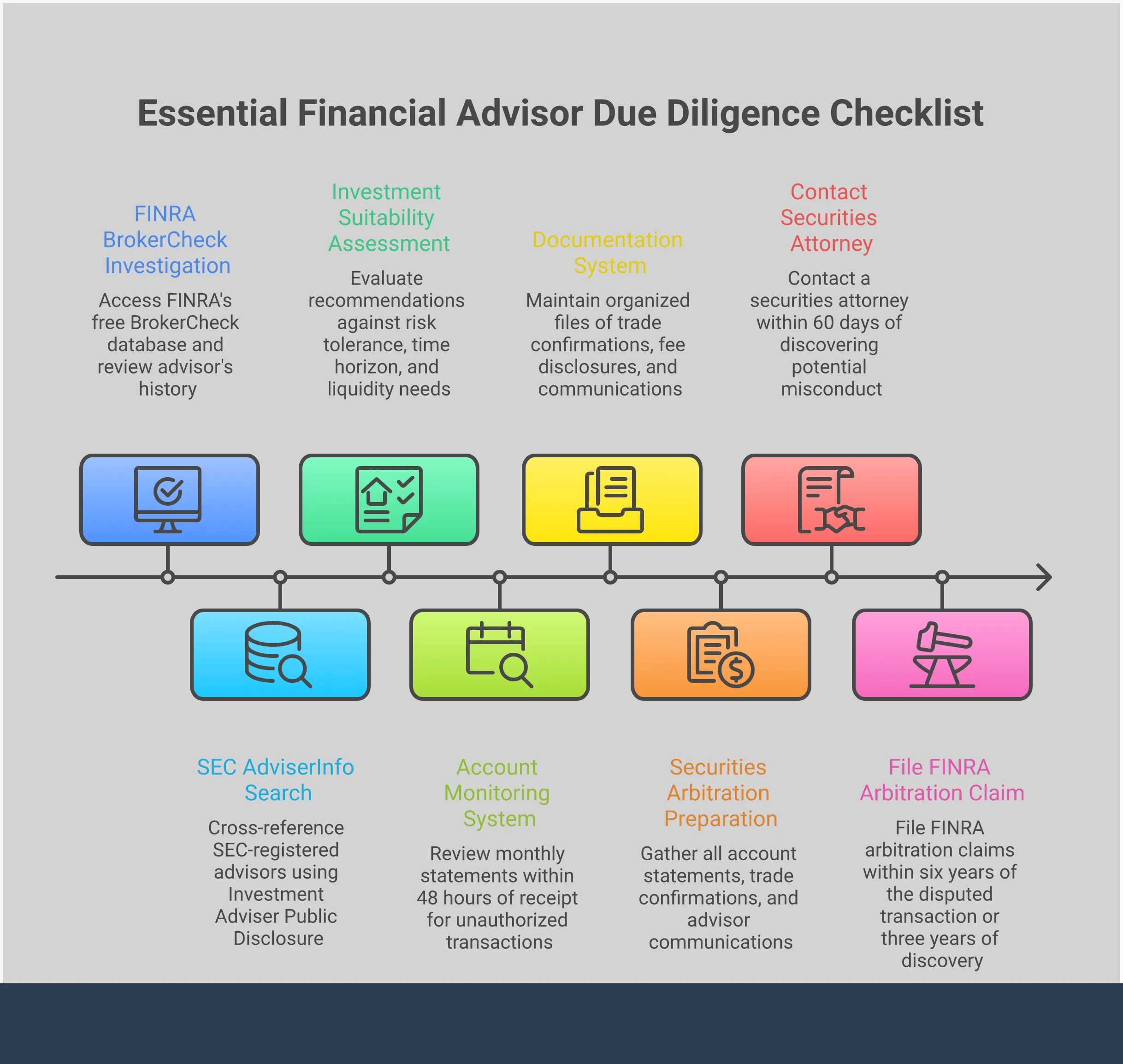
Using FINRA’s BrokerCheck Tool
One of the most valuable resources at your disposal is FINRA’s BrokerCheck tool. This free online database allows you to look into the professional history of brokers and investment advisors. By simply entering an advisor’s name, you can access a detailed report covering their employment history, licenses, certifications, and—most importantly—any past disciplinary actions or customer complaints. This initial search provides a solid foundation for your research and can immediately highlight any potential red flags. It’s a simple first step that offers a significant amount of insight into who you’re considering working with.
How to Read Regulatory Records
Once you have the BrokerCheck report, it’s important to know what you’re looking at. The report summarizes an advisor’s career, showing you where they’ve worked and their current registration status. Pay close attention to the “disclosure events” section. This is where you’ll find information on customer disputes, regulatory actions, or terminations, which can signal issues with their professional conduct. If an advisor isn’t listed on BrokerCheck, they may be registered with the SEC. In that case, you can find more information through the SEC’s Investment Adviser Public Disclosure (IAPD) database. Understanding these records helps you see beyond the sales pitch and evaluate an advisor’s history.
Key Due Diligence Steps
To make an informed decision, follow a few key due diligence steps. First, always verify that the advisor is registered with FINRA or the SEC. Legitimate professionals must be licensed to sell financial products. Second, carefully review their disciplinary history for any patterns of misconduct. Third, assess their qualifications to ensure they have the right background for your specific financial needs. Finally, have a conversation about their investment philosophy. A trustworthy advisor should be able to clearly explain their strategy and how it aligns with your personal goals, giving you confidence in their approach.
What are the Warning Signs of Investment Fraud?
Trusting someone with your financial future is a big step, and it’s devastating when that trust is broken. Investment fraud can be subtle, but there are often clear warning signs if you know what to look for. Recognizing these red flags is the first line of defense in protecting your hard-earned money. It’s not about being paranoid; it’s about being prepared. Understanding how brokers should act and what constitutes a sound investment empowers you to ask the right questions and spot inconsistencies before they escalate.
Fraudsters are skilled at building trust and creating an illusion of legitimacy. They might have a professional-looking website, impressive-sounding credentials, and a friendly demeanor that puts you at ease. This is why focusing on their actions, the nature of the investments they recommend, and the pressure they apply is so critical. A legitimate advisor will welcome your questions and encourage you to take your time, while a scammer will often do the opposite. By staying informed, you can identify potential problems before they lead to significant financial loss. This section will walk you through some of the most common warning signs, from a broker’s questionable conduct to the characteristics of an unsuitable investment, so you can feel more confident in your financial decisions.
Red Flags in a Broker’s Conduct
The way a financial professional behaves can tell you a lot. One of the biggest warning signs is pressure. A legitimate advisor gives you time to think and review documents, but a fraudster will often push you to make a decision right now. They create a false sense of urgency to prevent you from doing your due diligence. Another red flag is the promotion of unregistered products. Most legitimate investments are registered with regulatory bodies. If your broker is pushing an investment that isn’t, you should proceed with caution. This type of broker negligence can put your entire portfolio at risk.
Spotting Unsuitable Investments
Beyond a broker’s behavior, the investment itself can raise alarms. Be skeptical of any investment that promises high returns with little to no risk. Every investment carries some level of risk, and anyone who tells you otherwise is not being truthful. This is a classic tactic used to lure investors into fraudulent schemes. You should also be wary of overly complex strategies that are difficult to understand. Fraudsters sometimes use confusing jargon to hide the true nature of a risky investment. If you can’t understand it, you probably shouldn’t invest in it. These are common investment issues that can lead to major losses.
Signs of Elder Financial Abuse
Older investors are often targeted by fraudsters, making it crucial for them and their families to recognize the signs of financial abuse. A significant red flag is when a broker attempts to isolate an older client from their family members. This tactic makes it easier to manipulate and control the person’s finances without interference. Another clear sign is the misuse of funds. If you notice unusual withdrawals or if an advisor is using an investor’s money for their own expenses, it’s a serious problem. You can find a helpful checklist of fraud red flags on Investor.gov to stay prepared.
What Are Your Legal Options After Investment Fraud?
Discovering that you may have been a victim of investment fraud can be overwhelming and distressing. It’s easy to feel lost and unsure of what to do next. The good news is that you have rights, and there are established legal pathways to help you pursue the recovery of your hard-earned money. The key is to act promptly and understand the options available to you.
Depending on the specifics of your situation, your case might be resolved through a process called securities arbitration, or it could involve other legal actions. The financial industry has specific rules and forums for handling these types of disputes, which are designed to be more efficient than traditional court litigation. An attorney who understands the complexities of investment issues can help you determine the most effective strategy for your claim. Taking the first step by seeking legal advice is critical to protecting your interests and holding the responsible parties accountable for their actions.
The Securities Arbitration Process
One of the most common ways to resolve investment-related disputes is through securities arbitration. Think of it as a private, streamlined alternative to a public court battle. When you open an account with a brokerage firm, you typically sign an agreement that requires any future disputes to be settled this way. The process involves presenting your case to a neutral arbitrator or a panel of arbitrators who will hear both sides and issue a binding decision.
This forum is often faster and less formal than going to court. The entire process is managed by the Financial Industry Regulatory Authority (FINRA), which sets the rules to ensure a fair hearing. Pursuing a claim through securities arbitration is a formal legal action designed specifically to help investors recover losses caused by broker misconduct or fraud.
How to Recover Investment Losses
If you suspect you’ve lost money due to fraud, your first step is to gather all relevant documents, including account statements, trade confirmations, and any communications you had with your advisor. Once you have your records organized, it’s time to speak with a lawyer. An attorney who handles cases of broker fraud and negligence can review your situation, explain your rights, and outline a clear path forward.
Your lawyer will help you file a formal claim, typically through FINRA arbitration, to seek recovery of your losses. They will handle the legal complexities, from building your case to representing you in hearings. You don’t have to face this situation on your own. Getting professional guidance is the most important step you can take to protect your financial future.
How to Protect Your Investments
Taking an active role in your financial life is the best way to safeguard your future. It’s not about becoming a market analyst overnight, but about staying informed, asking questions, and knowing what to look for. A good advisor should welcome your involvement and be transparent about their strategies. By regularly checking in on your accounts and understanding your rights, you can build a strong defense against potential misconduct and ensure your investments are always working toward your personal goals.
Key Questions for Your Advisor
Your financial strategy should be a clear reflection of your goals and values. To ensure you and your advisor are on the same page, it’s crucial to ask direct questions. Start by asking how every decision supports your long-term objectives. Inquire about their investment philosophy, how they are compensated, and who holds your money. Understanding these fundamentals can help you spot inconsistencies or strategies that don’t feel right. If an advisor can’t clearly explain how their plan helps you achieve your goals, it could be a sign of broker fraud and negligence. True financial clarity comes from knowing your money is being managed with your best interests at heart.
How to Monitor Your Accounts
Regularly reviewing your investment accounts is about more than just checking your balance. It’s an opportunity to ensure your financial plan is cohesive and performing as expected. Take the time to read your monthly statements carefully. Look for any unfamiliar transactions, unexpected fees, or investments that don’t align with your risk tolerance. A well-managed portfolio should be stress-tested against different market conditions, and all aspects, from investments to estate and tax planning, should work together. If you see something that doesn’t make sense or have questions about certain investment issues, ask your advisor for a detailed explanation immediately. Consistent monitoring helps you catch potential problems early.
Know Your Rights as an Investor
The financial industry is governed by strict regulations designed to protect you. Regulators like the SEC are actively working to enforce these rules, bringing dozens of actions against investment advisers each year. For example, advisers are required to keep detailed records of allocations and confirmations, creating a paper trail for every transaction. Understanding these requirements helps you hold your advisor accountable. You have the right to receive clear information, suitable investment recommendations, and fair treatment. If you feel those rights have been violated, you have legal options, including the securities arbitration process, to recover your losses.
Related Articles
- Who Is UBS Financial Services Inc. Broker Michael Meniktas?
- UBS Broker William Meador: Investigating Investment Loss Claims
- Financial Advisor Raul Benitez Faces Multiple Allegations of Unsuitable Investment Recommendations
- Jeffrey Howell Barred From Securities Industry
- NJ Financial Advisor Pleads Guilty To Fraud
Frequently Asked Questions
My advisor has won awards and is recognized by publications like Forbes. Doesn’t that mean my money is in good hands? Industry awards and rankings can certainly look impressive, but they don’t tell the whole story. These honors are often based on factors like the amount of money an advisor manages or their production numbers within the firm. They don’t guarantee that every piece of advice given is suitable for every client’s unique financial situation. It’s still essential to monitor your own accounts and question any strategy that doesn’t align with your personal goals.
The blog post mentions “unsuitable investments.” What does that actually mean? An unsuitable investment is any financial product that doesn’t fit your specific circumstances. This could be based on your age, income, risk tolerance, or long-term goals. For example, a high-risk, speculative stock might be unsuitable for someone nearing retirement who needs to preserve their capital. Your advisor has a duty to recommend investments that are appropriate for you, and failing to do so can be a form of negligence.
I’m worried about my portfolio, but I feel overwhelmed at the thought of questioning a large, well-known firm. What should I do first? It’s completely understandable to feel that way. A good first step is to gather your documents, such as account statements and any written communication you have with your advisor. Having this information organized will give you a clearer picture of your situation. The next step is to speak with a securities attorney who can review your case and explain your options in a way that makes sense, without any obligation.
If I signed an account agreement, have I signed away my right to take legal action? This is a common concern, but the answer is no. Most account agreements include a clause that requires you to resolve disputes through a process called securities arbitration, which is handled by FINRA. This is a formal legal process specifically designed for investor claims. It’s a different venue than a traditional courtroom, but it is absolutely a way to hold a firm accountable and seek to recover your losses.
What’s the single most important thing I can do to protect myself going forward? Stay involved and ask questions. You don’t need to be a financial professional, but you should have a basic understanding of where your money is and why. Regularly review your account statements and don’t hesitate to ask your advisor to explain any transaction or fee you don’t understand. A trustworthy advisor should be able to provide clear, simple answers that give you confidence in your financial plan.