
+1-888-741-7503
NO FEES UNTIL WE WIN
FREE CONSULTATION
NO FEES UNTIL WE WIN
FREE CONSULTATION
You placed your trust in a financial professional to guide you, believing they had your best interests at heart. When that trust is broken and your savings disappear, it’s easy to blame yourself or chalk it up to bad luck in the market. The truth is, the financial industry has strict rules, and your advisor has a duty to recommend suitable investments. If they failed in that duty, your losses may not be your fault at all. Going up against a large brokerage firm alone is a daunting task. They have teams of lawyers to protect their interests. An Alabama stock fraud lawyer acts as your advocate, leveling the playing field and fighting to recover the money you lost due to negligence or deceit.
At its core, stock fraud is about deception. It happens when a broker, advisor, or company intentionally misleads investors by providing false information or hiding critical details about an investment. This can trick people into making financial decisions that result in significant, often devastating, losses. It’s not always a dramatic, headline-grabbing scheme; sometimes, it’s as subtle as an advisor pushing a product that isn’t right for you just to earn a higher commission. The result is the same: your hard-earned money is put at risk because you weren’t given the whole truth.
So, when is it time to call a lawyer? The moment you feel something isn’t right. If you’re seeing unexpected losses, your advisor is being evasive, or your account statements don’t make sense, trust your instincts. You don’t need to have concrete proof of fraud to seek legal advice. An experienced attorney can help you understand if your losses are due to normal market fluctuations or if they are the result of misconduct. Getting a professional opinion early on is the best way to protect your rights and explore your options for recovering your funds. Many people hesitate, thinking they need a perfect case, but the reality is that a lawyer can help you piece together what happened and determine the strength of your claim. They can help you make sense of these complex investment issues and guide you on the next steps.
Fraud can take many forms, and knowing what to look for is the first step toward protecting yourself. Many investors in Alabama fall victim to the same types of misconduct. These often involve a breach of trust by a financial professional who was supposed to act in your best interest. Some of the most common examples of broker fraud and negligence include unsuitable investment recommendations that don’t fit your age or risk tolerance, unauthorized trading in your account, and excessive trading (or “churning”) designed only to generate commissions. Other serious issues include misrepresenting the facts about an investment or failing to disclose important risks.
Fraudulent brokers often use similar tactics, and recognizing their warning signs can save you from financial harm. Be wary of any advisor who promises guaranteed high returns with little to no risk; all investments carry some level of risk. Another major red flag is high-pressure sales tactics urging you to “act now” before you have time to do your research. You should also be cautious if your account statements are confusing or if you see trades you never authorized. If your broker can’t clearly explain their strategy or why a specific investment is right for you, it’s a problem. If any of this sounds familiar, it’s time to contact us to review your situation.
Discovering you may be a victim of investment fraud can feel overwhelming. The financial system is complex, and going up against a large brokerage firm alone is a daunting task. This is where an Alabama stock fraud lawyer comes in. Their role is to be your guide and advocate, helping you understand your options and taking on the legal burdens so you can focus on moving forward. They work to hold negligent parties accountable and recover the assets you worked so hard to earn.
When you hire a securities fraud attorney, you get a dedicated professional who puts your needs first. They act as your voice, communicating directly with financial firms and their legal teams on your behalf. Your lawyer will analyze your case, explain your rights in clear terms, and develop a strategy tailored to your specific situation. Their focus is solely on representing you in disputes within the securities industry. This means you have someone in your corner who understands the tactics used by brokerage firms and is prepared to counter them effectively, ensuring your side of the story is heard and your investment issues are addressed properly.
Most investor disputes aren’t settled in a traditional courtroom. Instead, they are often resolved through a process called securities arbitration, typically overseen by the Financial Industry Regulatory Authority (FINRA). An Alabama stock fraud lawyer manages this entire process for you. This includes filing the official claim, gathering evidence through discovery, representing you in hearings, and presenting a compelling argument to the arbitration panel. They handle the intricate legal procedures and deadlines, building a strong case to prove misconduct. By managing the complexities of arbitration or litigation, your attorney allows you to pursue justice without having to become a legal scholar yourself.
The primary goal of taking legal action is to recover the money you lost due to misconduct. A lawyer will meticulously review your financial records, account statements, and communications with your broker to build a powerful case for damages. They work to demonstrate how the broker fraud and negligence directly caused your financial harm. From there, they will aggressively pursue the maximum compensation you are entitled to, whether through a negotiated settlement or an arbitration award. If you believe your financial losses are the result of fraud, reaching out to a lawyer is the first step toward holding the responsible parties accountable and working to get your money back.
Realizing you might be a victim of stock fraud is a heavy burden, and the path to recovery can seem confusing. Your first, most powerful step is choosing the right legal advocate. This decision is about more than just hiring a lawyer; it’s about finding a partner who truly understands the complexities of investment issues and is dedicated to your financial well-being. The right attorney will guide you through the legal system, handle the intricate details, and fight to recover what you’ve lost. Taking the time to find a qualified professional is crucial for the success of your case.
A good lawyer won’t just file paperwork; they will listen to your story, explain your options in plain language, and build a strategy tailored to your specific situation. They become your voice in a system that can feel intimidating. When you’re facing off against a large brokerage firm, you need someone with the right background and resources on your side. Here’s what to focus on when you’re ready to find an Alabama stock fraud lawyer who can champion your cause.
Securities law is a highly specialized field with its own set of rules and procedures. You wouldn’t ask a family doctor to perform heart surgery, and the same principle applies here. A general practice attorney simply won’t have the focused knowledge needed to effectively handle your case. Look for a lawyer or firm whose practice is centered on securities litigation and arbitration. They will be familiar with the tactics brokerage firms use and understand the nuances of proving broker fraud and negligence. This specific background is essential for building a strong claim and working toward a successful resolution.
Before you commit to an attorney, do a little homework. It’s important to confirm that they are properly licensed and in good standing. In Alabama, for instance, the law requires financial professionals to be registered with the state’s security commission. You can check an attorney’s credentials through the state bar association. This simple step provides peace of mind and confirms you are working with a legitimate professional who is authorized to handle your case. A reputable firm will be transparent about their qualifications and make this information easy for you to find.
What former clients say can tell you a lot about what it’s like to work with a law firm. Look for testimonials and reviews that speak to the attorney’s communication style, professionalism, and dedication. While every case is unique and past results don’t guarantee a future outcome, a history of successful cases shows that the firm has a track record of getting results. You want a team that not only has legal knowledge but also makes you feel heard and supported throughout the process of securities arbitration. A firm that is proud of its work will often share case studies or client feedback.
Investment fraud can show up in many different ways, and it’s not always as obvious as a dramatic movie scene. Often, it’s a slow burn of broken trust and confusing advice that leaves you with significant financial losses. At our firm, we’ve seen how financial advisors and brokerage firms can take advantage of investors through a variety of tactics. Understanding these common scenarios is the first step toward recognizing if you have a case. We handle a wide range of investment issues, from straightforward negligence to complex fraudulent schemes. Below are some of the primary types of cases we help our clients with.
Your financial advisor has a responsibility to recommend investments that fit your specific situation. This means they should consider your age, financial goals, income, and how much risk you’re comfortable taking. When they suggest a product that is too risky or doesn’t align with your objectives, it’s known as an unsuitable recommendation. For example, putting a retiree’s entire nest egg into a highly volatile startup stock would likely be considered unsuitable. These recommendations can lead to devastating losses, and they represent a serious breach of the trust you placed in your advisor. If you feel your portfolio was filled with investments that never made sense for you, it’s worth looking into.
You should always be in control of your investment account. Unauthorized trading happens when a broker buys or sells securities in your account without getting your permission first. Unless you have given them specific discretionary authority in writing, they must have your consent for every transaction. Similarly, “churning” is when a broker trades excessively in your account just to generate commissions for themselves, not to benefit you. If you see a lot of activity in your account that you don’t understand or didn’t approve, it could be a sign of broker fraud and negligence. These actions can drain your account balance through fees and poor investment choices.
Brokers and financial advisors are held to professional standards and have a duty to act in your best interest. Misconduct can take many forms, from failing to properly supervise their employees to neglecting to monitor your investment strategy as market conditions change. Negligence isn’t always about a deliberate attempt to defraud you; sometimes it’s a simple failure to provide the competent advice you’re paying for. This can include a lack of due diligence on an investment product or failing to explain the risks involved. When this carelessness causes you to lose money, the broker or their firm can be held accountable for their actions.
Misrepresentation is a fancy term for when a broker lies or omits crucial facts about an investment. They might overstate potential returns, downplay risks, or provide false information about a company’s health to convince you to invest. This is a direct form of deception. A Ponzi scheme is a type of fraud where money from new investors is used to pay returns to earlier investors, creating the illusion of a profitable enterprise. These schemes inevitably collapse when they can’t attract enough new money. If the promises about an investment opportunity seemed too good to be true, it’s possible you were misled. If you suspect fraud, please contact us to discuss your situation.
If you’ve lost money due to investment fraud, it can feel like you have nowhere to turn. But you’re not alone, and you have more protections than you might realize. Both state and federal laws are in place to shield investors from misconduct. Understanding these rights is the first step toward holding responsible parties accountable. Let’s walk through the key legal frameworks that protect investors in Alabama, so you know what tools are available to help you.
The Alabama Securities Act is a powerful tool for investor protection. At its core, this law makes it illegal for financial advisers to use fraudulent or deceptive practices when selling securities. They are legally required to give you accurate information and cannot mislead you about an investment’s suitability. The act is designed to ensure you can make clear, informed decisions based on facts, not false promises. It’s a fundamental safeguard against many common investment issues that can put your savings at risk.
Your protections don’t stop at the state line. Federal laws, like the Securities Act of 1933, create a national safety net for investors. These regulations are designed to keep financial markets transparent and hold bad actors accountable for securities fraud. The U.S. Securities and Exchange Commission (SEC) is the federal agency responsible for enforcing these laws, providing another critical layer of defense. If you have information about wrongdoing, you may even be able to act as an SEC whistleblower and help prevent others from being harmed.
The Financial Industry Regulatory Authority (FINRA) is a private organization that regulates brokerage firms and their employees. It sets and enforces the rules that financial professionals must follow, from making suitable recommendations to handling your accounts properly. When brokers violate these rules, investors can file claims. Many cases involving broker fraud and negligence are resolved through securities arbitration overseen by FINRA, which is often a more direct path to justice than going to court.
It can be incredibly disorienting to realize the investment you trusted was not what it seemed. At its core, securities fraud involves misleading an investor by providing false information or conveniently leaving out critical details about an investment. If you suspect you were deceived into making a poor financial decision, it’s important to understand what makes a claim valid. Not every investment loss is the result of fraud, but many are caused by broker fraud and negligence.
Determining whether you have a strong case depends on the specific actions your broker or advisor took. Did they recommend an investment that was far too risky for your financial situation? Did they make trades without your permission? These are the kinds of questions that help uncover potential misconduct. The key is to show that you were misled and that this deception directly caused your financial losses. Understanding the specific laws that apply is the first step toward holding the responsible parties accountable and working to recover your money.
To build a successful securities fraud case, you need to show that your broker or advisor failed in their duty to you. A common violation happens when a broker recommends an investment that is completely wrong for your financial goals, age, and risk tolerance. Under the Alabama Securities Act, advisors are prohibited from misleading or deceiving clients about whether an investment is suitable for them. To establish your case, you’ll need to demonstrate that the broker either acted with negligence, which is a serious lack of care, or had a clear intent to deceive you for their own benefit.
Being organized is one of your greatest assets when pursuing a claim. When you meet with a securities attorney, they will need to review documents to understand your situation and calculate the full value of your losses. Start by gathering every relevant piece of paper you can find. This includes account statements, transaction records, and any emails, texts, or letters you exchanged with your broker or financial advisor. These documents create a timeline and provide concrete evidence to support your case. Having them ready will make your initial consultation much more productive and help your legal team get started right away.
When you realize you’ve lost money due to potential investment fraud, it’s easy to feel overwhelmed. The path forward can seem unclear, and many misconceptions about hiring a lawyer can stop you from taking action. Let’s clear up a few common myths so you can make an informed decision about protecting your financial future. Believing these myths can be the difference between recovering your losses and walking away with nothing.
The reality is that the financial industry has complex rules, and firms have powerful legal teams on their side. Pursuing a claim requires a deep understanding of securities regulations and the specific procedures for filing disputes, which are often handled through securities arbitration. An attorney who focuses on these cases can help you build a strong claim, gather the right evidence, and represent your interests against large brokerage firms.
It’s natural to want to take charge and fix a problem, especially when your own money is on the line. However, trying to handle a stock fraud case on your own is incredibly challenging. The rules governing the securities industry are intricate, and the process for recovering funds is not designed for the average investor. It’s very difficult to get help directly from regulators like the SEC or to successfully manage a claim by yourself. A seasoned lawyer knows how to properly file a claim, meet strict deadlines, and argue your case effectively, giving you a much stronger chance of a favorable outcome.
Thinking that any lawyer can handle a securities fraud case is like asking a family doctor to perform heart surgery. While both are doctors, their specializations are vastly different. The same is true in law. Securities law is a highly specific and complex field. A general practice attorney likely won’t have the focused knowledge of FINRA regulations or experience with the unique tactics used in these cases. You need someone who dedicates their practice to fighting for investors who have been wronged by broker fraud and negligence. Choosing a lawyer with specific experience in this area is critical to building a compelling case.
The fear of high legal bills prevents many people from seeking the help they need. Fortunately, most reputable securities fraud lawyers work on a contingency fee basis. This means you don’t pay any attorney’s fees unless they successfully recover money for you. The lawyer’s fee is a percentage of the amount recovered, so their goals are directly aligned with yours. This arrangement makes quality legal representation accessible to everyone, regardless of their current financial situation. You can learn about your options without any upfront cost by scheduling an initial consultation to discuss your case.
Taking legal action can feel like a big step, but understanding the process makes it much more manageable. When you work with a securities fraud attorney, you’ll have a dedicated professional guiding you through each stage. The goal is to build a strong case on your behalf while you focus on moving forward. The journey typically involves an initial review, a thorough investigation, and a resolution through either a settlement or a formal hearing. Your legal team will handle the complexities, ensuring your rights are protected.
Your first step is to schedule an initial consultation. This meeting is a confidential opportunity to share your story and discuss the losses you’ve suffered due to potential broker fraud and negligence. We will listen to your experience, review any documents you have, and help calculate the potential value of your claim. This is also your chance to ask questions and understand your legal options without any pressure. The goal of this first conversation is to determine if you have a valid case and to outline a clear path forward. We want you to leave feeling informed about your next steps.
Once you decide to proceed, your legal team gets to work. We will formally file a claim on your behalf and begin the critical process of gathering evidence. This involves collecting account statements, correspondence with your broker, and other financial records to build a detailed picture of what happened. We focus on representing clients in complex matters involving the securities industry, meticulously preparing all necessary documentation to support your case. Our team handles the intricate paperwork and procedural requirements, allowing you to focus on your life while we handle the legal details.
Most investment fraud cases are resolved in one of two ways: a negotiated settlement or a formal hearing. Often, a fair settlement can be reached through direct negotiation, which can be a faster path to resolution. However, if a reasonable agreement isn’t possible, we are fully prepared to represent you in a hearing. The majority of these disputes are handled through the securities arbitration process, a specialized forum for resolving investment-related conflicts. We will advocate for your interests and fight to recover the compensation you deserve, whichever path your case takes.
Discovering that you may be a victim of investment fraud is a deeply unsettling experience. It’s easy to feel overwhelmed and unsure of what to do next. The good news is that you don’t have to figure it out alone. There are established legal paths designed to help investors recover their hard-earned money, and a dedicated attorney can guide you through every step. Taking action is the first move toward putting this difficult chapter behind you and reclaiming your financial security.
When your investments lose value because of fraud or negligence, you have rights. The primary goal is to pursue compensation for the financial damages you’ve sustained. Depending on the specifics of your situation, this could involve filing a claim through a dispute resolution forum or taking other legal action. The most effective way to understand your options is to discuss your case with a securities lawyer as soon as possible. They can review the details of your investment issues and outline a clear strategy for seeking the recovery you deserve. Acting quickly is key to protecting your ability to file a claim.
If you suspect fraud, your first move should be to gather all related documents. This includes account statements, emails, contracts, and any notes you took during conversations with your broker or advisor. These records are crucial pieces of evidence. Once you have your documents organized, the next step is to speak with an attorney who concentrates on securities law. We can discuss your case in an initial consultation to help you understand your legal standing and the potential for recovery. This conversation is a critical step in holding the responsible parties accountable for broker fraud and negligence.
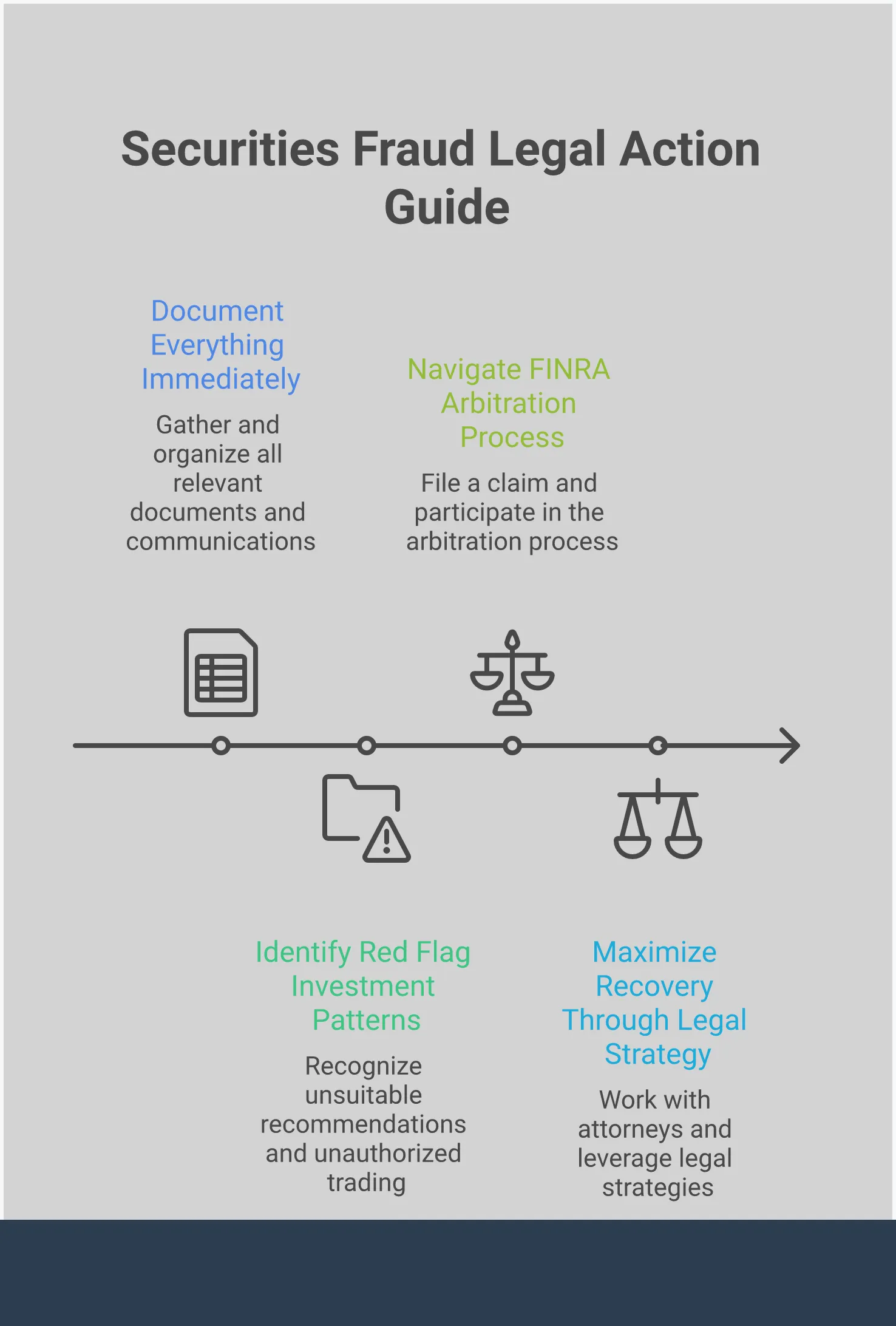
The legal process for recovering investment losses takes time, but a clear plan can make it feel much more manageable. It all starts with a thorough case review. We’ll meet with you to discuss your losses, answer your questions about taking legal action, and explain how we’ll work to get you the damages you need. The path forward often involves filing a formal claim and may lead to negotiation, mediation, or a formal hearing through securities arbitration. Throughout the entire process, you can expect to have a dedicated legal team providing guidance and fighting for your interests.
If you’ve lost money due to investment fraud, the thought of paying for a lawyer can feel overwhelming. Fortunately, you don’t have to let financial concerns stop you from seeking justice. Most securities fraud attorneys in Alabama work on a contingency fee basis. This payment structure is designed to help people who have been wronged without adding the burden of upfront legal bills.
Simply put, a contingency fee means your lawyer only gets paid if they successfully recover money for you. Their fee is a percentage of the final settlement or award. This approach makes quality legal representation accessible and ensures your attorney is just as motivated as you are to achieve a positive outcome. It allows you to pursue your claim with the support of a dedicated legal team without paying out of pocket. If you’re concerned about the cost of legal action, a good first step is to contact us for a straightforward conversation about your case and how we can help.
The contingency fee model is a partnership. Instead of billing you by the hour, your attorney agrees to take on your case with the understanding that their payment comes directly from the funds they recover on your behalf. This means you won’t receive a bill for their time or effort while the case is ongoing. If your case doesn’t result in a financial recovery, you owe no attorney fees. This arrangement removes the financial risk of pursuing a claim and allows you to focus on the process of holding the responsible parties accountable through processes like securities arbitration.
While the contingency fee covers your lawyer’s services, every legal case involves other expenses. These are the direct costs of building and arguing your case, such as court filing fees, charges for obtaining documents, or fees for hiring financial analysts to testify. It’s important to have a clear conversation about these costs during your initial consultation. You should understand how these expenses are paid. Often, the law firm will cover these costs and then be reimbursed from the settlement amount. Understanding this process from the start helps you make informed decisions about your case involving broker fraud and negligence.
What if I’m not sure if my losses are from fraud or just a bad market? This is a very common and valid concern. It’s not your job to be a legal scholar; it’s a lawyer’s job to help you figure that out. Normal market ups and downs are one thing, but losses caused by unsuitable recommendations, excessive trading, or misleading information are another. An attorney can review your account statements and communications to identify patterns of misconduct that go beyond typical market risk.
How long do I have to file a claim for investment fraud? There are strict deadlines, known as statutes of limitation, for filing investment fraud claims. The exact timeframe can be complicated, but the clock often starts ticking from the moment you discovered, or reasonably should have discovered, the potential wrongdoing. Because these deadlines are firm, it is very important to speak with an attorney as soon as you suspect a problem to protect your right to recover your losses.
Will I have to testify in a courtroom? It’s highly unlikely. The vast majority of investor disputes are resolved through a process called securities arbitration, which is a private forum, not a public courtroom. While you will need to provide information and may give testimony, it happens in a setting that is much less formal than a traditional trial. Your attorney will be with you every step of the way to prepare you and present your case to a neutral arbitration panel.
My broker claims I knew the risks. Do I still have a case? Yes, you still might have a strong case. While all investments carry some level of risk, financial advisors have a duty to recommend products that are suitable for your specific financial situation, age, and goals. Simply being told an investment is “risky” doesn’t give a broker a free pass to put your retirement savings into an inappropriate product. The core issue is often whether the investment was suitable for you in the first place.
What does it mean to work on a contingency fee basis? Working on a contingency fee basis means you do not pay any attorney’s fees unless we successfully recover money for you. Our payment is a percentage of the final award or settlement. This approach allows you to pursue justice without the stress of upfront costs or hourly bills. It ensures our goals are perfectly aligned with yours: to recover the maximum amount possible for your losses.