
+1-888-741-7503
NO FEES UNTIL WE WIN
FREE CONSULTATION
NO FEES UNTIL WE WIN
FREE CONSULTATION
When you decide to take on a large brokerage firm, it can feel like an unfair fight. They have teams of lawyers and vast resources dedicated to protecting their bottom line. So, how can an individual investor stand a chance? The answer lies in FINRA arbitration, a dispute resolution process created specifically for these situations. However, the system itself doesn’t automatically make it a fair fight. To truly level the playing field, you need a strong advocate in your corner. Hiring a skilled Huntsville, AL FINRA Arbitration lawyer gives you the support and knowledge necessary to challenge misconduct effectively. They understand the intricate securities laws and procedural tactics that firms use, ensuring your case is presented with strength and precision.
If you’ve lost money because of a broker’s bad advice or misconduct, you might feel like your only option is a lengthy court battle. However, there’s another path specifically designed for these situations. FINRA arbitration is a legal forum overseen by the Financial Industry Regulatory Authority (FINRA) where investors may have the right to recover their losses due to broker-dealer misconduct, investment fraud, and regulatory violations. Think of it as a specialized justice system for the investment world.
When you open an account with a brokerage firm, the paperwork you sign almost always includes a clause that requires you to resolve any future disputes through this process. This means that instead of suing your broker in court, you’ll present your case to an impartial arbitrator or a panel of arbitrators. These individuals will hear both sides of the story and make a final, binding decision. Understanding how this process works is the first step toward holding a negligent financial professional accountable and potentially getting back your hard-earned money. The entire system is built to handle complex investment issues in a streamlined way.
You might be wondering why a separate system like this even exists. The simple answer is that investment disputes can be incredibly complex, involving specific industry rules and regulations that aren’t common knowledge. FINRA’s Dispute Resolution Services (DRS) helps investors and firms resolve securities-related disputes through arbitration and mediation. This process is intended to give investors a direct path to seek justice without getting bogged down in the traditional court system.
It provides a structured environment where claims of broker fraud and negligence can be heard by people who understand the nuances of the financial industry. It’s a system designed to level the playing field between individual investors and large financial institutions, ensuring that your claim is taken seriously.
While both arbitration and a lawsuit are ways to resolve a legal dispute, they are very different processes. A court lawsuit involves judges, juries, and strict rules of evidence and procedure, which can make it a long and expensive journey. In contrast, arbitration is generally a fairer, faster, and less expensive way to resolve problems compared to going to court.
The key differences are in the structure and formality. Securities arbitration is a more private and less formal process. Instead of a judge and jury, your case is decided by one or three neutral arbitrators. The rules for presenting evidence are more flexible, and the timeline is typically much shorter. For many investors, this means a quicker resolution and lower legal costs, allowing them to move forward sooner.
For most investors with a claim against their brokerage firm, FINRA arbitration isn’t just an option; it’s a requirement. This is because the account agreements you sign when you open a brokerage account almost always contain a pre-dispute arbitration clause. By signing, you agree to resolve any future conflicts through arbitration rather than litigation.
This is a binding agreement for both you and the brokerage firm. In fact, FINRA member firms are required to participate in arbitration when an investor files a claim against them. While this might feel limiting, it also means the firm cannot refuse to engage in the process or try to drag you into a prolonged court battle. It forces both parties to the table in a forum designed to handle these specific types of disputes efficiently.
When you’ve lost money due to investment fraud or negligence, the path to recovery can feel overwhelming. The Financial Industry Regulatory Authority (FINRA) offers a dispute resolution process, but it’s not a simple journey. While you have the right to represent yourself, going it alone means facing off against brokerage firms and their seasoned legal teams. This is where a dedicated FINRA arbitration lawyer becomes your greatest asset.
Hiring a lawyer isn’t just about having legal representation; it’s about leveling the playing field. They handle the complex legal arguments, manage the procedural deadlines, and build a strategy designed to recover your losses. Think of them as your guide and advocate, someone who can translate the dense language of securities law into a clear plan of action. With a professional in your corner, you can focus on moving forward while they handle the fight.
Securities law is a highly specialized and intricate field. The rules governing investments, broker conduct, and financial products are complex and constantly evolving. A lawyer who focuses on securities arbitration understands these nuances inside and out. They can identify specific rule violations or instances of broker fraud and negligence that you might not recognize as legally significant.
This knowledge is critical for building a strong case. Your attorney will analyze your situation to determine the strongest legal arguments, whether it’s proving an investment was unsuitable, that your broker misrepresented information, or that the firm failed to supervise its employees. They know how to frame the narrative and present evidence in a way that clearly demonstrates misconduct to the arbitration panel.
The FINRA arbitration process is driven by paperwork and strict deadlines. From filing the initial Statement of Claim to responding to discovery requests and submitting pre-hearing briefs, every step has specific requirements. Missing a deadline or filing an incorrect document can seriously jeopardize your case, or even lead to its dismissal.
A FINRA arbitration lawyer manages this entire administrative burden for you. They ensure all documents are drafted correctly, filed on time, and served to the opposing party according to FINRA rules. This meticulous attention to detail is the backbone of a successful claim. By handling the procedural complexities of securities arbitration, your attorney frees you from the stress of managing the process and prevents simple administrative errors from derailing your chance at recovery.
Without a deep understanding of the arbitration process, it’s easy to make critical mistakes. You might accidentally weaken your claim during discovery, fail to object to improper evidence presented by the other side, or miss an opportunity to effectively cross-examine a key witness. Brokerage firms and their lawyers know these common pitfalls and can use them to their advantage.
An attorney who regularly handles these cases anticipates these challenges. They prepare you for what to expect, help you avoid making damaging statements, and develop a strategy to counter the brokerage firm’s defense. They know how to present your story in the most compelling way and challenge the arguments from the other side. This strategic guidance is invaluable in a process where the decisions made are typically final and binding.
While FINRA is a national organization, working with a local Huntsville attorney offers distinct advantages. Discussing your financial losses is a sensitive and personal matter. Having someone you can meet with face-to-face can provide a level of comfort and trust that’s hard to replicate over the phone. A local lawyer is accessible and part of your community.
A Huntsville-based attorney can evaluate the strength of your claim, gather the necessary evidence, and represent you through every stage of the process. They are committed to helping investors in our area protect their rights and recover from financial harm. If you believe you have a claim, the first step is to contact a local firm to discuss your situation and explore your options.
Finding the right legal partner is one of the most critical decisions you’ll make when pursuing a FINRA arbitration claim. The attorney you choose can significantly influence the course and outcome of your case. You need someone who not only understands the law but also understands your situation. Look for a lawyer who combines specific legal knowledge with a proven history of helping investors, communicates clearly, and prepares your case with care.
When you’re dealing with investment-related issues, you need a lawyer who specializes in securities law. This area is incredibly complex, with its own set of rules and procedures that are very different from a typical court case. A general practice attorney simply won’t have the focused knowledge required. You should look for a firm with deep experience handling broker fraud and negligence claims and a thorough understanding of the FINRA arbitration process. This specific background ensures your lawyer can identify misconduct, build a strong argument, and effectively represent your interests against financial firms and their legal teams.
While past results can’t predict the future, an attorney’s track record is a strong indicator of their ability. You want a lawyer who has a history of successfully recovering losses for investors like you. Ask about their experience with cases similar to yours and their success rates in securities arbitration. An attorney who consistently helps clients get their money back demonstrates a deep understanding of how to build a compelling case and effectively argue on behalf of investors. Their experience can be a significant asset in your efforts to secure a financial recovery for the losses you’ve suffered.
Going through a legal dispute is stressful enough without being left in the dark. A good lawyer will make you feel supported by communicating clearly and consistently. They should explain the process in a way you can understand, provide regular updates, and be available to answer your questions. This transparency should also extend to their fees. Before you sign anything, make sure you have a clear understanding of how the firm charges for its services. Feeling confident and informed is key, so don’t hesitate to contact a firm to discuss your situation and see if their communication style is a good fit for you.
A successful arbitration claim is built on meticulous preparation. Your lawyer should have a strategic and detail-oriented approach from the very beginning. This involves a thorough review of your financial records, account statements, and communications with your broker to build the foundation of your case. Thorough documentation is the backbone of a strong claim. Your attorney will use this evidence to craft a clear narrative and a strategic plan for the hearing. This careful preparation for various investment issues is what positions you for the best possible outcome when you present your case to the arbitrators.
When you’ve lost money due to investment misconduct, the path to recovery can feel overwhelming. For many investors, that path leads through FINRA arbitration. This process was designed to be a more efficient and less formal alternative to court litigation. While every case is unique, the process follows a structured series of steps. Understanding these stages can help you feel more prepared for what’s ahead. Let’s walk through what you can generally expect when you file a claim.
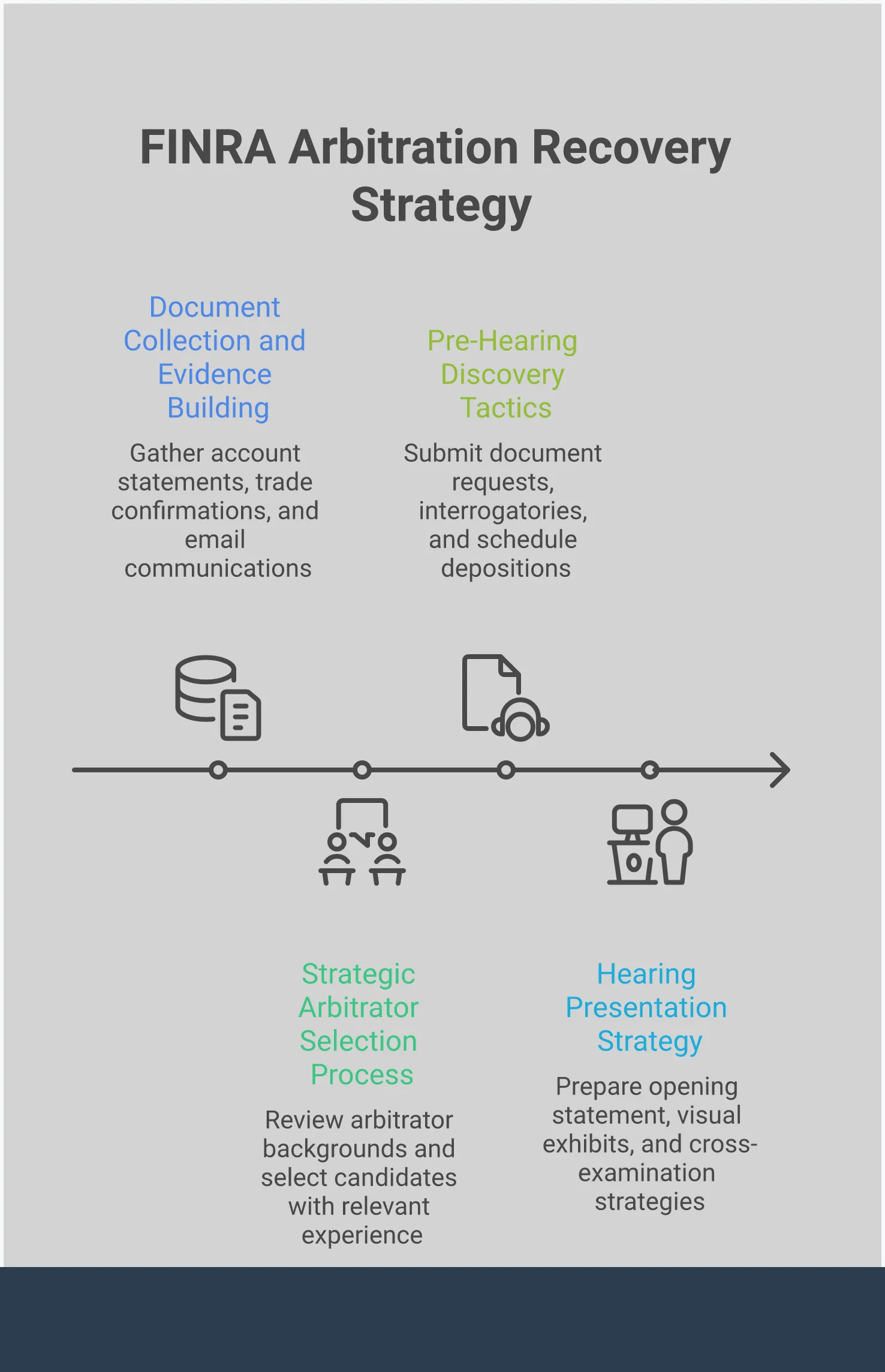
The first move is to officially start your case by filing a Statement of Claim with FINRA. Think of this as telling your story in a formal document, outlining what happened, who was involved, and why you believe you are owed compensation. Along with this claim, you’ll need to submit all the documents that support your case. This is where thorough preparation pays off. Account statements, emails with your broker, and any other correspondence are the foundation of your claim. Thorough documentation is the backbone of a successful case, as it provides the arbitrators with clear evidence to review during the FINRA arbitration process.
After your claim is filed, the next step is to select the person or people who will decide your case. These individuals are called arbitrators. To ensure fairness, “FINRA provides identical lists of possible arbitrators for the case to both sides of the dispute.” You and your attorney will review the backgrounds of these potential arbitrators to select the ones best suited for your case. During this phase, both sides also exchange documents and information relevant to the claim. This discovery process ensures that there are no surprises at the hearing and that everyone has access to the same facts.
The hearing is the main event of the arbitration process. This is when “each party presents its case to the arbitrators.” Your attorney will present your story, submit evidence, and call on witnesses to testify on your behalf. The opposing side will have a chance to do the same. Unlike a formal court trial, the setting is typically a conference room, and the rules of evidence are more relaxed. The goal is to clearly and persuasively explain the investment issues you faced and demonstrate how you were harmed. The arbitrators will listen to both sides before making their final decision.
It’s important to have realistic expectations about the timeline and costs. The FINRA arbitration process can take over a year from filing to a final decision. The costs include filing fees, hearing session fees, and attorney fees. While arbitration is often faster and less expensive than a court battle, it is still a significant undertaking. An experienced attorney can give you a clearer picture of the potential costs for your specific situation. They can also manage the process efficiently, helping you avoid costly delays and procedural mistakes. If you have questions about your case, a good first step is to contact a lawyer for a consultation.
Going through the FINRA arbitration process can feel overwhelming, but understanding what to expect can make a significant difference. It’s not just about filing a claim; it’s about knowing the potential hurdles and advantages of the system. From the finality of the decision to the costs involved, having a clear picture helps you prepare for the road ahead and make informed choices about your case.
One of the most critical things to understand about FINRA arbitration is that the decision is typically final. Unlike a court case, FINRA does not have an internal appeals process. While federal and state laws allow for a decision to be challenged in court, the grounds for doing so are extremely narrow and rarely successful. This makes it all the more important to build a strong case from the very beginning.
On the bright side, if you do win your case, enforcing the award is usually straightforward. FINRA rules require brokerage firms to pay arbitration awards within thirty days. Failure to do so can result in serious consequences for the firm, including suspension. This provides a level of assurance that you will receive the funds you are awarded in a timely manner, helping you start the process of financial recovery.
Many investors have misconceptions about securities arbitration that can unfortunately harm their case. A common myth is that arbitration is an informal discussion. In reality, it is a formal legal proceeding with specific rules for evidence and testimony. Another pitfall is believing that your story alone is enough to win. While your testimony is important, a successful claim requires solid documentation and evidence to prove misconduct.
Knowing what to expect from the FINRA arbitration process will help reduce anxiety and increase your confidence as your case progresses. Understanding that you need to prepare just as you would for a court trial is the first step. This means gathering all relevant documents, organizing your timeline of events, and clearly articulating how you were wronged by broker fraud and negligence.
It’s natural to worry about the cost of pursuing a claim, especially after you’ve already suffered financial losses. The FINRA process does involve fees, including an initial filing fee and hearing session fees, which vary depending on the size of your claim. These costs are something to consider as you decide how to proceed with your case.
However, you don’t have to bear these costs alone. Many securities arbitration lawyers handle cases on a contingency fee basis. This means you don’t pay any attorney fees unless they successfully recover money for you. The attorney’s fee is then a percentage of the amount recovered. This arrangement allows investors to pursue justice without needing to pay for legal help out of pocket, making it possible to take on complex investment issues without further financial strain.
Facing a large brokerage firm can be intimidating, but you don’t have to do it by yourself. Perhaps the most important step in preparing for FINRA arbitration is hiring a seasoned securities attorney. These legal professionals are experienced in securities law and have deep experience handling arbitration cases involving broker-dealer misconduct, investment fraud, and regulatory violations. An attorney can manage the complex paperwork, deadlines, and strategic decisions required to build a compelling case.
For investors in Huntsville, having a dedicated legal team on your side can make all the difference. A lawyer can help you gather the right evidence, anticipate the opposition’s arguments, and represent your interests at the hearing. If you believe you have been a victim of investment fraud, the first step is to get in touch with a law firm that can review your situation and explain your options.
Do I have to go through FINRA arbitration, or can I sue my broker in court? For the vast majority of investors, FINRA arbitration is the required path. When you opened your brokerage account, the agreement you signed almost certainly included a clause requiring you to resolve disputes through arbitration instead of the court system. While this might feel restrictive, it also means the brokerage firm is obligated to participate and can’t pull you into a drawn-out court battle.
What kind of proof do I need to build a strong case? A successful claim is built on clear documentation. Your story is important, but it needs to be supported by evidence. You should gather all relevant records, including account statements, trade confirmations, emails, and any notes you took during conversations with your broker. These documents help create a detailed timeline and provide tangible proof of the misconduct you experienced.
How long does the FINRA arbitration process usually take? It’s important to have realistic expectations. From filing the initial claim to receiving a final decision, the process can often take more than a year. The exact timeline depends on the complexity of your case and the schedules of everyone involved. While it is a significant time commitment, it is generally a much faster resolution than you would find in the traditional court system.
I’ve already lost money, so how can I afford to hire a lawyer? This is a very common and understandable concern. Many securities arbitration attorneys work on a contingency fee basis. This means you do not pay any legal fees upfront. The attorney’s payment is a percentage of the money they successfully recover for you. If you don’t win your case, you don’t owe them a fee. This approach allows you to pursue your claim without taking on another financial burden.
What happens after the arbitrators make a decision? The arbitrators’ decision, known as an “award,” is final and binding. Unlike court cases, there is no standard appeals process, which means the outcome is usually the end of the matter. If the award is in your favor, FINRA rules require the brokerage firm to pay you within 30 days. This enforcement mechanism is a key benefit of the process, as it ensures you receive your recovered funds promptly.