
+1-888-741-7503
NO FEES UNTIL WE WIN
FREE CONSULTATION
NO FEES UNTIL WE WIN
FREE CONSULTATION
When you first opened your investment account, you signed a stack of documents. Buried in that fine print was likely a mandatory arbitration clause. This means that if a dispute arises with your brokerage firm, you’ve already agreed not to sue them in court. Instead, you must use the Financial Industry Regulatory Authority (FINRA) arbitration process. While that might sound limiting, it’s actually a streamlined system created to handle these exact situations. It has its own set of rules, procedures, and deadlines. Knowing how to use this system is crucial for protecting your rights. This article explains what FINRA arbitration is and how a New York FINRA Arbitration Lawyer can help you use this process to pursue financial recovery.
If you have a dispute with your stockbroker or brokerage firm, you probably won’t end up in a traditional courtroom. Instead, you’ll likely go through a process called FINRA arbitration. Think of it as a specialized forum for resolving disagreements within the financial industry. When you opened your investment account, you almost certainly signed an agreement that included a clause requiring you to resolve any future disputes through this process.
So, what is it exactly? FINRA arbitration is a method of dispute resolution that is generally faster and more streamlined than a lawsuit. Instead of a judge and jury, your case is heard by one or three impartial arbitrators who are knowledgeable about securities rules. Understanding this process is the first step toward holding a financial professional accountable for misconduct and working to recover your investment losses. It’s the primary avenue for investors seeking justice, and knowing how it works is crucial for protecting your financial future.
FINRA, the Financial Industry Regulatory Authority, does more than just provide a forum for disputes; it also has rules in place to protect you. One of the most significant ways it does this is by enforcing the outcomes of arbitration. If you win your case and receive an award, FINRA has a powerful tool to ensure you get paid. According to FINRA’s rules, if a broker or firm fails to pay an arbitration award, FINRA will suspend their license, effectively putting them out of business until they fulfill their obligation. This enforcement mechanism provides a critical layer of security for investors who have been wronged by broker fraud and negligence.
While both arbitration and a lawsuit are ways to resolve a legal dispute, they have some key differences. The most notable is that securities arbitration is typically faster and less expensive than going to court. The discovery process, where both sides exchange information, is more limited, and the rules of evidence are more relaxed. Instead of a judge, your case is decided by an arbitrator or a panel of arbitrators. It’s also important to know that an arbitrator’s decision is final and binding, with very limited grounds for appeal. This finality means the process provides a conclusive end to the dispute, for better or worse.
A wide range of conflicts can lead to FINRA arbitration. For investors, the most common claims involve some form of broker misconduct. This can include situations where a broker recommended unsuitable investments that didn’t match your risk tolerance, made trades in your account without your permission, or misrepresented the nature of a financial product. Other frequent investment issues that end up in arbitration are churning (excessive trading to generate commissions), failure to supervise, and breach of fiduciary duty. Essentially, any dispute where you believe your financial professional’s actions caused you to lose money could be grounds for a FINRA arbitration claim.
When you’ve lost money due to broker misconduct, the thought of taking on a large financial firm can feel overwhelming. This is where a dedicated FINRA arbitration lawyer comes in. They act as your advocate, handling the complex legal procedures so you can focus on moving forward. From the moment you decide to pursue a claim, your attorney works to build your case, represent your interests, and fight for the financial recovery you deserve. They level the playing field, ensuring your voice is heard and your rights are protected throughout the entire process.
The first thing a lawyer will do is carefully review the details of your situation to determine if you have a strong case. Not every investment loss qualifies for arbitration. Generally, you can file a claim if you have a written agreement with a FINRA-registered firm and your dispute falls within their rules. An attorney helps you understand these requirements and assesses the merits of your potential claim. They will gather all the necessary documents, like account statements and communications with your broker, to build a solid foundation and prepare a compelling Statement of Claim to initiate the arbitration process.
Having a knowledgeable attorney by your side during hearings is critical. While securities arbitration is typically faster and less formal than a traditional court trial, it is still a legal proceeding with specific rules and procedures. Your lawyer will present the evidence, make legal arguments on your behalf, question witnesses, and counter the brokerage firm’s defense. They handle all the procedural aspects, allowing you to present your side of the story clearly and confidently. Their presence ensures that your case is presented effectively and professionally to the arbitration panel.
Many FINRA arbitration cases are resolved through a settlement before the final hearing. A skilled lawyer can negotiate with the opposing side to reach a fair agreement on your behalf, saving you the time and stress of a full hearing. If your case proceeds and the arbitrators issue an award in your favor, your attorney’s job isn’t over. They will take the necessary steps to make sure the award is paid and will handle any legal actions required to enforce it. This follow-through is essential to ensuring you actually receive the compensation you are owed.
Finding the right legal partner is one of the most important decisions you’ll make when pursuing a FINRA arbitration claim. The lawyer you choose can significantly influence the direction and outcome of your case. You need someone who not only understands the law but also understands what you’re going through. This isn’t just about legal strategy; it’s about finding an advocate who will stand by you, explain the process clearly, and fight for your financial recovery. When you’ve lost money due to someone else’s misconduct, feeling overwhelmed is completely normal. The right attorney should ease that burden, not add to it.
When you’re dealing with the fallout from investment losses, the last thing you need is more confusion. A good lawyer will cut through the complexity and give you a straightforward path forward. They should be your guide and your champion, handling the intricate details of your claim so you can focus on moving forward. As you begin your search, focus on a few key areas: their specific experience, their history with cases like yours, and how they communicate with their clients. These factors will help you find a firm that is truly equipped to handle your case and give you the confidence that your rights are being protected.
When you’re looking for a lawyer, it’s tempting to go with a general practitioner, but securities law is a highly specialized field. You need a lawyer who lives and breathes this area of law every day. A firm that focuses specifically on securities litigation and FINRA arbitration will be familiar with the unique rules, procedures, and strategies involved. They understand the nuances of broker fraud and negligence and know what it takes to build a strong claim. Don’t hesitate to ask a potential lawyer about their primary practice areas. Their answer will tell you if they have the dedicated knowledge your case requires.
Experience is more than just years in practice; it’s about a proven history of handling cases just like yours. Ask any potential lawyer about their track record in FINRA arbitration. How many cases have they managed? What kinds of outcomes have they achieved for their clients? A lawyer with a deep background in securities arbitration will be comfortable in that environment and prepared for the tactics the opposition might use. This kind of hands-on experience is invaluable and can make a real difference in how your case is presented and perceived by the arbitration panel.
A strong legal case is built on a foundation of trust, and that starts with clear communication. From your very first conversation, you should feel heard and respected. Look for a lawyer who offers a free initial consultation, giving you a chance to discuss your situation without any financial pressure. This first meeting is a great opportunity to see if their communication style works for you. They should be able to explain their fee structure, typically a contingency fee agreement, in a way that is easy to understand. You should walk away feeling confident that you have a partner you can contact whenever you have a question.
The idea of a legal process can feel overwhelming, but FINRA arbitration is a structured path designed to resolve disputes fairly and efficiently. It’s different from a courtroom trial, with its own set of rules and procedures. Understanding the key stages can help you feel more prepared and in control as you move forward. From filing your initial claim to receiving a final decision, each step plays a critical role in presenting your case. The process is broken down into three main phases: filing and preparation, discovery and arbitrator selection, and the final hearing. Knowing what happens in each phase demystifies the journey and allows you to focus on what matters: telling your story and seeking a just resolution for your financial losses. This process was created to be a more streamlined alternative to traditional litigation, giving investors a dedicated forum to address grievances against brokerage firms and their representatives. While it has its own complexities, it’s a manageable process when you have the right guidance. Your attorney will guide you through each step, ensuring your claim is presented clearly and effectively.
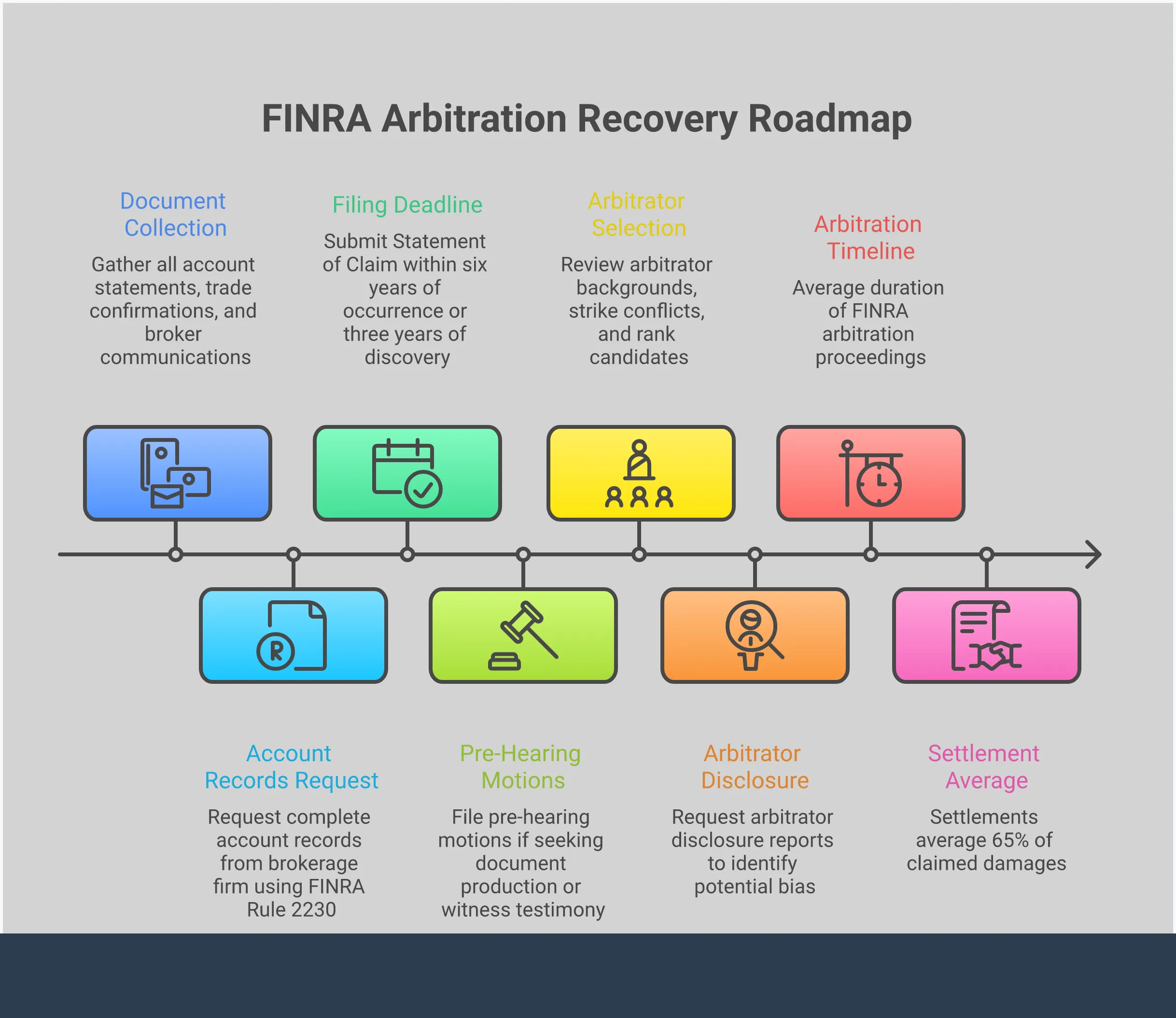
The first step is to file a Statement of Claim with FINRA. This document is your story. It details the events that occurred, explains how your broker or firm was negligent, and calculates the financial damages you’ve suffered. Most investor agreements include a clause that requires you to resolve disputes through securities arbitration rather than court. At this stage, you and your attorney will gather all necessary paperwork, including account statements, trade confirmations, and any communication you had with your broker. A well-drafted claim supported by strong evidence sets the foundation for your entire case.
Once your claim is filed, both sides will select the arbitrators who will decide the case. FINRA provides a list of potential arbitrators, and each party can strike certain names and rank the remaining ones in order of preference. These individuals act as neutral judges. Next comes the discovery phase, where you and the opposing side exchange documents and identify potential witnesses. This process ensures that everyone has access to the relevant information before the hearing. FINRA provides a Discovery Guide to outline what documents are typically shared in cases involving broker fraud and negligence.
The hearing is where you and your attorney present your case to the arbitration panel. You will provide testimony, present evidence, and call witnesses to support your claim. The other side will do the same. After the hearing concludes, the arbitrators deliberate on all the information presented. Their final decision, known as an “award,” is typically issued in writing within 30 days. This award is legally binding and final, with very limited options for appeal. If you receive a monetary award, the firm is required to pay it promptly. Having a skilled attorney by your side is crucial for effectively arguing your case and securing a favorable outcome.
Going through the FINRA arbitration process can feel overwhelming, and a lot of that stress comes from not knowing what to expect. Misconceptions about how it works can create unnecessary hurdles and prevent investors from taking action. When you’re already dealing with the fallout of financial misconduct, the last thing you need is more confusion. Let’s clear up some of the most common myths and challenges you might encounter so you can approach the process with clarity and confidence. Understanding the realities of arbitration is the first step toward building a strong case and working toward a fair resolution.
One of the biggest misconceptions is that if your broker engaged in clear misconduct, you are certain to get 100% of your money back. While a strong case improves your chances, a full recovery is never guaranteed. The arbitrators who hear your case have the final say on the award amount. They consider many factors, including the specifics of your claim, the evidence presented, and the arguments from both sides. Even in cases of obvious wrongdoing, the panel might decide on a partial award. It’s important to go into the process knowing that various outcomes are possible for your investment issues.
Many investors hesitate to pursue a claim because they feel intimidated by the process. The world of securities arbitration has its own set of rules and procedures that can seem complex from the outside. This uncertainty can cause people to miss their opportunity to recover losses. While arbitration is less formal than a courtroom trial, it is still a legal proceeding with specific deadlines and requirements. Understanding these limitations from the start is key. An experienced attorney can guide you through each step, making sure your claim is filed correctly and that you meet all necessary deadlines.
It’s helpful to remember that FINRA arbitration isn’t a sterile, robotic process. It is a human one. The arbitrators are often seasoned professionals who listen to testimony, review documents, and weigh the credibility of everyone involved. They are tasked with making a judgment based on the story your case tells. This is why setting realistic expectations is so important. Working with a lawyer helps you understand the potential strengths and weaknesses of your claim, especially in cases of broker fraud and negligence. This allows you to prepare a compelling case grounded in the reality of the arbitration system.
When you’re dealing with investment losses, the thought of adding legal bills to your financial stress can be overwhelming. Fortunately, the fee structures for FINRA arbitration lawyers are often designed to make legal help accessible, even when you’re facing financial uncertainty. Understanding how these fees work can give you the confidence to take the next step in recovering your money. The total cost depends on your specific case, but most arrangements follow a few common models.
Many securities arbitration lawyers work on a contingency fee basis. This is great news for investors because it means you don’t pay any attorney fees unless your lawyer successfully recovers money for you. If you win your case, the lawyer’s fee is a pre-agreed-upon percentage of the award, typically around one-third. This percentage might increase slightly if the case proceeds to a final hearing. This arrangement aligns your lawyer’s goals directly with yours. It allows you to pursue justice without worrying about upfront costs, making it possible to hold those responsible for broker fraud and negligence accountable for their actions.
While a contingency agreement covers your lawyer’s fee, there are other costs associated with the securities arbitration process itself. When you file a claim with FINRA, you must pay a filing fee. This fee varies based on the amount of money you are trying to recover, ranging from as little as $50 for very small claims to several thousand dollars for claims over $5 million. You may also encounter other administrative costs, such as fees for pre-hearing sessions with the arbitrators. A transparent lawyer will walk you through all these potential expenses from the start so you have a clear picture of the financial side of your case.
This is a question many investors have, and the answer provides a bit of relief. In many successful FINRA arbitration cases, the arbitration panel can order the brokerage firm to reimburse you for your legal fees as part of the final award. While this is not guaranteed in every case, it is a common outcome that can significantly reduce your out-of-pocket expenses. Recovering these fees means the final amount you receive is closer to your actual losses. Discussing the likelihood of recovering legal fees is an important part of the initial case evaluation with your attorney when you are facing complex investment issues.
Deciding to pursue a claim for investment losses can feel overwhelming, but timing is a critical factor. If you suspect misconduct, waiting too long can limit your options or even prevent you from recovering your money. Understanding the key triggers and deadlines for filing a claim is the first step toward protecting your financial future. If your situation involves a dispute with a registered FINRA member broker or firm arising from your investment activities, arbitration may be your required path forward.
One of the most important factors in deciding when to act is the statute of limitations. This is a legal deadline that sets a firm time limit on your ability to file a claim. If you miss this window, you could lose your right to seek recovery, no matter how strong your case is. FINRA has its own eligibility rules that dictate these timelines. Because these deadlines can be complex and are strictly enforced, it’s essential to evaluate your situation as soon as you suspect a problem. A delay could mean the difference between recovering your losses and having no recourse at all. You can learn more about the process of securities arbitration to better understand the rules.
Many investors hesitate to take action because they’re unsure if their losses qualify for a claim. You don’t have to be certain that fraud occurred to explore your options. Many people miss the chance to recover losses simply because they don’t realize their situation warrants a complaint. Common grounds for a FINRA arbitration claim include losses resulting from broker fraud and negligence, misrepresentation of an investment’s risks, or recommendations for unsuitable investments that didn’t align with your financial goals and risk tolerance. If your broker’s actions led to significant financial harm, it’s worth investigating whether you have a valid claim.
Beyond meeting deadlines, acting quickly is crucial for building a strong case. The sooner you begin the process, the easier it is to gather necessary documents, statements, and communications before they are lost or deleted. Memories also fade over time, so capturing your own recollections and those of any potential witnesses is much more effective when the events are still fresh. While there’s a common misconception that you’re guaranteed to get all your money back, the reality is that the sooner you act, the better your chances of achieving a favorable outcome. Taking prompt action signals that you are serious about your claim and allows your legal team to start working for you right away.
I signed an agreement when I opened my account. Does that mean I can’t take action? That agreement is actually what directs your dispute to FINRA arbitration. Almost all brokerage account agreements include a clause that requires you to resolve conflicts through this specific process instead of a traditional lawsuit. So, signing that paper doesn’t prevent you from seeking to recover your losses; it just defines the venue where you will do it.
How long does the FINRA arbitration process usually take? While it’s generally faster than a court case, the timeline can vary quite a bit. A straightforward case might be resolved in about a year, but more complex situations can take longer. The total time depends on factors like the complexity of your claim, the number of parties involved, and the arbitrators’ schedules.
Is it possible to settle my case without going to a full arbitration hearing? Yes, absolutely. A significant number of FINRA arbitration claims are resolved through a settlement before the final hearing ever takes place. Your attorney can negotiate with the brokerage firm on your behalf to reach a fair agreement, which can save you the time and emotional energy of a formal hearing.
What if the broker who caused my losses no longer works at the firm? You can still pursue a claim. In many cases, the legal claim is not just against the individual broker but also against the brokerage firm for its failure to properly supervise its employee. The firm has a responsibility to oversee its representatives, so its liability doesn’t necessarily disappear just because the broker has left.
Can I file a claim if my losses happened several years ago? It depends. There are strict deadlines, known as statutes of limitations and eligibility rules, that limit how long you have to file a claim. These time limits are one of the most critical aspects of the process. If you believe you have a claim, it is important to have your case reviewed as soon as possible to determine if you are still within the required timeframe to take action.