
+1-888-741-7503
NO FEES UNTIL WE WIN
FREE CONSULTATION
NO FEES UNTIL WE WIN
FREE CONSULTATION
When you open an investment account, you sign a stack of paperwork. Buried in that fine print is likely a clause you skimmed over, one that dictates how you must handle any future disputes. This clause almost always requires you to use arbitration instead of going to court. For most investors, this means turning to the Financial Industry Regulatory Authority, or FINRA. If you’ve lost money due to your broker’s actions, this process is your primary path to recovery. It’s a specialized world with its own rules, which is why finding the right Palm Beach FINRA arbitration lawyer is so critical to building a strong case and seeking justice.
When you open an investment account, you likely sign an agreement that includes a clause about resolving disputes. More often than not, this clause requires you to use arbitration instead of going to court. For most investors, this means turning to the Financial Industry Regulatory Authority, or FINRA. This process can feel intimidating, but it’s a structured way to handle disagreements with your broker or their firm.
If you’re an investor in Palm Beach and believe you’ve lost money due to your broker’s actions, understanding FINRA arbitration is your first step. It’s the primary forum for resolving these issues, from unsuitable investment advice to outright fraud. Knowing how this process works can help you decide on the right path to recover your losses and hold financial professionals accountable. The system is designed to be quicker and more cost-effective than traditional court litigation, but it comes with its own set of rules and limitations. For anyone facing unexpected portfolio losses that seem to stem from poor advice or misconduct, getting familiar with FINRA arbitration is essential. It’s the path you’ll most likely need to take to seek justice and financial recovery.
FINRA is a private, self-regulatory organization that oversees brokerage firms and registered brokers in the United States. While it’s not a government agency, it operates under the supervision of the Securities and Exchange Commission (SEC). FINRA’s main job is to protect investors by writing and enforcing the rules that govern the securities industry. When a broker violates these rules and an investor suffers financial harm, FINRA provides a mandatory forum to resolve the conflict. This process, known as securities arbitration, is designed to be a more efficient and less formal alternative to court litigation for settling these specific types of disputes.
Investors in Palm Beach face the same risks as those anywhere else. Disputes often arise from specific failures by stockbrokers and their firms. You might find yourself in a situation where your broker recommended an investment that was far too risky for your financial situation or misrepresented the nature of a product. Other common issues include excessive trading to generate commissions, known as churning, or making trades without your permission. These examples of broker misconduct can lead to significant and recoverable investment losses. If your portfolio has taken an unexpected hit that doesn’t align with market trends, it may be worth investigating the advice you received.
When you sign an account agreement with a brokerage firm, you are almost certainly agreeing to resolve any future problems through arbitration. This is a critical detail because it means you waive your right to sue the firm in court. By agreeing to arbitrate, you cannot have the same issue decided by a judge or jury. Instead, your case will be heard by a FINRA arbitrator or a panel of arbitrators whose decision is typically final and binding. While the process is often faster than a court case, the grounds for appealing an arbitrator’s decision are very limited. Understanding these limitations is important when considering how to handle investment disputes.
Finding the right legal representation can feel overwhelming, especially when you’re already dealing with the stress of investment losses. But choosing the right lawyer is one of the most important decisions you’ll make for your case. Not all attorneys have the specific background needed to handle these complex financial disputes. When you’re ready to find a lawyer, focus on a few key areas to ensure you have a strong advocate on your side.
This is a highly specialized area of law. Disputes with brokerage firms are resolved through securities arbitration, a unique forum with its own set of intricate rules. Your lawyer needs to be fluent in this world. They should have a deep understanding of issues like suitability, churning, and complex securities products. A general practice attorney simply won’t have the focused knowledge required to build a compelling case. You need someone who lives and breathes securities law and knows the FINRA rulebook inside and out. This specific knowledge is the foundation of a strong claim and can make a significant difference in the outcome.
Knowing the rules is one thing; using them effectively is another. A great FINRA arbitration lawyer can take a mountain of financial statements and transaction histories and find the story within them. They need strong analytical skills to uncover evidence of misconduct and calculate your actual damages. Just as importantly, they must be able to communicate that story clearly and persuasively to the arbitration panel. An attorney who is well-versed in these rules can guide you through each step, from filing the claim to the final hearing. They turn complex investment issues into a straightforward, compelling argument.
While securities law is national, having a lawyer with an understanding of the Palm Beach financial scene can be a real advantage. They may be familiar with the specific brokerage firms operating in the area and the types of investment products commonly sold to local investors. This local insight can provide valuable context for your case. A lawyer who has handled cases against firms in South Florida will understand the regional dynamics at play. This familiarity helps in building a case that resonates with arbitrators and addresses the specific circumstances of broker fraud and negligence in our community.
Going through a legal dispute is tough. The last thing you need is a lawyer who is distant or hard to reach. Look for someone who prioritizes clear communication and makes you feel heard. A good lawyer will take the time to explain the arbitration process, answer your questions, and keep you updated on your case’s progress. They should treat you as a partner, valuing your input and understanding the emotional toll of your situation. This client-focused approach ensures you feel supported and confident throughout the process. When you’re ready to talk, a firm should make it easy to contact them and start the conversation.
When you’ve lost money because of your broker’s actions, it can feel overwhelming. You might wonder if you even have a case. FINRA arbitration lawyers focus on a specific set of issues that arise between investors and financial firms. They handle disputes involving everything from outright deception to negligence that costs you your hard-earned savings. These cases often involve complex financial products and require a detailed understanding of industry rules. If you believe your financial professional mismanaged your assets or led you astray, understanding the types of claims that are commonly brought can be the first step toward seeking recovery.
One of the most serious issues a lawyer can address is investment fraud. This happens when a broker or firm intentionally misleads you to get you to invest. They might provide false information, hide significant risks, or promise returns that are completely unrealistic. Misrepresentation can also be more subtle, like omitting crucial details about an investment that would have changed your decision. For example, a broker might describe a high-risk private placement as a “safe, bond-like” investment. These cases of broker fraud and negligence aim to hold financial professionals accountable for their dishonesty and the losses they cause.
Brokers have a professional obligation to recommend investments that are a good fit for you. This is known as the “suitability” rule. Before making a recommendation, they must consider your financial situation, age, investment goals, and how much risk you’re comfortable with. A FINRA arbitration claim can arise when a broker ignores these factors and suggests an investment that is completely wrong for your circumstances. For instance, pushing a speculative, high-risk stock on a retiree who depends on their savings for income is a classic example of an unsuitable recommendation. These types of investment issues are common and can cause significant financial harm.
Your broker should never make trades in your account without your permission, unless you have given them specific written authority to do so. When they buy or sell securities without your consent, it’s called unauthorized trading, and it is a serious violation. Another area of concern is a breach of fiduciary duty. Investment advisers are held to a fiduciary standard, meaning they must always act in your best interest. Actions like “churning,” which is excessive trading just to generate commissions, or favoring investments that pay them a higher fee are clear breaches of that trust. These actions put the broker’s interests ahead of yours and can be grounds for a legal claim.
Sadly, older investors are often targeted for financial abuse. A FINRA arbitration lawyer can step in when a broker takes advantage of an elderly client’s trust, pressuring them into inappropriate investments or complex products they don’t understand. These cases often overlap with unsuitability and fraud but are particularly damaging due to the vulnerability of the victim. Lawyers in this field also handle other complex disputes that require a specialized forum to resolve. The securities arbitration process is specifically designed to address these intricate financial disagreements, providing a path for investors to hold firms accountable and work toward recovering their losses.
Choosing the right lawyer can feel overwhelming, especially when you’re already dealing with the stress of investment losses. While many attorneys are skilled, not all are suited for the unique world of FINRA arbitration. Knowing what to watch out for can help you find a representative who truly understands your situation and can effectively advocate for you. Here are a few critical red flags to keep in mind during your search.
Disputes with brokerage firms aren’t your typical legal battles. They take place in a highly specific forum, FINRA arbitration, and involve complex issues like suitability, churning, and calculating market-adjusted damages. A lawyer who isn’t deeply familiar with the securities industry or the arbitration process can be a significant disadvantage. You need someone who speaks the language of finance and understands the nuances of these claims. Don’t hesitate to ask a potential attorney about their specific experience with securities law. A general practitioner, however well-intentioned, may not have the focused knowledge required to handle the intricacies of your case effectively.
When you first notice losses in your portfolio, it’s easy to hope they are temporary. But waiting too long to act is one of the most common mistakes investors make. FINRA has strict eligibility rules and filing deadlines, and missing them can mean losing your right to recover your losses forever. Time is not on your side. An attorney who downplays these deadlines or encourages a “wait and see” approach may not be serving your best interests. A proactive lawyer will immediately assess the timeline of your case and explain the critical deadlines. Taking swift action is essential to protecting your rights and starting the process of recovering from broker fraud and negligence.
It’s one thing for a lawyer to understand securities law in theory; it’s another to have applied it successfully within the FINRA arbitration system. A lawyer’s direct experience with FINRA matters. Ask potential attorneys about their track record in this specific forum. How many cases have they handled? What were the outcomes? An attorney who is vague about their FINRA experience or cannot provide concrete examples may not be the right fit. You want a representative who has been through the process many times and understands how arbitrators think and how brokerage firms defend themselves. This practical experience is invaluable when your financial future is on the line.
Your relationship with your attorney should be built on trust, and that starts with transparency about fees. Be cautious of any lawyer who is evasive or unclear about their fee structure. You should receive a straightforward explanation of how they charge for their services, whether it’s a contingency fee, an hourly rate, or a flat fee. Ask for a written agreement that details all potential costs, so there are no surprises down the road. A reputable attorney will be happy to have this conversation and ensure you understand the financial aspects of your case. If you feel pressured or confused about costs, it’s a major red flag. Feel free to contact us for a clear discussion about your case.
Finding the right legal partner is a critical step on your path to recovery. Since disputes with brokerage firms are handled in a specialized forum, you need an attorney who truly understands its unique landscape. Properly vetting a lawyer can make a significant difference in your case’s outcome. Here’s a straightforward guide to doing your homework and finding a FINRA lawyer you can trust.
Start your search by focusing on lawyers with the right specialty. General practice attorneys often lack the specific knowledge needed for these complex cases. Use your state’s bar association website and other legal directories to find lawyers who concentrate on securities arbitration. This initial step helps you create a shortlist of qualified candidates, saving you from consultations with lawyers who aren’t a good fit for your specific needs.
Once you have a few names, verify each attorney’s credentials through your state bar association’s website. This lets you confirm they are in good standing and see any public disciplinary records. Experience working directly within the FINRA system is a strong indicator of a dedicated professional. It shows they have practical, hands-on knowledge of how these cases unfold, not just a theoretical understanding of the law.
Learning about other clients’ experiences offers valuable insight into working with a lawyer or firm. Look for testimonials on their website and check independent review sites for a balanced perspective. Pay attention to how past clients describe the attorney’s communication, professionalism, and dedication. These accounts can help you understand how a firm handles complex investment issues and supports its clients.
The initial consultation is your opportunity to interview a potential lawyer. Come prepared with questions about their experience, strategy, and how they will keep you informed. A good lawyer should explain the process clearly, without confusing legal jargon. You should feel comfortable asking questions and confident in their ability to represent you. If you feel rushed or dismissed, that’s a sign to keep looking. When you’re ready, contact a firm to schedule that first conversation.
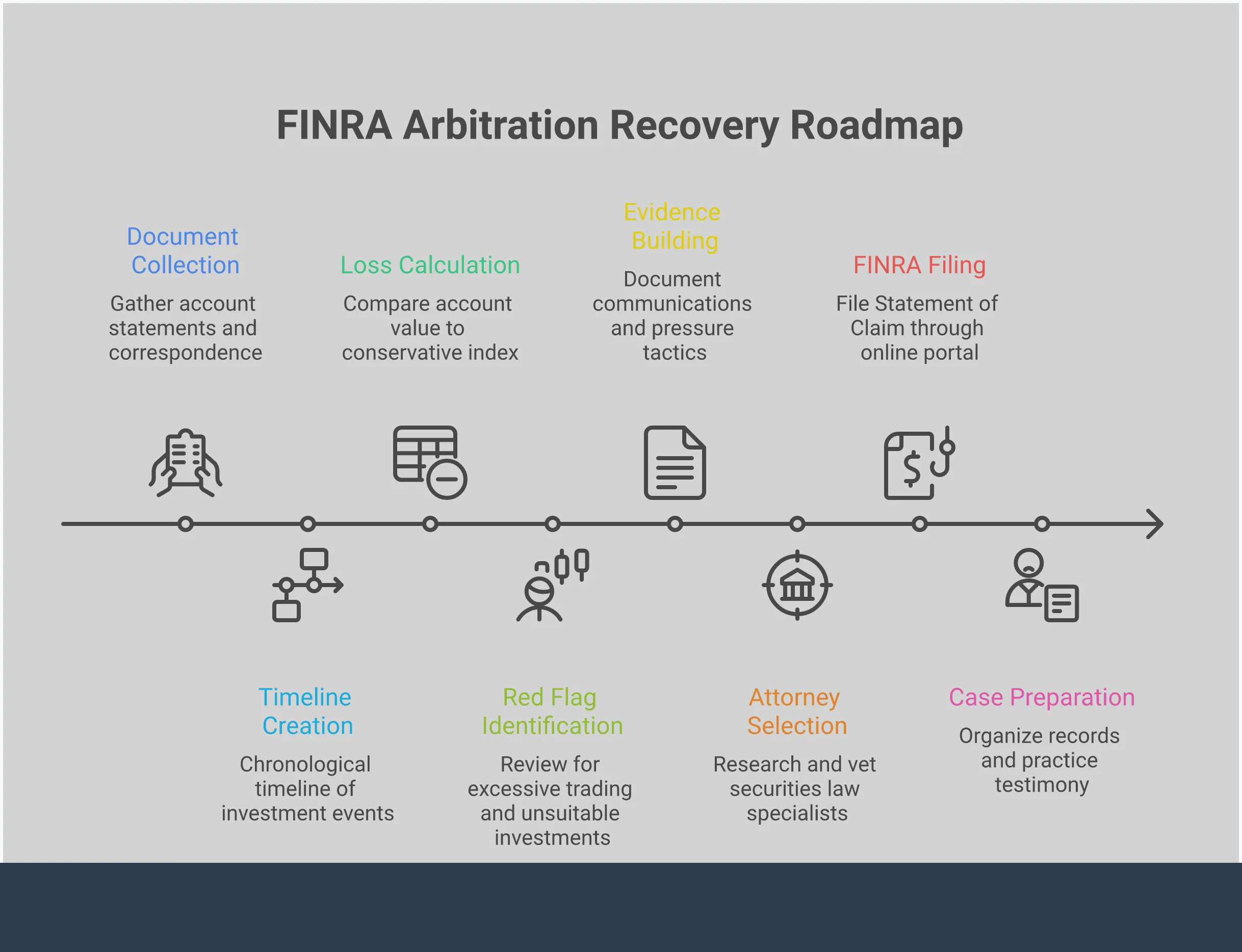
If you’re facing an investment dispute, the idea of a legal process can feel overwhelming. But understanding the steps involved can make the journey feel much more manageable. The Financial Industry Regulatory Authority (FINRA) has a specific process for resolving these issues, known as arbitration. It’s a structured path designed to handle disputes between investors and brokerage firms outside of a traditional courtroom. While every case is unique, the securities arbitration process follows a predictable sequence of events. Let’s walk through what you can generally expect from start to finish.
The first step is to formally file a Statement of Claim with FINRA. This document outlines the details of your dispute, explaining what happened and the resolution you are seeking. From this point, the clock starts ticking. The entire FINRA arbitration process typically takes between 12 and 18 months to complete, from filing the initial paperwork to receiving a final decision. It’s important to act promptly, as there are strict time limits for filing a claim. Working with an attorney can help ensure all your documents are filed correctly and on time, so you don’t risk having your case dismissed on a technicality.
After your claim is filed and served, the brokerage firm has 45 days to submit a formal response. Soon after, FINRA will provide both parties with a list of potential arbitrators. These are neutral individuals who will hear your case and make a final decision. You and your attorney will review the list and rank the candidates to select a single arbitrator or a panel of three. This phase also involves discovery, which is the formal process of exchanging information. Both sides will request and share documents and evidence relevant to the case, helping to build a clear picture of the facts before the hearing.
The arbitration hearing is where you and your legal team present your case. While it’s more formal than a simple meeting, it’s less rigid than a courtroom trial. During the hearing, both sides will have the opportunity to make opening and closing statements, present evidence, and question witnesses. This is your chance to tell your side of the story directly to the arbitrators who will decide the outcome. After the hearing concludes, the arbitrators will deliberate and issue a written decision, known as an award, typically within 30 days.
One of the defining features of FINRA arbitration is that the arbitrator’s award is almost always final and legally binding. Unlike a court verdict, the grounds for appealing an arbitration award are extremely narrow and rarely successful. This finality provides a conclusive end to the dispute, usually within that 12 to 18-month timeframe. While complex cases can sometimes take longer, the process is designed to be more efficient than traditional litigation. Once the award is issued, the case is considered resolved, allowing you to move forward.
Many people assume arbitration is just like going to court, but it’s a highly specialized forum with its own set of rules and procedures. Disputes involving investment issues are complex and require a deep understanding of securities regulations. The arbitrators who hear these cases are often industry professionals and attorneys with specific knowledge in this field. Because of this, it’s not a place for general practice lawyers. Successfully presenting your case requires familiarity with the unique environment of FINRA arbitration and the specific arguments that resonate with arbitrators.
When you’re facing investment losses, choosing the right legal partner is a critical step toward recovery. It’s about finding a team that not only understands the complexities of securities law but also appreciates what’s at stake for you and your family. At The Frankowski Firm, we combine deep industry knowledge with a commitment to each client’s unique situation. We are dedicated to helping investors hold financial advisors and brokerage firms accountable for their actions.
Our approach is built on years of focused practice in securities law, providing diligent representation for investors in Palm Beach and across the country. We understand the local financial landscape and have the resources to handle complex claims effectively. Let’s walk through how our firm can stand by your side.
Your case deserves individual attention from a lawyer who is deeply familiar with the FINRA arbitration process. We believe that a proactive and dedicated approach is essential, which comes from years of working within the FINRA system. This isn’t just about knowing the rules on paper; it’s about understanding how they are applied in practice, especially in cases involving broker fraud and negligence. We take the time to listen to your story, analyze every detail of your claim, and build a strategy tailored to your specific circumstances. You can feel confident that your case will be handled with the thoroughness it requires.
Disputes in FINRA arbitration involve highly specialized issues that are often outside the scope of general legal practice. That’s why it’s so important to work with a lawyer who has extensive and specific experience in the securities industry. This unique background can significantly influence the outcome of your case. Our firm is built on a foundation of securities law, and we have spent years focusing exclusively on these types of disputes. This allows us to effectively represent investors in the complex world of securities arbitration and work toward recovering their losses.
While we are a firm with a national reach, we are committed to serving the Palm Beach community. We understand the local investment environment and are dedicated to helping investors who have suffered recoverable losses due to the failures of stockbrokers and brokerage firms. This combination of broad resources and local focus allows us to provide powerful representation that is also personal and accessible. We are here to answer your questions and guide you through your options. If you are a Palm Beach investor who has been wronged, we encourage you to contact us to see how we can help.
The FINRA arbitration process can be lengthy, often taking 12 to 18 months from start to finish. Having a supportive legal team by your side is crucial to avoid procedural missteps that could jeopardize your claim. We provide comprehensive representation throughout the entire process, from filing the initial claim to the final hearing. We handle the complexities so you can focus on moving forward. Our goal is to make the process as clear and manageable as possible, ensuring you feel informed and supported every step of the way when dealing with your investment issues.
Why do I have to go through arbitration instead of suing my broker in court? When you opened your investment account, you almost certainly signed an agreement that included a pre-dispute arbitration clause. This is a standard practice in the financial industry. This clause legally binds you to resolve any future disputes with the firm through a specific forum, which for most investors is FINRA arbitration. By signing it, you waive your right to a trial by jury for these types of claims.
How can I tell if my investment losses are due to broker misconduct or just a bad market? It can be difficult to distinguish between normal market fluctuations and actual misconduct. The key is to look for actions that don’t align with your instructions or financial profile. Red flags include investments that were far riskier than you were comfortable with, frequent trading that doesn’t seem to have a clear strategy, or discovering your money was in products you never understood or approved. If the advice you received seems inconsistent with your goals, it’s worth investigating further.
How long do I have to file a FINRA arbitration claim? Time is a critical factor in these cases. FINRA has a strict eligibility rule that generally requires you to file a claim within six years of the event that caused your losses. However, state laws, known as statutes of limitation, often have much shorter deadlines, sometimes as little as two years. Because these timelines can be complex, it is very important to speak with a lawyer as soon as you suspect a problem to protect your right to file a claim.
What if I can’t afford a lawyer? How are fees typically handled in these cases? This is a very common and understandable concern, especially after you’ve already experienced financial losses. Many securities arbitration lawyers handle cases on a contingency fee basis. This means you do not pay any attorney’s fees upfront. The law firm only gets paid a percentage of the money they recover for you. If there is no recovery, you owe no attorney’s fees.
Do I really need a lawyer for FINRA arbitration, or can I represent myself? While you are technically allowed to represent yourself in FINRA arbitration, it is not recommended. The process involves complex procedural rules, and the brokerage firm will be represented by experienced defense attorneys. Having a lawyer who specializes in securities law and understands the FINRA system ensures you can present your case effectively and puts you on a more even footing with the opposition.